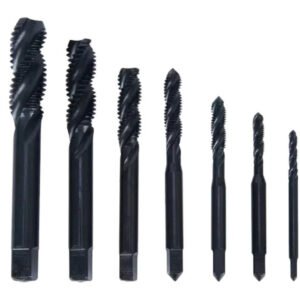
DIN371 Thread Tap
Looking for high-performance DIN371 Thread Tap solutions for industrial threading? MisolTap, a trusted manufacturer since 2005, delivers precision-engineered thread taps designed for superior durability, accuracy, and efficiency in modern machining environments.
With integrated R&D, advanced production, and global distribution, MisolTap provides reliable threading tools tailored for CNC machining, automotive manufacturing, aerospace applications, and more.
🔧 What is a DIN371 Thread Tap?
A DIN371 Thread Tap is a machine tap manufactured according to the DIN 371 standard, featuring a reinforced shank design for enhanced rigidity and torque resistance. It is widely used for cutting internal threads in medium to large diameters, especially in demanding industrial environments.
🚀 Advantages of MisolTap DIN371 Thread Tap
1. Reinforced Shank Design
DIN371 standard includes a strengthened shank for improved stability during high-torque operations.
2. High Wear Resistance
Made from premium HSS, HSS-E (Cobalt), or Carbide, ensuring long tool life even in tough materials.
3. Excellent Thread Accuracy
Precision-ground threads ensure compliance with international tolerance standards such as ISO 2 / 6H.
4. Optimized Chip Evacuation
Available in spiral flute, spiral point, and straight flute designs for efficient chip removal.
5. Wide Material Compatibility
Suitable for machining stainless steel, alloy steel, carbon steel, aluminum, and cast iron.
6. Advanced Coating Technology
Coatings like TiN, TiCN, and TiAlN reduce friction and improve cutting performance.
7. OEM & Custom Solutions
MisolTap supports custom sizes, coatings, and packaging for global B2B clients.
📏 DIN371 Thread Tap Sizes
MisolTap offers a comprehensive range of DIN371 Thread Tap sizes to meet diverse industrial needs:
-
Metric Sizes: M3 – M12
-
Thread Types: Metric coarse & fine
-
Thread Standards: ISO / DIN
-
Shank Type: Reinforced shank (DIN371 standard)
-
Flute Types: Spiral flute / Spiral point / Straight flute
📊 Technical Specifications Table
| Parameter | Specification |
|---|---|
| Brand | MisolTap |
| Product Name | DIN371 Thread Tap |
| Standard | DIN 371 |
| Material | HSS / HSS-E / Carbide |
| Coating | TiN / TiCN / TiAlN / Black Oxide |
| Size Range | M3 – M12 |
| Thread Type | Metric (Coarse / Fine) |
| Flute Type | Spiral Flute / Spiral Point / Straight |
| Application | Steel, Stainless Steel, Aluminum |
| Hardness | HRC 62–68 |
| Tolerance | ISO 2 / 6H |
| Surface Finish | Polished / Coated |
| Shank Type | Reinforced Shank (DIN371) |
| Packaging | Plastic Box / Bulk / Custom |
| OEM/ODM | Supported |
🏭 Applications of DIN371 Thread Tap
-
CNC machining centers
-
Automotive parts manufacturing
-
Aerospace precision components
-
Mold & die industry
-
General engineering and metalworking
🌍 About MisolTap
Since 2005, MisolTap has established itself as a leading Chinese manufacturer of high-performance thread cutting tools. We integrate R&D, production, and global sales into a seamless operation, delivering robust and precise threading solutions for modern manufacturing industries worldwide.
❓ Frequently Asked Questions (FAQ)
1. What is the difference between DIN371 and DIN376 thread taps?
DIN371 taps have a reinforced shank and are typically used for smaller sizes (M3–M12), while DIN376 taps are designed for larger diameters.
2. Which materials are suitable for DIN371 thread taps?
They are ideal for stainless steel, carbon steel, alloy steel, aluminum, and cast iron.
3. How do I choose the right flute type?
-
Spiral flute: best for blind holes
-
Spiral point: ideal for through holes
-
Straight flute: general-purpose applications
4. Can MisolTap provide customized thread taps?
Yes, we offer OEM/ODM services including custom sizes, coatings, and packaging.
5. What coating should I choose for high-speed machining?
TiAlN coating is recommended for high-speed and high-temperature machining environments.
6. Are DIN371 thread taps compatible with CNC machines?
Yes, they are fully compatible with CNC machines, tapping machines, and manual operations.
Showing the single result