
In the precision world of metalworking and manufacturing, the terminology surrounding cutting tools can often lead to confusion, especially for those transitioning from general maintenance to high-production environments. One of the most frequent queries we encounter involves the difference between a plug tap and a thread tap. While the terms are sometimes used interchangeably in casual settings, in a professional machine shop, distinguishing between them is vital for tool longevity and thread accuracy. Since our founding in 2005, MisolTap has focused on bridge the gap between complex engineering requirements and practical shop-floor solutions, and this guide serves to clarify these essential threading concepts.
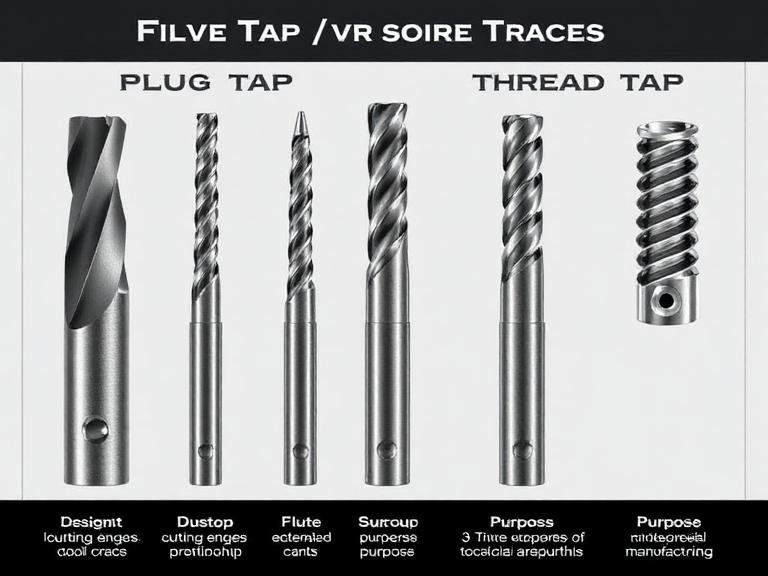
Table of Contents
- 1. Defining the Terms: Technical Clarification
- 2. Deep Dive into the Plug Tap
- 3. The Broader Concept of the Thread Tap
- 4. Key Differences: Geometry, Taper, and Application
- 5. Choosing the Right Tool for Your Material
- 6. International Standards: ISO, DIN, and JIS
- 7. Summary Comparison Table
- 8. Frequently Asked Questions
- 9. References
1. Defining the Terms: Technical Clarification
To begin, we must establish a foundational linguistic baseline. A thread tap is a broad, categorical term. It refers to any tool designed to cut internal threads into a pre-drilled hole. Under this umbrella, you find various specific geometries such as taper taps, plug taps, and bottoming taps. Therefore, when discussing the difference between a plug tap and a thread tap, we are essentially comparing a specific subset to the general category.
From our experience at MisolTap, professional machinists usually specify a thread tap by its standard or its chamfer length. For instance, an IOS-529 Thread Tap or a DIN371 Thread Tap provides much more information than the generic term. However, the plug tap occupies a unique middle ground in the three-piece tap set, making it perhaps the most commonly used tool in the industry for through-hole applications.
2. Deep Dive into the Plug Tap
The plug tap is characterized by its chamfer length, which typically encompasses 3 to 5 threads. This gradual entry allows the tool to start the thread relatively easily while still maintaining enough full-diameter threads to finish a through-hole in a single pass. It is the workhorse of the automotive and aerospace assembly lines.
In many regions, particularly in the UK and parts of Europe, the term second tap is used to describe the plug tap. This is because it is traditionally used after a taper tap (the first tap) to refine the threads. However, in modern CNC machining with high-performance tools like our JIS Thread Tap series, many operators skip the taper tap entirely and start directly with a plug tap to save cycle time.
3. The Broader Concept of the Thread Tap
When someone refers to a thread tap without further qualification, they are referring to the entire mechanical process of internal threading. The thread tap category includes tools for different thread forms (Metric, UNC, UNF, BSP) and different manufacturing methods (cutting vs. forming). At MisolTap, we integrate R&D and production to ensure that every thread tap we manufacture, whether it is an IOS-529 or a DIN standard, meets the rigorous precision levels required for global sales.
The variety within thread taps is immense. You have spiral point taps for through holes, spiral flute taps for blind holes, and straight flute taps for general purpose use. Understanding the difference between a plug tap and a thread tap involves recognizing that the plug tap is a geometry choice within this vast selection. If you choose the wrong thread tap category—for example, using a cutting tap on a material that requires a forming tap—you risk tool breakage regardless of whether it has a plug chamfer or not.
4. Key Differences: Geometry, Taper, and Application
The most significant difference between a plug tap and a thread tap (specifically other types of thread taps like taper or bottoming) lies in the chamfer. The chamfer is the ground-down portion at the tip of the tool that enables the cutting edges to gradually engage the workpiece.
Chamfer Length and Engagement
A taper tap has 7 to 10 chamfered threads, making it very easy to start but requiring significant clearance at the bottom. A bottoming tap has only 1 to 1.5 chamfered threads, allowing it to cut threads nearly to the floor of a blind hole but making it very difficult to start without a guide. The plug tap, with its 3 to 5 threads, sits perfectly in the middle. From our experience, this makes the plug tap the most versatile option for general manufacturing.
Torque Distribution
Because the plug tap distributes the cutting load over several threads, the torque is lower than that of a bottoming tap but higher than a taper tap. This distribution is critical when working with harder alloys. We recommend utilizing our high-performance IOS-529 Thread Tap in plug geometry for stainless steel applications to achieve the best balance between speed and tool life.
5. Choosing the Right Tool for Your Material
Material science plays a massive role in how these tools perform. When we provide precision threading solutions to our global clients, we always analyze the material ductility. For gummy materials like aluminum, a spiral flute thread tap is often preferred to pull chips out of the hole. However, if that hole is a through-hole, a plug tap with a spiral point (often called a gun tap) is the superior choice because it pushes the chips forward.
In high-volume manufacturing, the difference between a plug tap and a thread tap category like the DIN371 Thread Tap becomes a question of shank design. A DIN371 tap usually features a reinforced shank, which is ideal for smaller diameters to prevent snapping under high torque. This is a technical nuance that general thread tap discussions often overlook, but at MisolTap, we believe these details are what ensure robust production.
6. International Standards: ISO, DIN, and JIS
The threading industry relies heavily on international standards to ensure compatibility. When you are looking for the difference between a plug tap and a thread tap, you will often see these acronyms:
- ISO (IOS-529): A global standard that defines tap dimensions and tolerances. It is widely used in international trade.
- DIN (DIN371/376): German standards that are the benchmark for European machinery. They often specify shank thickness.
- JIS (Japanese Industrial Standard): Known for having different shank and square dimensions than ISO. Our JIS Thread Tap range is specifically designed for clients using Japanese-made CNC machinery.
Understanding these standards is just as important as knowing the tap geometry. A plug tap made to JIS standards will not fit in an ISO-standard collet. From our experience, matching the tool standard to your machine’s tool-holding system is the first step toward precision.
7. Summary Comparison Table
| Feature | Plug Tap (Specific Type) | Thread Tap (General Category) | Bottoming Tap (Comparison) |
|---|---|---|---|
| Chamfer Threads | 3 to 5 threads | Varies (1 to 10) | 1 to 1.5 threads |
| Primary Use | Through holes / Deep holes | All internal threading | Blind holes (to the bottom) |
| Ease of Starting | Moderate | Depends on specific type | Difficult (Requires lead) |
| MisolTap Example | JIS Thread Tap (Plug) | DIN371 Thread Tap | IOS-529 (Bottoming) |
| Torque Load | Balanced | Determined by geometry | High |
8. Frequently Asked Questions
9. References
- International Organization for Standardization. (2024). ISO 529: Short machine taps and hand taps. ISO.org
- Deutsches Institut für Normung. (2023). DIN 371: Machine taps with reinforced shank. DIN.de
- MisolTap Internal Technical Data (2005-2026). Threading Performance Analysis in High-Performance Alloys.
Choosing between a plug tap and a thread tap isn’t about choosing different tools, but about choosing the right geometry within the thread tap family. At MisolTap, we pride ourselves on providing the precision tools and expertise necessary for modern manufacturing. Whether you require an IOS-529, DIN, or JIS standard solution, our global sales team is ready to provide robust and precise threading tools tailored to your needs. Would you like me to help you select the specific tap standard for your next production run?