
Since our founding in 2005, MisolTap has established itself as a leading Chinese manufacturer of high-performance thread cutting tools. We integrate R&D, production, and global sales into a seamless operation, providing our clients with robust and precise threading solutions tailored to modern manufacturing needs. One of the most specialized areas in precision machining is the creation of reverse threads. When tackling these unique fastening challenges, understanding what materials are typically used for left-hand thread tap and die sets is paramount to ensuring precision, maximizing tool longevity, and maintaining the structural integrity of your workpiece.
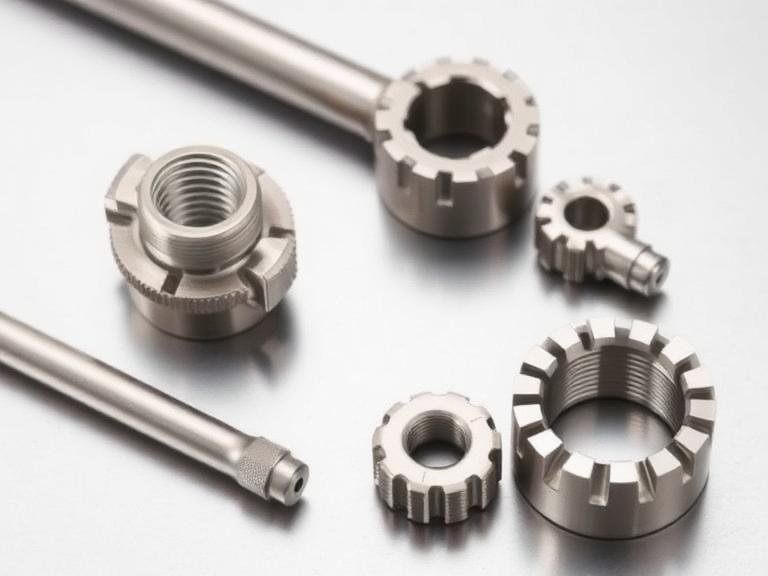
Left-hand threads tighten in a counter-clockwise direction, counteracting rotational forces that would otherwise loosen standard right-hand fasteners. From automotive suspension linkages and tie-rod ends to rotary saw arbors and bicycle pedals, these specialized threads are critical for mechanical safety. However, cutting them requires tools manufactured from highly specific metallurgical compositions. In this authoritative engineering guide, we will explore the metallurgical properties, advantages, and applications of the various alloys utilized in left-hand threading tools.
Table of Contents
- 1. The Fundamentals of Reverse Threading Operations
- 2. What Materials Are Typically Used for Left-Hand Thread Tap Sets?
- 3. High-Speed Steel (HSS): The Industry Workhorse
- 4. Cobalt High-Speed Steel (HSS-Co): Unyielding Durability
- 5. Carbon Steel and Alloy Steel: The Maintenance Solution
- 6. The Role of Advanced Surface Coatings
- 7. From Our Experience: Selecting the Right Set for Your Application
- 8. Summary Comparison Table
- 9. Frequently Asked Questions (FAQs)
- 10. Industry References
1. The Fundamentals of Reverse Threading Operations
Before analyzing specific metals, it is essential to understand the physical demands placed on reverse threading tools. Cutting internal and external threads generates immense frictional heat and torsional stress. The tool must possess sufficient hardness to shear the workpiece material, toughness to withstand twisting forces without shattering, and red-hardness to maintain its cutting edge at highly elevated temperatures.
The applications for these tools are highly specific. You will frequently encounter them in rotating machinery assemblies, turnbuckles, and specialized fluid or gas supply valves designed to prevent accidental cross-connection. For a deeper mechanical understanding of these fasteners, we highly recommend reading our comprehensive guide on reverse thread taps. Because these applications often involve hardened steel components or abrasive non-ferrous alloys, the tooling must be forged from industrial-grade metals to prevent catastrophic failure mid-cut.
2. What Materials Are Typically Used for Left-Hand Thread Tap Sets?
When evaluating cutting tools, modern machinists must look well beyond the physical geometry of the flutes and focus heavily on the substrate metal. The materials are typically used for left-hand thread tap and die production fall into three primary metallurgical categories: High-Speed Steel (HSS), Cobalt High-Speed Steel (HSS-Co), and High Carbon Steel. Each of these compositions offers distinct operational advantages depending on the material being threaded, the speed of the spindle, and the overall production volume.
At MisolTap, we meticulously select our raw materials based on stringent international quality standards. As one of the premier global thread tap manufacturers, we ensure that every left-hand tap and die set we produce is engineered to deliver flawless threads and exceptional durability in the harshest manufacturing environments.
3. High-Speed Steel (HSS): The Industry Workhorse
High-Speed Steel, commonly designated in the industry as M2 or M7 grade, is undoubtedly the most prevalent material utilized in professional-grade threading tools. HSS is a complex alloy containing precisely balanced levels of tungsten, molybdenum, chromium, and vanadium. This metallurgical combination provides a remarkable equilibrium of abrasion resistance, core toughness, and thermal stability.
When industrial engineers ask us what materials are typically used for left-hand thread tap manufacturing for general-purpose applications, standard HSS is our definitive answer. Tools forged from high-quality HSS boast a hardness rating of approximately 63 to 65 on the Rockwell C scale (HRC). This structural rigidity allows them to effortlessly cut through mild steel, aluminum, brass, and industrial plastics without edge degradation.
One of the defining characteristics of High-Speed Steel is its red-hardness—the unique ability to maintain a sharp cutting edge even when friction raises the tool’s core temperature to 600 degrees Celsius. This property is crucial for automated CNC operations where production speed is paramount. Optimizing the rotational speeds for these tools is critical to prevent galling; you can learn more about matching tool materials to operational speeds in our detailed guide on drilling speed for metal.
4. Cobalt High-Speed Steel (HSS-Co): Unyielding Durability
For extreme machining environments involving stainless steel, titanium, Inconel, cast iron, or aerospace superalloys, standard HSS may dull prematurely. In these rigorous scenarios, Cobalt High-Speed Steel (often designated as HSSE, M35, or M42) is the vastly superior choice. These specialized alloys incorporate 5 percent (M35) to 8 percent (M42) cobalt into the high-speed steel matrix.
The addition of cobalt significantly enhances the tool’s hot-hardness, pushing the overall hardness rating up to 68 to 70 HRC. This means the tap or die can endure significantly higher cutting temperatures and abrasive friction without losing its temper or suffering microscopic edge deformation. From our experience, when clients require tools for aerospace components or heavy machinery, the materials are typically used for left-hand thread tap operations must contain a cobalt additive.
While HSS-Co is incredibly wear-resistant, the increased hardness makes the tool slightly more brittle than standard HSS. Therefore, rigid machine setups are necessary to prevent lateral forces from snapping the tap. If you are working with thick, abrasive plates, pairing a cobalt left-hand tap with a heavy duty tap and drill setup is essential for achieving clean, precise threads without risking catastrophic tool failure inside the hole.
5. Carbon Steel and Alloy Steel: The Maintenance Solution
Not all threading tasks involve cutting new threads into virgin metal. In many automotive repair, plumbing, and maintenance scenarios, the goal is simply to clean out rust, burrs, or cross-threading damage from an existing hole or bolt. For these specific applications, High Carbon Steel and standard Alloy Steel are frequently utilized.
Carbon steel is significantly more affordable to manufacture than HSS or Cobalt alloys. However, it lacks the tungsten and molybdenum required for high red-hardness. If a carbon steel tool is subjected to the high speeds and frictional heat of machine tapping, the cutting edges will soften and round off almost instantly.
We recommend carbon steel tap and die sets strictly for manual, hand-tapping operations. They are an excellent, budget-friendly addition to a mechanic’s toolbox for thread chasing and repair work. When sizing these tools for fluid or pneumatic systems, consulting a pipe thread tap size chart or referencing specific dimensional data like the 3/8 pipe thread tap size ensures you are using the correct pitch and diameter before applying the tool by hand.
6. The Role of Advanced Surface Coatings
While the base materials are typically used for left-hand thread tap sets determine the core mechanical properties, modern manufacturing frequently employs advanced physical vapor deposition (PVD) coatings to push performance even further.
- Titanium Nitride (TiN): A distinctive gold-colored coating that significantly increases surface hardness (up to 80 HRC) and provides excellent natural lubricity. TiN coatings reduce friction, lower operating temperatures, and prevent material from welding to the cutting edges (known as galling).
- Titanium Carbonitride (TiCN): A harder, gray or blue-tinted coating that offers superior wear resistance, particularly when tapping highly abrasive materials like cast iron or high-silicon aluminum.
- Steam Oxide (Black Oxide): A porous, black surface treatment that helps the tool retain cutting fluid. This is highly beneficial when threading gummy materials like low-carbon steel, as it prevents chip packing and ensures a much smoother thread finish.
From our experience at MisolTap, the combination of an M35 Cobalt base substrate with a Titanium Nitride (TiN) coating yields the absolute best cost-to-performance ratio for mid-volume stainless steel left-hand threading applications.
7. From Our Experience: Selecting the Right Set for Your Application
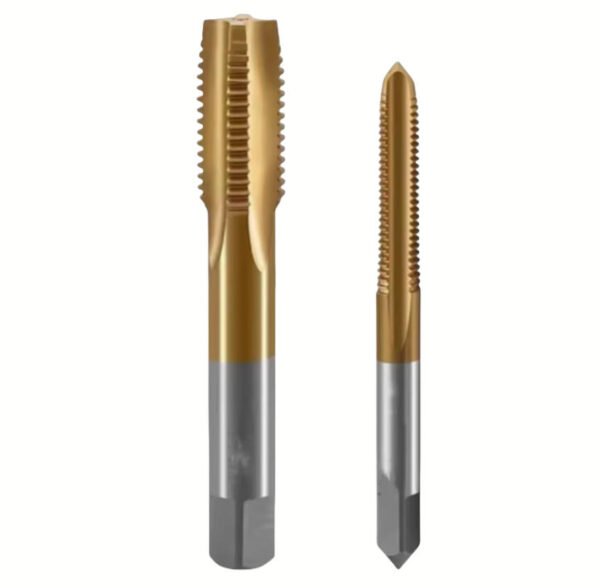
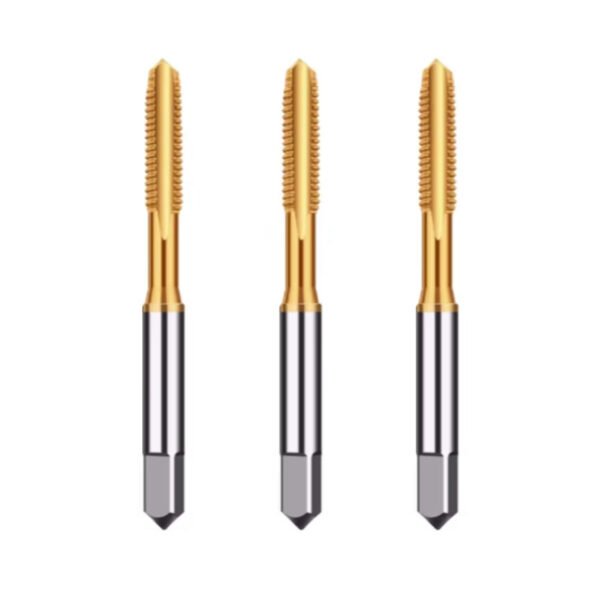
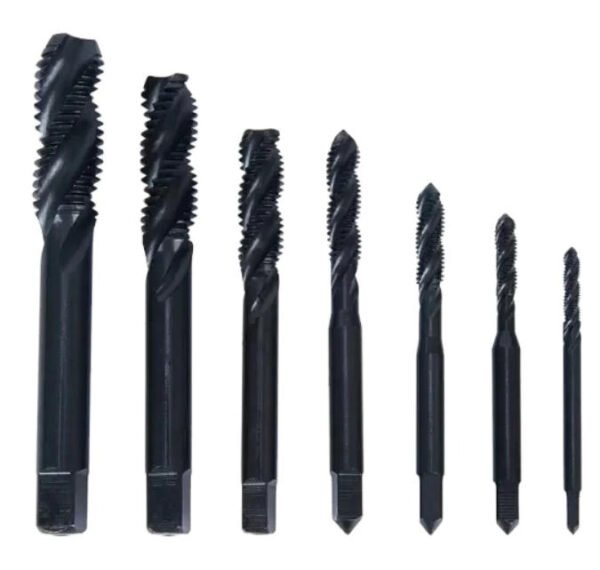
At MisolTap, we firmly believe that optimizing your manufacturing process begins with precise tool selection. When procurement teams ask us how to evaluate the materials are typically used for left-hand thread tap and die sets, we provide a simple, three-step diagnostic approach:
- Determine the Workpiece Material: If you are threading soft to medium-hard metals (aluminum, brass, mild steel), a standard M2 HSS tap is the most cost-effective and reliable choice. For stainless steel, titanium, and exotic alloys, you must upgrade to an M35 or M42 Cobalt tap. For cleaning dirty threads manually, carbon steel is sufficient.
- Assess the Machining Environment: Will the tool be used in a hand wrench or a high-speed CNC machine? Carbon steel should never be used in powered equipment. For CNC machining, HSS or HSS-Co with a TiN or TiCN coating is required to handle the heat and chip evacuation demands.
- Implement Proper Lubrication: Regardless of the material, high-quality cutting fluid is non-negotiable. Even the hardest M42 cobalt tap will fail prematurely if subjected to dry cutting in stainless steel. Specialized tapping fluids reduce friction, flush away chips, and preserve the precise geometry of the cutting edges.
8. Summary Comparison Table
| Tool Material | Hardness (HRC) | Red-Hardness / Heat Resistance | Ideal Workpiece Materials | Best Application Type |
|---|---|---|---|---|
| High-Speed Steel (M2/M7) | 63 – 65 | Excellent (up to 600°C) | Mild Steel, Aluminum, Brass, Plastics | General CNC Machining, Powered Tapping |
| Cobalt HSS (M35/M42) | 68 – 70 | Superior (Extremely high heat tolerance) | Stainless Steel, Titanium, Cast Iron, Inconel | Heavy-Duty CNC, Abrasive/Hardened Metals |
| High Carbon Steel | 58 – 60 | Poor (Loses temper quickly) | Wood, Plastics, Pre-threaded mild steel | Manual Hand-Tapping, Thread Repair/Chasing |
| Alloy Steel | 60 – 62 | Moderate | Mild Steel, Zinc alloys | Maintenance, Budget hand tool sets |
9. Frequently Asked Questions (FAQs)
Why are left-hand taps more expensive than standard right-hand taps?
Left-hand taps are produced in significantly lower volumes than right-hand taps, which eliminates economies of scale during manufacturing. Additionally, because they are often used in specialized safety-critical applications, manufacturers frequently utilize premium high-speed steel or cobalt, increasing the raw material cost.
Can I use a carbon steel left-hand tap in a drill press?
We strongly advise against it. Carbon steel lacks the thermal stability required for powered machining. The friction generated by a drill press will rapidly heat the carbon steel, causing it to lose its temper, dull immediately, and potentially snap inside your workpiece.
How can I tell if my left-hand tap is made of HSS or Carbon Steel?
Reputable manufacturers will laser-etch or stamp the material grade directly onto the shank of the tap. You will typically see markings such as “HSS”, “HSSE”, or “M42”. If the tap has no material stamping, it is highly likely made of cheaper carbon or alloy steel.
Does a titanium coating change the core material of the tap?
No. Titanium Nitride (TiN) is purely a surface coating applied via Physical Vapor Deposition (PVD). It adds a microscopic layer of extreme hardness and lubricity to the exterior, but the core structural properties (toughness and flexibility) remain dictated by the base HSS or Cobalt substrate.
10. Industry References
- ASM International. (2025). Properties and Selection: Irons, Steels, and High-Performance Alloys. Materials Park, OH: ASM International. Link
- National Institute of Standards and Technology (NIST). (2024). Machining Guidelines for High-Speed Steel and Cobalt Alloys. Link
- MisolTap Engineering Department. (2026). Internal Technical Data on Metallurgical Tool Wear in Reverse Threading Operations.