
In the highly demanding world of precision manufacturing, the threading process is often the final and most critical step in producing a machined component. By the time a workpiece reaches the tapping stage, substantial investments in time, labor, and machine hours have already been made. A broken tap inside a nearly finished aerospace casing or automotive engine block can result in catastrophic financial losses and production delays. Therefore, identifying the best material for a thread tap is not merely a purchasing decision; it is a fundamental engineering necessity.
From our experience at MisolTap, manufacturing engineers frequently underestimate the thermal and mechanical stresses inflicted upon threading tools. Tapping is a continuous cutting process that generates extreme friction within a confined space. Unlike milling or turning, chip evacuation in tapping is inherently difficult, meaning the tool must possess extraordinary toughness and heat resistance to survive. We recommend a comprehensive evaluation of the workpiece material, the production volume, and the machine setup before determining the best material for a thread tap for your specific application. In this authoritative technical guide, we will analyze the metallurgical properties of the top threading substrates, detail the five best material for a thread tap options, and explain how tool geometry plays an equally vital role in your success.
Table of Contents
1. Understanding Thread Tap Metallurgy
Before dissecting the specific substrates that constitute the best material for a thread tap, one must understand the metallurgical balance required for threading. A tap requires three primary physical characteristics: hardness, toughness, and red hardness (heat resistance).
Hardness prevents the cutting edges from wearing down when machining abrasive materials. Toughness is the material’s ability to absorb shock and resist chipping or snapping under the immense torsional loads of threading. Red hardness refers to the alloy’s ability to maintain its cutting edge at highly elevated temperatures. Unfortunately, in metallurgy, hardness and toughness are inversely related. As you increase the hardness of a metal to improve wear resistance, it becomes increasingly brittle. Finding the best material for a thread tap involves selecting the exact alloy that balances these competing properties for your specific workpiece.
2. The 5 Best Material for a Thread Tap
Based on rigorous internal testing at our R&D facilities and feedback from thousands of global manufacturing clients, we have identified and categorized the five substrates that represent the best material for a thread tap in the modern industrial landscape.
2.1 High-Speed Steel (HSS)
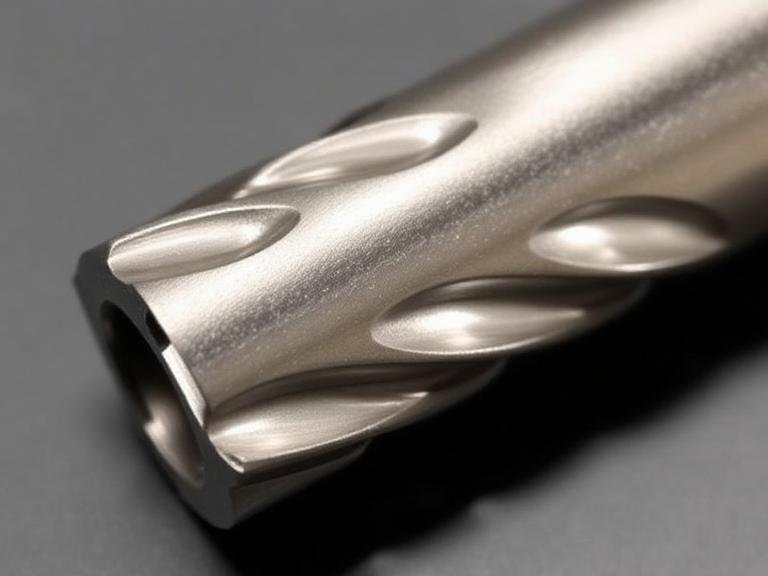
For general-purpose machining, standard High-Speed Steel (often designated as M2) remains the most widely used and cost-effective substrate. HSS contains significant amounts of tungsten, molybdenum, and vanadium, which impart excellent toughness and adequate wear resistance. We consider HSS to be the best material for a thread tap when machining softer materials such as aluminum, mild steels, brass, and plastics.
The primary advantage of HSS is its flexibility. Because it is incredibly tough, it can handle slight misalignments in the spindle or workpiece without instantly snapping. From our experience, if you are operating older manual milling machines or drill presses that lack perfect rigidity, HSS is unequivocally the best material for a thread tap to prevent catastrophic tool failure.
2.2 Cobalt High-Speed Steel (HSSE / HSS-Co)
When you transition from machining mild steel to tougher alloys like stainless steel, tool steel, or titanium, standard HSS will dull rapidly due to heat accumulation. This is where Cobalt High-Speed Steel (HSSE or HSS-Co) becomes necessary. HSSE is alloyed with 5% to 8% cobalt. This crucial addition dramatically increases the red hardness of the tool, allowing the tap to retain its sharp cutting edge at temperatures that would cause standard HSS to fail.
We recommend HSSE as the best material for a thread tap in medium to high-volume production runs involving austenitic stainless steels (such as 304 and 316). While slightly more brittle than standard HSS, the trade-off in superior heat and wear resistance makes it an indispensable asset in modern CNC operations.
2.3 Powder Metallurgy High-Speed Steel (PM-HSS)
Powder Metallurgy High-Speed Steel represents a massive leap forward in cutting tool technology. Traditional steel is melted and cast, which can lead to irregular carbide distribution and structural weak points within the metal. PM-HSS is created by atomizing the molten steel into a fine powder and then sintering it under extreme pressure. This process results in an incredibly uniform, fine-grained microstructure with perfectly distributed carbides.
Because of this uniform structure, PM-HSS solves the traditional metallurgy dilemma: it offers the extreme wear resistance of high-alloy steels while maintaining the supreme toughness of standard HSS. For tapping highly abrasive materials, high-tensile steels, and aerospace superalloys (like Inconel), PM-HSS is often the ultimate best material for a thread tap. It provides predictable tool life, which is critical for automated “lights-out” manufacturing cells.
2.4 Solid Tungsten Carbide
Solid Carbide is the hardest substrate utilized in the threading industry. It offers unparalleled wear resistance and can be run at cutting speeds significantly faster than any HSS variant. When evaluating the best material for a thread tap strictly based on tool longevity in highly abrasive materials (like cast iron, high-silicon aluminum, or hardened steels up to 60 HRC), solid carbide reigns supreme.
However, we must emphasize a critical caveat from our engineering department: solid carbide is exceptionally brittle. It possesses virtually zero tolerance for shock, vibration, or spindle runout. We recommend utilizing solid carbide taps exclusively in state-of-the-art CNC machining centers equipped with synchronized tapping cycles and highly rigid fixturing. If deployed in a less rigid setup, solid carbide is guaranteed to shatter.
2.5 High Carbon Steel
While not suited for industrial CNC manufacturing, high carbon steel still holds a specific place in the threading ecosystem. Carbon steel taps are extremely hard but lack the heat resistance required for machine tapping. They will lose their temper immediately if run at high speeds.
We categorize high carbon steel as the best material for a thread tap exclusively for manual hand-tapping, chasing damaged threads, or simple maintenance and repair operations. For hobbyists or mechanics working on engine blocks by hand, a high-quality carbon steel tap provides a cost-effective and functional solution, provided it is never subjected to machine speeds.
3. Integrating Material with Thread Tap Geometry
Identifying the best material for a thread tap is only half the equation; the physical geometry of the tool must perfectly match the chosen substrate and the target application. Since 2005, MisolTap has engineered threading solutions that optimize this synergy. A premium PM-HSS substrate is useless if the flute geometry fails to evacuate chips from a blind hole.
We manufacture to strict international standards to ensure our clients receive the exact geometry required for their machinery:
- IOS-529 Thread Tap: Widely used across Europe and international markets, the ISO-529 standard dictates specific shank diameters and driving square dimensions. An IOS-529 Thread Tap manufactured from HSSE is our top recommendation for general-purpose metric and imperial threading in diverse job shop environments.
- DIN371 Thread Tap: The DIN371 standard features a reinforced shank, meaning the shank diameter is equal to or larger than the thread diameter. We highly recommend a DIN371 Thread Tap made from PM-HSS or Solid Carbide for tapping small diameter threads (M1 to M10) in tough materials, as the reinforced shank provides the massive rigidity required to prevent breakage.
- JIS Thread Tap: The Japanese Industrial Standard (JIS) is prevalent in Asian manufacturing and specialized automotive sectors. A JIS Thread Tap is often designed with specific overall lengths and thread profiles optimized for high-speed automated production lines. Pairing JIS geometry with our premium cobalt substrates ensures seamless integration into advanced CNC systems.
4. Summary Table: Thread Tap Materials Compared
To assist procurement officers and manufacturing engineers in selecting the best material for a thread tap, we have summarized the core properties of each substrate in the matrix below.
| Tap Material | Toughness (Shock Resistance) | Wear Resistance (Hardness) | Heat Resistance (Red Hardness) | Ideal Machining Application |
|---|---|---|---|---|
| High-Speed Steel (HSS) | Excellent | Moderate | Moderate | General purpose, Aluminum, Mild Steels, Manual Machines. |
| Cobalt HSS (HSSE) | Good | High | High | Stainless Steels, Tool Steels, Medium/High Volume CNC. |
| Powder Metallurgy (PM-HSS) | Very High | Very High | Very High | Aerospace Alloys, High-Tensile Steels, Predictable Tool Life. |
| Solid Carbide | Poor (Very Brittle) | Exceptional | Exceptional | Cast Iron, Hardened Steels, High-Speed Rigid CNC Only. |
| High Carbon Steel | Poor | Moderate | Very Poor | Hand Tapping, Thread Chasing, Maintenance and Repair. |
5. Frequently Asked Questions (FAQs)
Why shouldn’t I just buy Solid Carbide for everything if it is the hardest material?
From our experience, extreme hardness translates to extreme brittleness. Tapping inherently involves starting, stopping, and reversing the spindle, which generates heavy torsional shock. Unless your machine has flawless synchronization and zero runout, a solid carbide tap will shatter. For most standard CNC operations, HSSE or PM-HSS is the best material for a thread tap due to their superior shock absorption.
What is the difference between a DIN371 Thread Tap and a standard tap?
The DIN371 standard specifies a reinforced shank. This means the unthreaded portion of the tap is thicker than the threaded cutting portion. This added mass provides exceptional rigidity, making a DIN371 Thread Tap ideal for preventing breakage when tapping smaller holes in tough materials like stainless steel.
Does coating a tap change which material is best?
Coatings like Titanium Nitride (TiN) or Titanium Carbonitride (TiCN) drastically improve surface hardness and lubricity, but they do not alter the core mechanical properties of the substrate. You must still select the best material for a thread tap (like PM-HSS) for its core toughness before relying on a coating to extend its wear life.
Why is PM-HSS considered better than standard HSSE?
Standard cast HSSE can have microscopic carbide clumping, creating weak spots. PM-HSS is formed from atomized powder, resulting in a perfectly uniform grain structure. We recommend PM-HSS as the best material for a thread tap when you need the wear resistance of carbide but require the impact toughness of steel.