
In the precision machining and industrial fabrication sectors, achieving perfectly threaded holes is non-negotiable. Whether you are assembling aerospace components or automotive brackets, the integrity of your fasteners dictates the safety and reliability of the final product. At MisolTap, since our founding in 2005, we have established ourselves as a leading Chinese manufacturer of high-performance thread cutting tools. We integrate R&D, production, and global sales into a seamless operation, providing our clients with robust and precise threading solutions tailored to modern manufacturing needs. One of the most common questions our technical support team encounters from both apprentice machinists and veteran engineers is: exactly what size tap do I need for a M6 bolt?
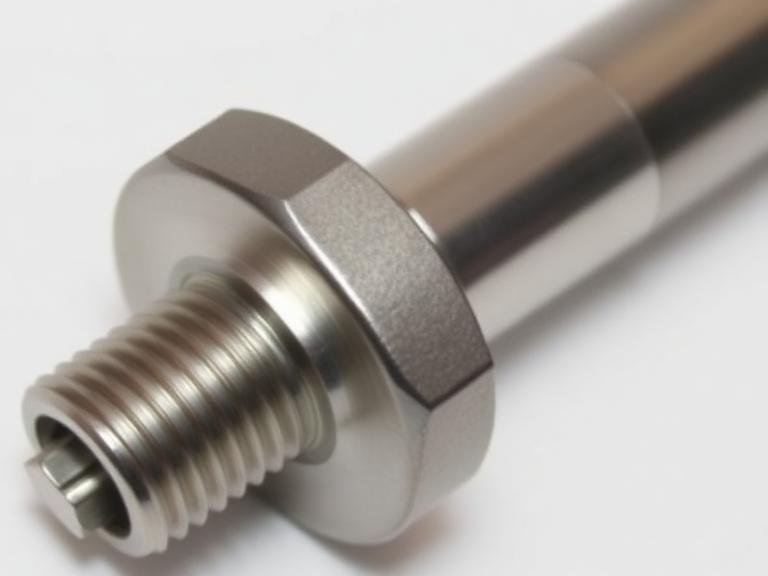
The answer to what size tap do I need for a M6 bolt is not merely a single number. It requires a comprehensive understanding of metric thread standards, the specific pitch of the fastener, the material being machined, and the exact diameter of the pre-drilled pilot hole. If the pilot hole is too small, the tap will bind and inevitably snap. If the pilot hole is too large, the thread engagement will be weak, leading to catastrophic thread stripping under tension. In this authoritative guide, we will break down the exact specifications and best practices to ensure your M6 threading operations are flawless.
Table of Contents
- 1. Understanding M6 Thread Specifications
- 2. Calculating the Tap Drill Size: The Core Formula
- 3. Choosing the Correct Type of Thread Tap
- 4. Machining Parameters: Speed and Lubrication
- 5. Comparing Metric Threads to Other Standards
- 6. The MisolTap Engineering Advantage
- 7. Summary Table: M6 Tap and Drill Chart
- 8. Frequently Asked Questions (FAQs)
- 9. Industry References
1. Understanding M6 Thread Specifications
Before answering what size tap do I need for a M6 bolt, we must first define what an M6 bolt actually is. In the ISO metric thread system, the “M” stands for metric, and the “6” represents the nominal outer diameter of the bolt in millimeters. However, metric threads come in different pitches. Pitch is defined as the distance in millimeters between two adjacent thread crests.
There are two primary variations of the M6 thread that you will encounter in industrial environments:
- M6 x 1.0 (Coarse Thread): This is the standard, most common M6 bolt. If a blueprint simply calls for an “M6” without specifying a pitch, it is universally understood to be M6 x 1.0. The threads are deeper and spaced further apart, providing excellent pull-out resistance in softer materials like aluminum and cast iron.
- M6 x 0.75 (Fine Thread): This variant has threads that are closer together. Fine threads are utilized in applications requiring extreme vibration resistance or when threading into thin-walled tubing where coarse threads would not provide enough thread engagement.
From our experience, misidentifying the pitch is the leading cause of scrapped parts. If you are asking what size tap do I need for a M6 bolt, you must first verify whether your bolt is a coarse 1.0 pitch or a fine 0.75 pitch.
2. Calculating the Tap Drill Size: The Core Formula
To successfully tap a hole, you must first drill a pilot hole. The tap itself does not create the hole; it only cuts the internal threads into the walls of an existing hole. Therefore, when evaluating what size tap do I need for a M6 bolt, you are simultaneously asking what size drill bit do I need.
We recommend utilizing the standard industry formula for calculating the theoretical tap drill size for metric threads:
Tap Drill Size = Nominal Tap Diameter – Thread Pitch
Applying this formula to our M6 scenarios:
- For a standard M6 x 1.0 bolt: 6.0mm – 1.0mm = 5.0mm drill bit. You will need an M6 x 1.0 tap and a 5.0mm drill bit.
- For a fine M6 x 0.75 bolt: 6.0mm – 0.75mm = 5.25mm drill bit. You will need an M6 x 0.75 tap and a 5.25mm drill bit.
Using a 5.0mm drill bit for a standard M6 coarse thread yields an approximate thread engagement of 75 percent. From our experience, 75 percent thread engagement is the optimal sweet spot for maximizing fastening strength while minimizing the torque required to drive the tap, thereby reducing the risk of tap breakage. If you drill the hole too small (e.g., 4.8mm), the tapping torque increases exponentially. If you drill it too large (e.g., 5.2mm for a coarse thread), the bolt will strip the internal threads under high load.
3. Choosing the Correct Type of Thread Tap
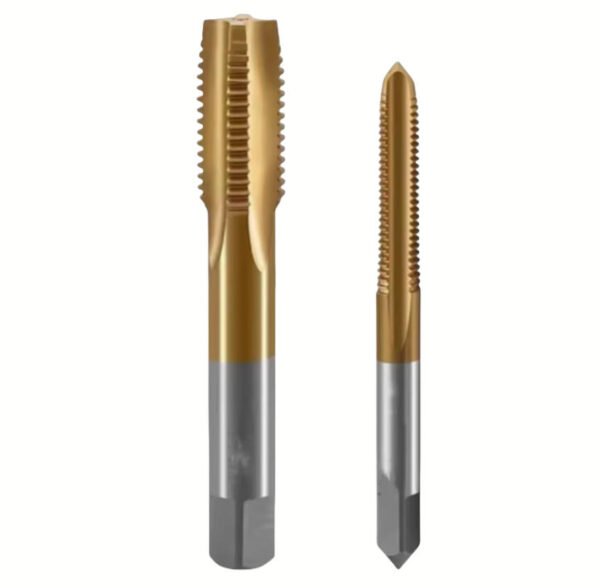
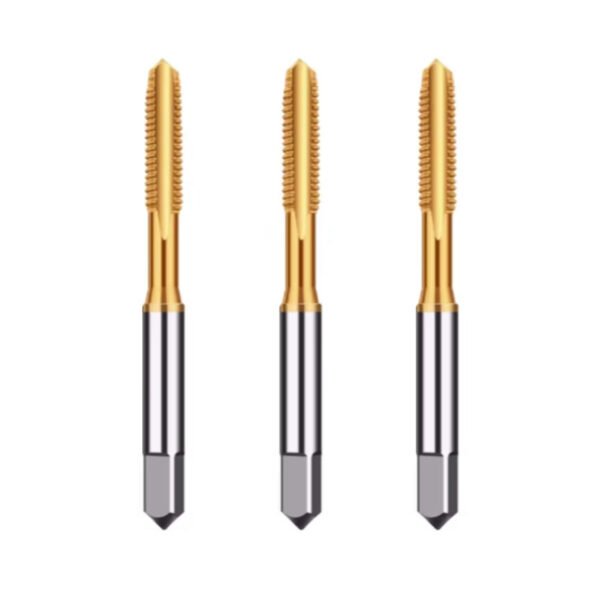
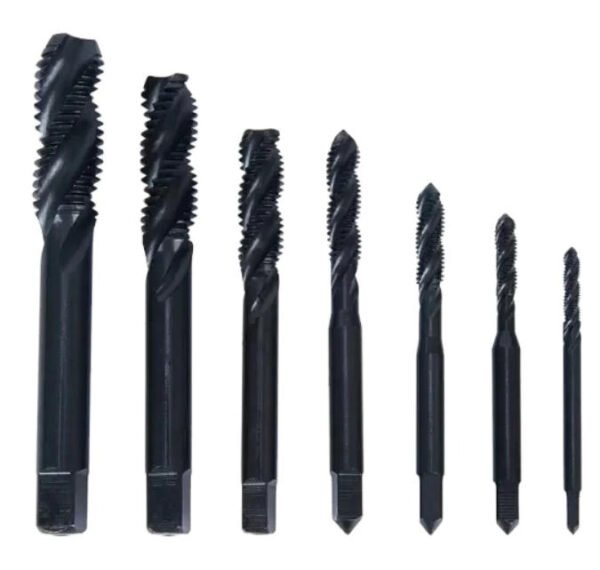
Determining what size tap do I need for a M6 bolt is only the first half of the equation. The second half is selecting the correct tap geometry for your specific application. As leading innovators in thread cutting, we offer a comprehensive breakdown of the types of thread taps available for modern machining.
We recommend selecting your tap based on whether you are cutting a through-hole or a blind hole:
- Taper Taps: These have a pronounced chamfer (usually 8 to 10 threads) at the tip. They are ideal for starting threads straight by hand, especially in tough materials. However, they cannot cut threads all the way to the bottom of a blind hole.
- Plug Taps: Featuring a 3 to 5 thread chamfer, plug taps are the workhorses of the CNC industry. They are excellent for through-holes and provide a good balance of cutting ease and thread depth.
- Bottoming Taps: With only a 1 to 2 thread chamfer, bottoming taps are exclusively designed to cut threads to the very bottom of a blind hole. We recommend starting a blind hole with a plug tap and finishing it with a bottoming tap.
- Spiral Flute Taps: If you are machine-tapping a blind M6 hole, spiral flute taps are mandatory. They evacuate the metal chips upward and out of the hole, preventing chip packing and tool breakage.
4. Machining Parameters: Speed and Lubrication
Once you have confidently answered what size tap do I need for a M6 bolt and selected your 5.0mm drill bit and M6x1.0 tap, execution is paramount. Drilling the pilot hole requires precise speed control. If you are unsure of the appropriate RPM for your material, we highly recommend reading our guide: drilling speed for metal.
Furthermore, tapping friction generates immense heat. Using a premium cutting fluid formulated specifically for tapping is critical. For aluminum, fluids containing kerosene or specialized synthetic coolants work best to prevent galling. For stainless steel, heavy sulfurized cutting oils are required to maintain the cutting edge of the tap.
When operating CNC machinery, utilizing rigid tapping cycles combined with high-quality carbide or cobalt-alloyed high-speed steel (HSSE) taps will yield the best dimensional accuracy and tool life. For demanding industrial applications involving hardened steels, we suggest exploring our line of heavy duty tap and drill sets.
5. Comparing Metric Threads to Other Standards
In global manufacturing, engineers frequently transition between ISO metric threads, Unified National (UNC/UNF) imperial threads, and specialized pipe threads. While an M6 bolt utilizes a 60-degree thread angle similar to UNC bolts, they are absolutely not interchangeable. A 1/4-20 UNC bolt is very close in outer diameter (approx. 6.35mm) to an M6, but attempting to force one into the other’s tapped hole will destroy the threads immediately.
For fluid power and pneumatic systems, standard straight machine threads are insufficient for sealing. Engineers must utilize tapered pipe threads. To understand this complex geometry, you can review our technical documentation on tapered vs straight thread designs. Specifically, if you are working with American standards, our 1/4 npt thread tap guide, pipe thread tap size chart, and 3/8 pipe thread tap size guides are invaluable resources for ensuring leak-free connections.
Furthermore, for linear motion applications like lead screws on lathes or 3D printers, standard 60-degree threads are highly inefficient. These systems require trapezoidal or Acme threads. Learn more about power transmission threading in our guide covering acme thread vs normal thread profiles.
6. The MisolTap Engineering Advantage
At MisolTap, we do not just manufacture cutting tools; we engineer solutions. When procurement managers and lead machinists ask what size tap do I need for a M6 bolt, they are fundamentally looking for a reliable, repeatable result. We utilize advanced physical vapor deposition (PVD) coatings such as Titanium Nitride (TiN) and Titanium Carbonitride (TiCN) to extend the lifespan of our M6 taps exponentially.
As highlighted in recent industry reports, evaluating thread tap manufacturers requires analyzing their metallurgical consistency and quality control standards. Additionally, for specialized mechanical assemblies featuring rotating shafts or turnbuckles, standard right-hand threads may loosen over time. In these unique cases, we engineer custom left-hand threading solutions; you can explore the reverse thread taps section of our catalog for more details.
7. Summary Table: M6 Tap and Drill Chart
To provide a quick reference for shop floor technicians asking what size tap do I need for a M6 bolt, we have compiled the essential data below. From our experience, printing this table and keeping it near the drill press prevents costly mistakes.
| Thread Designation | Thread Pitch (mm) | Major Diameter (mm) | Required Tap Drill Size (mm) | Target Thread Engagement (%) | Common Application |
|---|---|---|---|---|---|
| M6 x 1.0 (Standard/Coarse) | 1.00 | 6.00 | 5.00 mm | ~75% | General assembly, aluminum, steel structural brackets. |
| M6 x 0.75 (Fine) | 0.75 | 6.00 | 5.25 mm | ~75% | Thin-walled tubing, high-vibration automotive sensors. |
| M6 x 0.50 (Extra Fine) | 0.50 | 6.00 | 5.50 mm | ~75% | Precision optical instruments, aerospace micro-components. |
8. Frequently Asked Questions (FAQs)
Can I use an imperial drill bit if I don’t have a 5.0mm metric drill bit for my M6 bolt?
When machinists ask what size tap do I need for a M6 bolt and realize they lack metric drills, they often look for imperial substitutes. A 5.0mm drill is exactly 0.1968 inches. The closest imperial fractional drill is a 13/64 inch drill (0.2031 inches) or a #9 wire gauge drill (0.1960 inches). We strongly recommend using the #9 drill bit, as it is incredibly close to 5.0mm and will provide a safe, secure 75% thread engagement. The 13/64 drill will create a looser thread.
Why did my M6 tap snap off in the hole?
Tap breakage typically occurs due to three reasons: 1) You used a drill bit smaller than 5.0mm, creating extreme cutting friction. 2) You failed to use adequate cutting fluid, causing the metal chips to weld to the tap flutes. 3) You did not break the chips during hand tapping (failing to reverse the tap a half-turn for every full turn forward). Always verify your tap drill size before beginning.
What size tap do I need for a M6 bolt if I am using a roll tap (form tap) instead of a cutting tap?
Roll taps, also known as forming taps, do not cut metal; they displace it to form the threads. Because no material is removed, the pre-drill size must be larger. For an M6 x 1.0 forming tap, the required pilot hole size is calculated by the formula: Nominal Diameter – (Pitch / 2). Therefore, 6.0 – (1.0 / 2) = 5.5mm. We recommend using form taps only in ductile materials like aluminum, copper, and low-carbon steel.
9. Industry References
For further technical specifications regarding metric thread profiles, engineering tolerances, and standard dimensional data, please consult the following authoritative global standards:
- ISO 68-1: ISO general purpose screw threads — Basic profile — Part 1: Metric screw threads (International Organization for Standardization)
- National Institute of Standards and Technology (NIST) – Manufacturing Engineering Laboratory
- ASME B1.13M-2005: Metric Screw Threads: M Profile (American Society of Mechanical Engineers)
In summary, whenever the question arises regarding what size tap do I need for a M6 bolt, the definitive answer lies in confirming the pitch, selecting a 5.0mm drill for standard applications, and executing the machining process with precision cutting tools. By partnering with MisolTap, manufacturers globally ensure their threading operations remain precise, efficient, and relentlessly reliable.