
In the highly precise world of mechanical engineering and industrial manufacturing, selecting the correct thread profile is not merely a design preference; it is a critical requirement that dictates the functionality, load-bearing capacity, and longevity of a mechanical assembly. Since our founding in 2005, MisolTap has established itself as a leading Chinese manufacturer of high-performance thread cutting tools. We integrate R&D, production, and global sales into a seamless operation, providing our clients with robust and precise threading solutions tailored to modern manufacturing needs. Throughout our decades of experience, one of the most frequent technical inquiries we receive relates to the exact difference between ACME thread and normal thread.
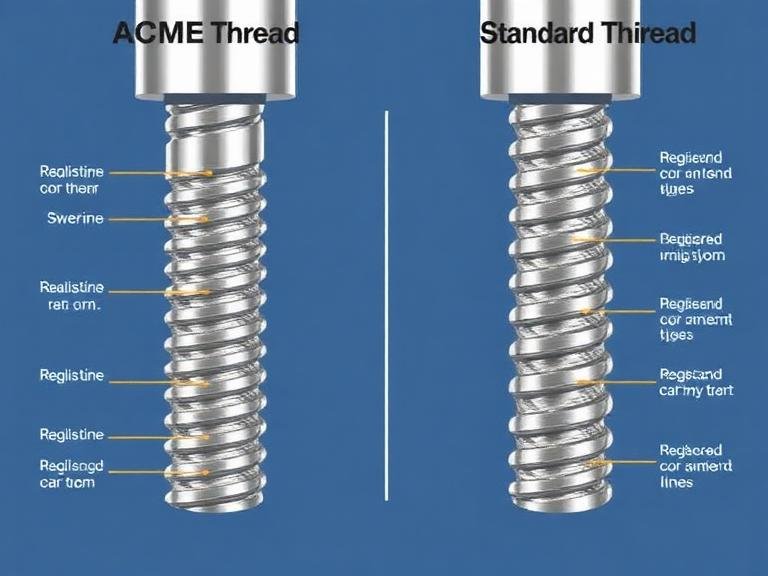
While both thread forms involve a helical ridge wrapped around a cylindrical core, their intended mechanical purposes are fundamentally divergent. Normal threads are engineered primarily for fastening components together, whereas ACME threads are engineered to translate rotational motion into linear motion. Recognizing the difference between ACME thread and normal thread is paramount for engineers, machinists, and procurement specialists to ensure mechanical integrity. In this comprehensive technical guide, we will analyze the geometric, functional, and manufacturing variations between these two essential thread forms.
Table of Contents
- Summary Table: ACME vs. Normal Thread Comparison
- What is a Normal Thread (V-Thread)?
- What is an ACME Thread?
- The Core Difference Between ACME Thread and Normal Thread
- Machining Considerations and Tooling Selection
- Expert Recommendations for Thread Machining
- Frequently Asked Questions (FAQs)
- References
Summary Table: ACME vs. Normal Thread Comparison
To provide immediate clarity, we have compiled a summary table highlighting the primary engineering parameters that define the difference between ACME thread and normal thread forms.
| Characteristic | Normal Thread (V-Thread / Metric / UN) | ACME Thread |
|---|---|---|
| Primary Function | Fastening and securing components. | Power transmission and linear motion. |
| Thread Profile Angle | 60 degrees. | 29 degrees. |
| Shape Geometry | V-shaped with sharp or slightly rounded crests. | Trapezoidal with flat crests and roots. |
| Friction Generation | High friction (prevents self-loosening). | Low friction (facilitates smooth movement). |
| Load Bearing Direction | High static axial load. | High dynamic axial load. |
| Manufacturing Complexity | Standard, highly accessible with standard taps. | Complex, requires specialized cutting tools. |
What is a Normal Thread (V-Thread)?
When industry professionals refer to a “normal thread,” they are typically speaking about the standard 60-degree V-thread. This category encompasses the Unified National (UN, UNC, UNF) system heavily utilized in North America, as well as the ISO Metric thread system utilized globally. The defining characteristic of a normal thread is its V-shaped profile, featuring an included angle of exactly 60 degrees between the flanks.
The primary engineering objective of a normal thread is fastening. The steep 60-degree angle wedges the mating threads tightly against one another when torque is applied. This wedging action creates immense internal friction, which is highly desirable for fasteners such as nuts, bolts, and screws, as it prevents the assembly from vibrating loose under dynamic mechanical stress. Because normal threads are ubiquitous, manufacturing them requires reliable, high-precision tools. For standard fastening applications, particularly in through-hole scenarios, we rely on the MSL001 Straight Flute Thread Tap and the MSL002 Straight Flute Thread Tap. These tools offer exceptional chip evacuation and pitch accuracy, making the creation of normal internal threads efficient and repeatable.
What is an ACME Thread?
Conversely, the ACME thread is a specialized trapezoidal thread form. Originating in the late 19th century as an improvement over the structurally weaker square thread, the ACME thread features a 29-degree included angle. Unlike the sharp peaks and valleys of a V-thread, the ACME thread boasts a broad, flat crest and a broad, flat root.
The primary purpose of an ACME thread is power transmission. Instead of locking components together, ACME threads are designed to smoothly translate rotational motion into heavy-duty linear motion. You will find ACME threads in lead screws of CNC lathes, heavy-duty lifting jacks, industrial valve stems, and C-clamps. The geometry is specifically designed to handle immense axial loads while minimizing the friction that would otherwise cause a normal thread to bind or gall under similar dynamic conditions.
The Core Difference Between ACME Thread and Normal Thread
To fully appreciate the difference between ACME thread and normal thread profiles, we must examine the physics of how forces interact along the thread flanks.
1. Flank Angle and Friction Dynamics
The most visually apparent difference between ACME thread and normal thread is the flank angle—29 degrees versus 60 degrees. The steep 60-degree angle of a normal thread acts like a wedge. As you tighten a bolt, the radial force pushes outward, creating high friction. This is perfect for a fastener that you want to remain permanently fixed. However, if you try to use a 60-degree thread to continuously move a heavy load (like a machine table), the wedging action causes severe friction, rapid heat generation, and accelerated mechanical wear.
The 29-degree angle of the ACME thread drastically reduces this radial wedging force. When torque is applied to turn an ACME lead screw, the force is directed much more linearly along the axis of the screw. This fundamental difference between ACME thread and normal thread physics allows the ACME mechanism to move heavy loads with significantly less rotational effort and far less wear on the mating nut.
2. Shear Strength and Root Thickness
Another crucial difference between ACME thread and normal thread lies in shear strength. The ACME thread features a wider base at the root compared to a standard V-thread of the same pitch. This broad trapezoidal base provides exceptional shear strength. From our experience, when subjected to extreme shock loads or heavy continuous axial forces, a normal thread is far more likely to strip or shear off entirely. The ACME thread’s robust root geometry distributes the mechanical stress over a wider cross-sectional area, making it the superior choice for heavy machinery.
3. Backlash and Clearances
In fastening (normal threads), tolerances are designed to be tight to maximize contact area and friction. In power transmission (ACME threads), a specific amount of clearance is necessary to allow for smooth movement, the retention of lubricating grease, and the expansion of metal due to thermal fluctuations. ACME threads are manufactured with precise allowances to accommodate these factors, representing a major difference between ACME thread and normal thread design philosophy.
Machining Considerations and Tooling Selection
Understanding the difference between ACME thread and normal thread is only half the battle; manufacturing them correctly requires distinct approaches to tooling. Machining a normal 60-degree thread is relatively straightforward. Because the chip load is distributed along the steep 60-degree flank, standard high-speed steel (HSS) or carbide taps can easily cut the profile in a single pass for most diameters.
When cutting normal threads in blind holes, where chip evacuation is critical to prevent tool breakage, we recommend utilizing the MSL037 Spiral Groove Tap. The spiral geometry draws the metal chips up and out of the hole, ensuring a clean, precise 60-degree thread profile without galling.
Machining an ACME thread, however, presents unique challenges. The flat crest and broad root mean that the cutting tool is engaged across a much wider surface area. This generates massive cutting forces and requires high-rigidity machine setups. From our experience, tapping an internal ACME thread often requires a set of tandem taps (rougher and finisher) because attempting to remove that much material in a single pass will inevitably bind the tool or tear the workpiece material. The complexity of the cutting operation is a significant difference between ACME thread and normal thread manufacturing protocols.
Expert Recommendations for Thread Machining
At MisolTap, we integrate decades of metallurgical research and cutting geometry optimization into our products. When deciding how to approach a threading operation, we recommend the following best practices:
- Analyze the Application: Never use a normal thread for power transmission, and avoid using an ACME thread as a static fastener. Recognizing the difference between ACME thread and normal thread applications will prevent catastrophic mechanical failures.
- Select the Right Tool for the Hole Type: For through-holes requiring standard fasteners, the MSL001 and MSL002 Straight Flute Thread Taps provide unmatched stability. For blind holes, always switch to a spiral groove configuration like the MSL037 Spiral Groove Tap.
- Utilize Proper Lubrication: The wide surface area of an ACME cutting tool generates high heat. We recommend using extreme-pressure (EP) tapping fluids rich in sulfur or chlorine when cutting ACME profiles, whereas standard synthetic coolants are often sufficient for cutting normal metric or UN threads.
- Monitor Tool Wear: Because ACME tools remove a larger volume of material per pitch, they wear faster. Regularly inspect the cutting edges of your trapezoidal tools to maintain the required strict tolerances.
Frequently Asked Questions (FAQs)
While physically possible to thread a nut onto an ACME screw, we recommend against using it for static fastening. The primary difference between ACME thread and normal thread friction dynamics means an ACME thread has very low holding power and is highly susceptible to vibrating loose under stress.
The 29-degree angle was selected as the optimal balance. It is steep enough to allow a split-nut to easily engage and disengage the screw (a common requirement in lathe lead screws) while being shallow enough to minimize radial friction and maximize power transmission efficiency.
From our experience, “strength” depends on the load direction. For static tension (pulling apart), normal threads perform exceptionally well due to the wedging action. However, for dynamic shear strength under continuous heavy axial loads, the broad root of the ACME thread is vastly superior.
Yes. As a leading manufacturer of high-performance thread cutting tools since 2005, MisolTap provides precision tools for normal threads, such as our MSL037 Spiral Groove Tap and MSL001 Straight Flute Thread Tap, alongside specialized solutions for trapezoidal and ACME profiles.
References
To ensure strict adherence to industrial standards, the geometric definitions and load-bearing physics discussed in this article are aligned with the following authoritative engineering resources:
- The American Society of Mechanical Engineers (ASME) – Standard B1.5 for ACME Screw Threads.
- National Institute of Standards and Technology (NIST) – Guidelines on Fastener Mechanics.
- International Organization for Standardization (ISO) – General Purpose Metric Screw Threads.
- MisolTap Internal Research & Development Data, 2026 Thread Machining Best Practices.