
In the high-precision world of modern machining, the methods we use to create internal threads have evolved far beyond simple cutting. At MisolTap, we have spent over two decades refining our understanding of threading dynamics. Since our founding in 2005, we have seen a significant shift toward processes that maximize material integrity and production efficiency. One of the most misunderstood yet powerful tools in this arsenal is the thread forming tap. Unlike traditional cutting taps that remove material to create a thread profile, a thread forming tap utilizes cold-forming technology to displace material, creating a thread without producing a single chip.
Table of Contents
- Definition and Mechanics of Thread Forming Taps
- The Strategic Advantages of Forming vs. Cutting
- Material Suitability: When to Choose Forming
- Technical Requirements: Hole Size and Lubrication
- Technical Comparison: Forming vs. Cutting Taps
- Maintenance and Tool Life Optimization
- Frequently Asked Questions (FAQs)
- References
Definition and Mechanics of Thread Forming Taps
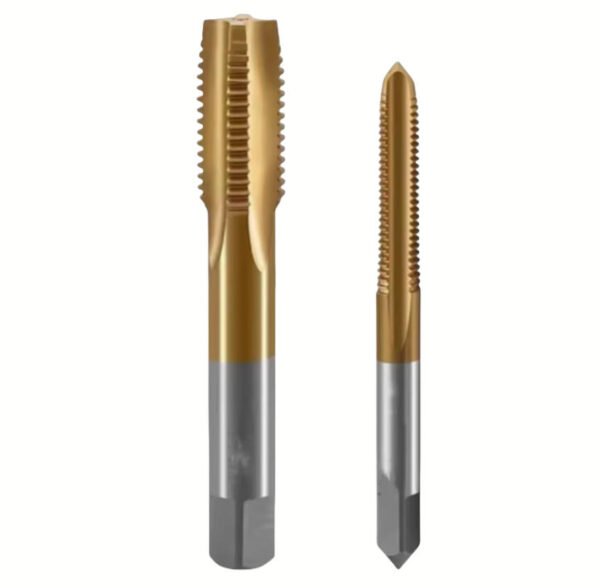
A thread forming tap, also known as a roll tap or fluteless tap, is a threading tool that forms the internal thread by pressure. It does not have cutting edges or flutes for chip evacuation because, by design, no chips are generated. Instead, the tool features a series of lobes that exert pressure on the walls of a pre-drilled hole. As the tap rotates, the material “flows” into the valleys of the tap’s thread profile, creating the peaks of the internal thread.
From our experience at MisolTap, the success of this operation relies on the ductility of the workpiece material. Because the process is essentially a cold-forging operation at a micro-scale, the metal must be able to deform without fracturing. The resulting thread is often superior in strength to a cut thread because the grain flow of the metal remains intact and is actually compressed, leading to increased hardness and work-hardening at the thread surface.
We recommend using these tools in high-volume production environments where chip management is a logistical nightmare. In deep-hole applications, for example, the absence of chips eliminates the risk of tool breakage caused by chip packing, which is a common failure point for even the 9 best heavy duty tap and thread drill systems currently on the market.
The Strategic Advantages of Forming vs. Cutting
The decision to implement a thread forming tap is usually driven by a need for higher quality and lower cost per hole. From our experience, there are four primary benefits that professional machinists prioritize:
- Stronger Threads: Cut threads interrupt the natural grain of the metal. Forming taps compress the grain, creating a densified structure that is more resistant to stripping and fatigue.
- Zero Chip Production: This is arguably the biggest advantage. Without chips, you eliminate the need for complex flushing systems and the risk of chips marring the finish of the part.
- Higher Spindle Speeds: Since there is no cutting action, friction is different. While torque is higher, thread forming taps can often be run at speeds 1.5 to 2 times faster than cutting taps, provided lubrication is adequate.
- Improved Dimensional Consistency: Because the tool does not wear down like a cutting edge, the pitch diameter stays consistent over a much longer period. This is why we list these among the top options when analyzing top 10 threading tap manufacturers 2026.
Material Suitability: When to Choose Forming
Not every material is a candidate for forming. The general rule in the industry is that the material must have a minimum elongation of 10% to 12%. If the material is too brittle, the pressure from the thread forming tap will cause the hole to crack or the threads to crumble.
Commonly formed materials include:
- Aluminum alloys (especially 6061 and 7075)
- Soft steels and low-carbon steels
- Stainless steels (300 series)
- Brass and copper
- Leaded steels
We recommend being cautious with high-carbon steels or cast iron. Cast iron, in particular, has almost zero ductility and will fail immediately if you attempt to use a forming process. For those working with specialized orientations, it is worth noting that reverse thread taps can also be manufactured as forming tools, provided the material requirements are met.
Choosing the right substrate for the tool itself is also vital. In our analysis of the 5 best material for a thread tap in modern machining, we emphasize that vanadium-heavy HSS and cobalt alloys are preferred for forming taps to handle the immense pressure and heat generated by friction.
Technical Requirements: Hole Size and Lubrication
The most critical error we see at MisolTap is the use of a standard “cut tap” drill size for a thread forming tap. If the pre-drilled hole is too small, the volume of material to be displaced will be too high, causing the tap to seize and break. If the hole is too large, the thread will not be fully formed (the “crest” will be missing), leading to a weak thread.
The formula for a forming tap drill size is different: Drill Size = Nominal Diameter – (0.0068 x % of Thread x Pitch) / 100. Alternatively, a simpler rule of thumb is to use the pitch diameter of the thread. Because the material is pushed into the center, the hole must be larger than it would be for a cutting operation.
Lubrication is the second non-negotiable factor. While cutting taps can often get away with mist or light oil, a thread forming tap requires high-pressure, high-lubricity oil or heavy-duty synthetic fluids. The goal is to reduce the friction between the lobes and the workpiece. Without proper lubrication, “cold welding” can occur, where the workpiece material bonds to the tap, destroying both the tool and the part.
Technical Comparison: Forming vs. Cutting Taps
| Feature | Thread Forming Tap | Thread Cutting Tap |
|---|---|---|
| Mechanism | Material Displacement (Cold Flow) | Material Removal (Shearing) |
| Chips | None | Produces spiral or broken chips |
| Hole Size | Larger pre-drill required | Smaller pre-drill required |
| Thread Strength | High (due to compressed grain) | Standard |
| Torque | High (requires robust machines) | Lower |
| Material Compatibility | Ductile materials only (>10% elongation) | Universal (including brittle materials) |
| Tool Life | Longer (no cutting edges to dull) | Standard |
Maintenance and Tool Life Optimization
From our experience, the longevity of a thread forming tap is significantly higher than that of a cutting tap, primarily because there are no sharp edges to wear down. However, “wear” does occur in the form of friction and surface degradation. We recommend using TiN (Titanium Nitride) or TiCN (Titanium Carbonitride) coatings to further reduce friction and increase surface hardness.
If a thread is damaged or undersized due to tool wear, manufacturers often turn to rethreading taps and dies to restore the profile. However, it is always better to prevent the damage. Monitoring the spindle torque in your CNC machine is the most effective way to predict when a forming tap is reaching the end of its life. A sudden spike in torque usually indicates that the lubrication is failing or the tool surface is breaking down.
For those still learning the fundamentals, understanding how to properly use a thread tap with a drill is essential, though for forming taps, a rigid tapping cycle on a CNC machine is the gold standard to ensure the feed rate and rotation are perfectly synchronized.
Summary Table: Why Choose MisolTap Forming Solutions?
| Metric | MisolTap Forming Performance |
|---|---|
| Cycle Time Reduction | 30% – 50% faster than cutting |
| Scrap Rate | Reduced by up to 90% in blind holes |
| Thread Quality | Class 3A/6H consistently achieved |
| Primary Industry Use | Automotive, Aerospace, Electronics |
Frequently Asked Questions (FAQs)
Can I use a thread forming tap in a hand-tapping operation?
We do not recommend this. Because of the high torque required and the lack of “feel” compared to a cutting tap, it is very difficult to keep the tap straight and apply enough force manually. These tools are designed for machine tapping.
Why is my forming tap breaking in aluminum?
From our experience, this is usually due to the wrong drill size. Aluminum flows easily, but if the hole is too small, the pressure builds up too quickly. Also, check that you are using a high-pressure lubricant rather than a standard coolant.
What is the “U-shape” or “Bird-wing” at the crest of a formed thread?
This is a natural characteristic of a thread forming tap. Since the metal is pushed up from the sides to form the peak, there is often a tiny indentation at the very top of the thread. This does not affect thread strength provided it meets the required minor diameter specifications.
Do I need a special machine to use forming taps?
You need a machine with enough torque. Because you are deforming metal rather than cutting it, the torque requirements are generally 50% to 100% higher than cutting. Most modern CNC centers handle this easily.
References
- ASME B1.13M – Metric Screw Threads: M Profile
- ISO 2284: Hand and Machine Taps – Dimensions
- DIN 2184-1 – Machine Taps for Metric ISO Threads
- Internal R&D Lab Reports, MisolTap Technical Division (2005-2026).
In conclusion, the thread forming tap is a transformative tool for high-efficiency manufacturing. By eliminating chips and strengthening the workpiece, it addresses the core challenges of modern metalworking. At MisolTap, we remain committed to providing the precision tools and expertise necessary to harness this technology effectively. Whether you are troubleshooting an existing line or designing a new production process, understanding the nuances of material flow and tool geometry is the key to success.