
Since our founding in 2005, MisolTap has established itself as a leading Chinese manufacturer of high-performance thread cutting tools. We integrate R&D, production, and global sales into a seamless operation, providing our clients with robust and precise threading solutions tailored to modern manufacturing needs. Among the highly specialized tools required in complex engineering environments, Reverse Thread Taps stand out as critical components for ensuring mechanical stability in rotary applications. Unlike standard right-hand taps, Reverse Thread Taps cut threads that tighten counter-clockwise, a feature that prevents mechanical loosening under specific torque conditions.
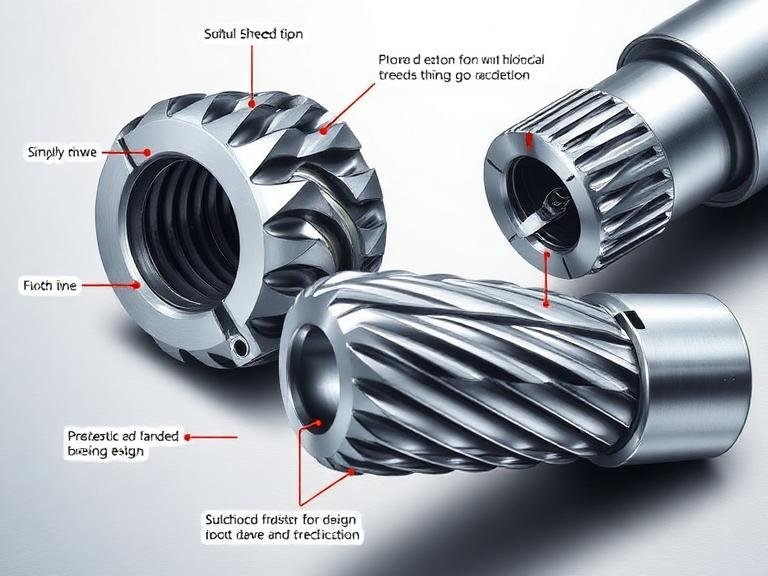
From our experience supplying tier-one automotive and aerospace manufacturers, understanding the precise characteristics, material requirements, and operational applications of Reverse Thread Taps is non-negotiable for production engineers. The utilization of these specialized tools requires rigorous attention to cutting parameters, chip evacuation strategies, and standard compliance. In this comprehensive technical guide, we detail the engineering principles behind Reverse Thread Taps, explore their critical industrial applications, and provide guidance on selecting the appropriate standards for your machining operations.
Table of Contents
- Summary Table: Reverse Thread Tapss Applications and Standards
- The Engineering Mechanics of Reverse Thread Tapss
- Fundamental Characteristics of Reverse Thread Tapss
- Critical Industrial Applications
- Choosing the Right Standard: DIN371, JIS, and ISO-529
- The MisolTap Manufacturing Advantage
- Frequently Asked Questions (FAQs)
- References
Summary Table: Reverse Thread Tapss Applications and Standards
To assist tooling engineers and procurement specialists, we have compiled a summary table linking common industrial applications of Reverse Thread Tapss with our highly recommended tool standards.
| Industrial Application | Mechanical Requirement | Recommended Thread Tap Standard | Material Suitability |
|---|---|---|---|
| Automotive Rotating Assemblies | Prevention of wheel stud/axle loosening | DIN371 Thread Tap | Alloy Steels, Cast Iron |
| Gas & Fluid Valves | Safety differentiation for combustible gases | IOS-529 Thread Tap | Brass, Bronze, Stainless Steel |
| Consumer Electronics | Micro-fastening in left-side rotating hubs | JIS Thread Tap | Aluminum, Magnesium Alloys |
| Tensioning Turnbuckles | Opposing thread mechanics for linear tension | DIN371 Thread Tap | Carbon Steel, Structural Steel |
The Engineering Mechanics of Reverse Thread Tapss
In mechanical engineering, fasteners are predominantly right-handed, meaning they tighten when rotated clockwise. However, rotational forces generated by moving machinery can exert unintentional torque on standard fasteners, causing them to loosen over time. To counteract this phenomenon, engineers utilize Reverse Thread Tapss to create left-hand threads. When a left-hand threaded fastener is subjected to counter-clockwise rotational friction, the forces actually cause the fastener to tighten rather than back out.
When operating Reverse Thread Tapss, the CNC spindle must be programmed to rotate in a counter-clockwise direction (M04 in standard G-code) during the cutting feed, and clockwise (M03) during retraction. We recommend that machinists thoroughly verify their CAM programming before initiating a cutting cycle, as deploying Reverse Thread Tapss with standard right-hand spindle rotation will instantly fracture the cutting edges and potentially damage the workpiece.
Fundamental Characteristics of Reverse Thread Tapss
The manufacturing and geometry of Reverse Thread Tapss are highly specialized. At MisolTap, we engineer these tools with precise rake angles and relief geometries optimized specifically for left-hand chip evacuation. Understanding these characteristics allows operators to optimize tool life and thread quality.
1. Flute Geometry and Chip Evacuation
The flute design of Reverse Thread Tapss dictates how swarf (cutting debris) is managed. Spiral point Reverse Thread Tapss are engineered to push chips forward, making them ideal for through-holes. Conversely, spiral flute Reverse Thread Tapss pull chips upward and out of the hole, which is strictly required for blind-hole applications. Due to the reversed cutting direction, the helix angle of a spiral flute left-hand tap is inverted compared to a standard tap.
2. Material Composition and Substrate
Because Reverse Thread Tapss are frequently deployed in heavy-duty applications involving hardened alloys, the base material of the tap is critical. We manufacture our Reverse Thread Tapss using premium High-Speed Steel with Cobalt (HSS-E) and micro-grain solid carbide. The addition of cobalt increases the tool’s red hardness, allowing the tap to maintain its cutting edge integrity at elevated temperatures.
3. Advanced Surface Coatings
From our experience, applying physical vapor deposition (PVD) coatings to Reverse Thread Tapss significantly reduces friction and extends tool life. Coatings such as Titanium Nitride (TiN) or Titanium Carbonitride (TiCN) prevent built-up edge (BUE) when tapping softer, gummy materials like aluminum, while Titanium Aluminum Nitride (TiAlN) is recommended for high-temperature cutting in stainless steels and exotic alloys.
Critical Industrial Applications
The implementation of Reverse Thread Tapss spans several critical sectors where safety and mechanical reliability are paramount. Below are the primary industrial environments where these tools are indispensable.
Automotive and Heavy Machinery
In the automotive industry, parts located on the left side of a vehicle, such as specific wheel studs or bicycle left pedals, are subjected to forward-rolling friction. If right-hand threads were used, the rotational force would gradually unthread the fastener. Utilizing Reverse Thread Tapss to machine the internal threads for these components ensures that the forward motion of the vehicle continuously applies a tightening torque to the assembly.
Gas Storage and Combustible Fluid Handling
Safety regulations demand that fittings for combustible gases (such as acetylene, propane, or hydrogen) use left-hand threads, while non-combustible gases (like oxygen or argon) use right-hand threads. This strict industry standard prevents the accidental connection of a combustible gas cylinder to an incompatible system. Machining these specialized valves requires high-precision Reverse Thread Tapss to guarantee a perfect, leak-proof seal.
Turnbuckles and Linear Tensioning
Turnbuckles are mechanical devices used to adjust the tension or length of ropes, cables, and tie rods. A turnbuckle consists of a metal frame with internal threads at both ends—one right-handed and one left-handed. By turning the central frame, both threaded rods are drawn inward simultaneously. Manufacturing the left-hand side of this tensioning device relies exclusively on robust Reverse Thread Tapss to ensure symmetrical load-bearing capacity.
Choosing the Right Standard: DIN371, JIS, and ISO-529
Selecting the correct standard for your Reverse Thread Tapss is vital for ensuring compatibility with your CNC toolholders, collets, and the dimensional requirements of your workpiece. MisolTap produces tools across all major global standards to serve our international clientele.
The DIN371 Thread Tap
The DIN371 Thread Tap is characterized by its reinforced shank, which is thicker than the thread diameter. We highly recommend the DIN371 standard for Reverse Thread Tapss in sizes M10 and below. The reinforced shank provides superior rigidity and vibration dampening during the machining process, making it the preferred choice for high-speed automated CNC operations in European and global manufacturing facilities.
The JIS Thread Tap
The Japanese Industrial Standard (JIS) defines specific shank dimensions and square drive sizes that differ slightly from European and American standards. A JIS Thread Tap is strictly required when supplying parts or utilizing machinery built for the Asian automotive and electronics markets. Our JIS-compliant Reverse Thread Tapss offer exceptional precision and are tailored for seamless integration into Japanese-engineered machining centers.
The IOS-529 Thread Tap
The IOS-529 Thread Tap (ISO 529) represents the globally recognized standard for short machine and hand taps. This standard features a reduced shank for sizes above M10, allowing the tap to cut deep threads beyond its own thread length. When a facility requires versatile Reverse Thread Tapss that can be utilized in both manual maintenance operations and general-purpose machine tapping, the IOS-529 standard is our foremost recommendation.
The MisolTap Manufacturing Advantage
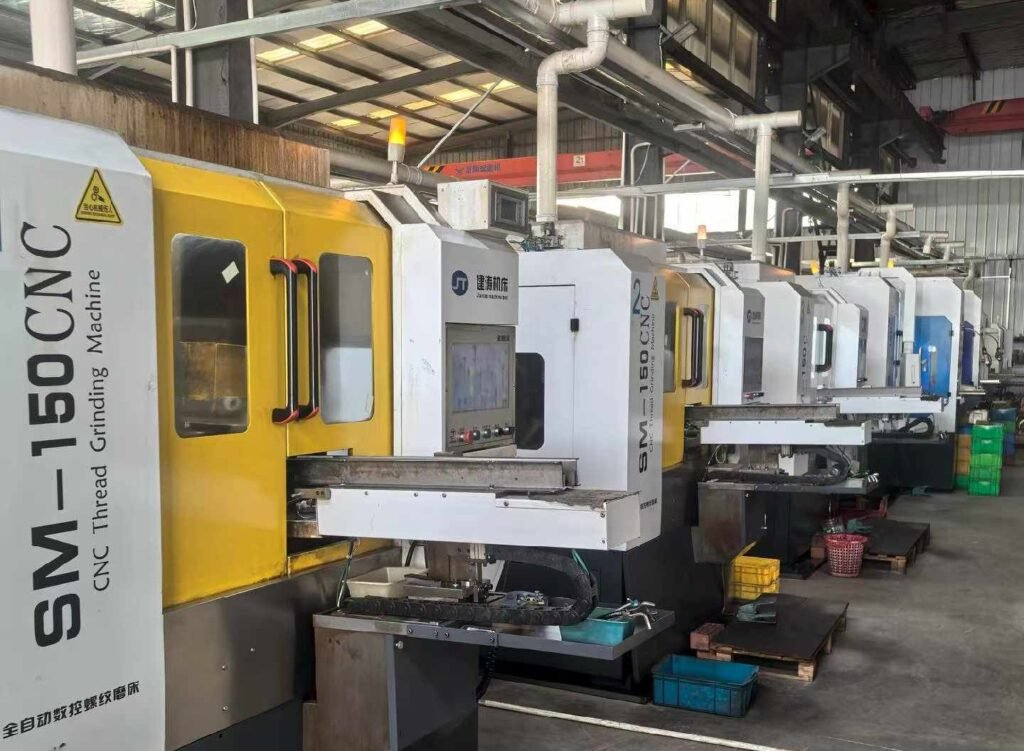
Since 2005, MisolTap has relentlessly pursued perfection in threading technology. Producing high-quality Reverse Thread Tapss requires sophisticated CNC grinding machines capable of extreme precision. We grind our taps from solid, pre-hardened blanks rather than milling them before heat treatment. This methodology eliminates heat-induced distortion, ensuring that the pitch diameter, flank angle, and relief geometry of our Reverse Thread Tapss meet the strictest Class 6H and 6G tolerance specifications.
Our integration of R&D, production, and global sales allows us to respond rapidly to complex engineering challenges. Whether you require a custom DIN371 Thread Tap for a high-volume automotive line or a specialized JIS Thread Tap for aerospace components, MisolTap provides the technical expertise and manufacturing capacity to optimize your thread cutting operations.
Frequently Asked Questions (FAQs)
How can I visually identify Reverse Thread Tapss?
Reverse Thread Tapss are typically laser-etched or stamped with the letters “LH” (Left Hand) alongside their thread size designation (e.g., M8 x 1.25 LH). Additionally, upon close inspection, you will notice that the threads spiral upward to the left, opposite to a standard right-hand tap.
Do I need a special tapping cycle on my CNC machine to use Reverse Thread Tapss?
Yes. You must program your CNC machine for a left-hand tapping cycle. This typically involves using a specific G-code (such as G74 instead of G84 on Fanuc controls) which starts the spindle in reverse (counter-clockwise) to feed into the hole, and then rotates clockwise to retract.
Which cutting fluid should be used with Reverse Thread Tapss?
From our experience, the cutting fluid used for Reverse Thread Tapss is the same as that used for standard taps, depending entirely on the workpiece material. We recommend high-lubricity cutting oils for alloy steels and heavy-duty emulsions for aluminum to prevent chip welding.
Why should I choose a DIN371 Thread Tap over an IOS-529 Thread Tap?
We recommend the DIN371 Thread Tap for sizes up to M10 because its reinforced shank provides greater rigidity, minimizing the risk of tap breakage under high torque. The IOS-529 Thread Tap is more versatile for deeper holes or manual operations due to its reduced shank design.