
In the realm of fluid power, mechanical assembly, and piping systems, one of the most critical design decisions an engineer must make involves the selection of connection types. The debate between tapered thread vs straight thread is not merely a matter of preference, but a fundamental choice that dictates how a joint will achieve its seal, withstand pressure, and maintain structural integrity over its operational lifespan. Choosing the wrong thread geometry can lead to catastrophic leaks, mechanical failure, or severe equipment damage.
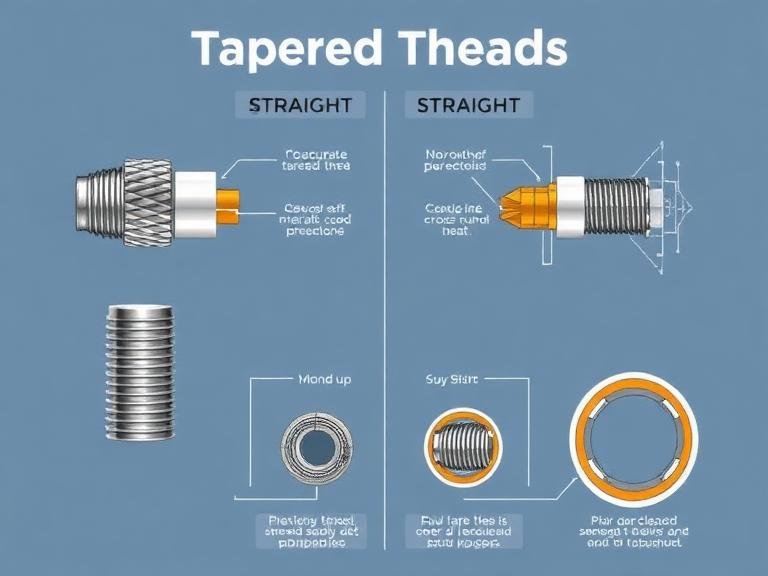
Understanding the precise mechanical differences in the tapered thread vs straight thread equation requires a deep dive into how these threads interact at a microscopic level. A tapered thread utilizes a wedging action to create a seal directly along the flanks of the threads themselves. Conversely, a straight thread runs parallel and relies on an external sealing mechanism, such as an O-ring or a crush washer, to prevent fluid or gas from escaping. In this authoritative guide, we will explore the technical nuances of the tapered thread vs straight thread comparison, offering industry-backed insights to help you specify the correct tooling and threading standards for your manufacturing projects.
Table of Contents
- 1. What is a Straight Thread?
- 2. What is a Tapered Thread?
- 3. Sealing Mechanisms: Tapered Thread vs Straight Thread
- 4. Manufacturing and Tooling Considerations
- 5. Expert Recommendations from MisolTap
- 6. Summary Table: Tapered vs Straight
- 7. Frequently Asked Questions (FAQs)
- 8. References
1. What is a Straight Thread?
Straight threads, often referred to as parallel threads, maintain a constant diameter along the entire length of the threaded portion of the fitting or fastener. When you measure the outside diameter at the beginning of the thread and at the end of the thread, the measurement is identical. Common examples of straight thread standards include Unified National Coarse (UNC), Unified National Fine (UNF), and British Standard Pipe Parallel (BSPP).
In the context of the tapered thread vs straight thread discussion, it is vital to understand that straight threads are primarily designed for holding power rather than sealing power. When a straight male thread is engaged with a straight female thread, there remains a slight spiral clearance between the crests and roots of the mating threads. If fluid or gas is introduced under pressure, it will easily travel up this spiral leak path. Therefore, straight threads strictly require a secondary sealing element. This is usually accomplished with a soft elastomer O-ring (such as in SAE straight thread O-ring boss fittings), a bonded seal, or a soft metal crush washer.
2. What is a Tapered Thread?
Tapered threads are engineered with a specific angle, meaning the diameter of the thread gradually decreases toward the end of the fitting. The most ubiquitous standard in North America is the National Pipe Tapered (NPT) thread, which features a taper rate of 1 inch in 16 inches (or a 1 degree 47 minute angle). Internationally, the British Standard Pipe Tapered (BSPT) is highly common. In the tapered thread vs straight thread analysis, this geometry is what fundamentally changes the functionality of the joint.
As a tapered male thread is driven into a tapered female thread, the threads wedge tightly together. The flanks of the threads compress against one another, causing an interference fit. This metal-to-metal wedging action is what creates the seal, theoretically eliminating the spiral leak path found in parallel threads. However, because machining tolerances are rarely absolute perfection, microscopic voids can still exist at the roots and crests. Thus, thread sealants like PTFE tape or liquid pipe dope are typically required to fill these microscopic gaps and lubricate the threads to prevent galling during assembly.
3. Sealing Mechanisms: Tapered Thread vs Straight Thread
When comparing tapered thread vs straight thread, the sealing mechanism is the primary differentiator that engineers must evaluate based on the application’s pressure, vibration, and fluid type.
Straight Thread Sealing Dynamics
Straight threads excel in high-pressure hydraulic systems where repetitive assembly and disassembly are required. Because the seal is formed by compressing an O-ring against a machined chamfer or face, the threads themselves do not endure the stress of creating the seal. This means you can torque a straight thread fitting multiple times without wearing out or deforming the metal threads. From our experience, if a machine requires frequent maintenance and part swapping, the straight thread is infinitely superior. The downside is that the mating surface must be machined perfectly flat and smooth to ensure the O-ring seals properly, which adds to the manufacturing complexity and cost of the base component.
Tapered Thread Sealing Dynamics
Tapered threads are heavily favored in plumbing, pneumatic systems, and low-to-medium pressure industrial fluid lines. The advantage is that the seal is built directly into the thread design, eliminating the need for delicate O-rings that can degrade over time due to heat or chemical exposure. However, in the debate of tapered thread vs straight thread, the tapered design has a severe limitation regarding reusability. Each time a tapered fitting is tightened, the metal deforms slightly to create the seal. Overtightening can easily crack female cast iron or aluminum ports. Furthermore, repeated assembly and disassembly will eventually wear down the threads, leading to inevitable leaks.
4. Manufacturing and Tooling Considerations
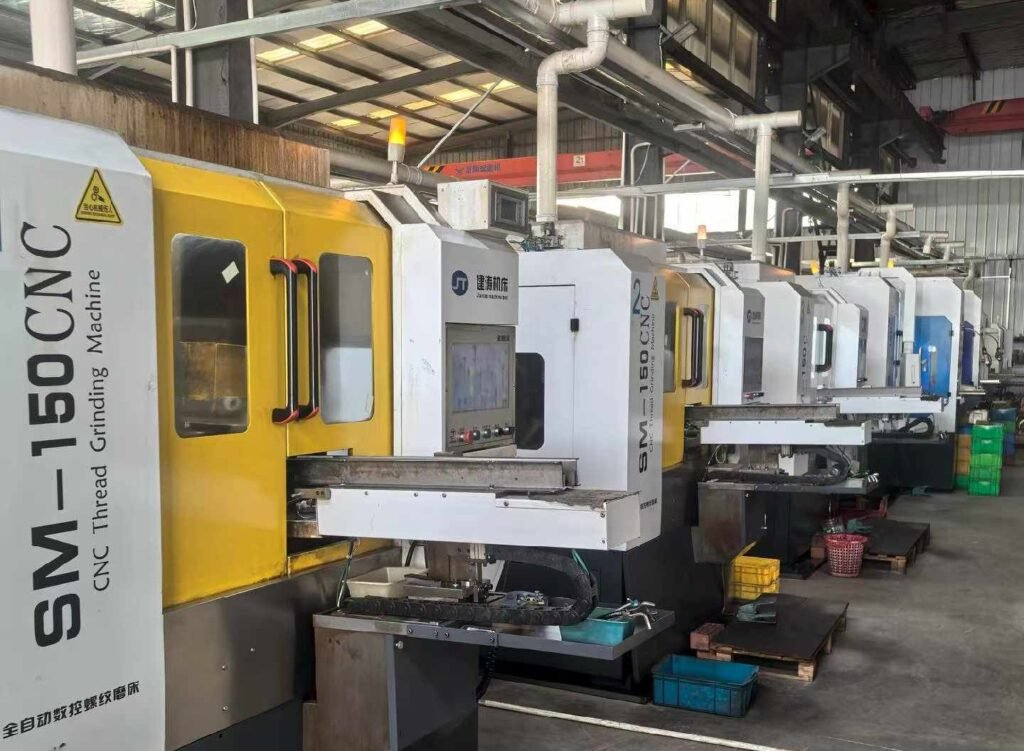
As a leading Chinese manufacturer of high-performance thread cutting tools, MisolTap understands that the manufacturing process differs significantly depending on the thread type chosen. The cutting forces, chip evacuation strategies, and tap geometries must be carefully selected when navigating the tapered thread vs straight thread tooling requirements.
Cutting a straight thread is generally straightforward, allowing for high-speed tapping operations. For these applications, we highly recommend our core straight flute products. The MSL001 Straight Flute Thread Tap is engineered for exceptional rigidity and is ideal for short chipping materials like cast iron or brass. For general purpose straight thread tapping in through-holes, the MSL002 Straight Flute Thread Tap provides reliable, consistent performance, pushing chips efficiently ahead of the tool to prevent binding.
Conversely, machining blind holes or tough materials requires specialized geometry. When tackling the complexities of high-precision straight threading in blind holes, the MSL037 Spiral Groove Tap is unmatched. The spiral flutes are designed to pull the chips up and out of the hole, preventing chip packing at the bottom, which is a leading cause of tap breakage. While tapered threads require specific pipe taps that cut progressively harder as they enter the hole, utilizing our high-grade cutting tools ensures that whether you are machining tapered or straight profiles, the thread flanks remain clean, precise, and burr-free.
5. Expert Recommendations from MisolTap
The choice between tapered thread vs straight thread should never be left to chance. From our experience working with global manufacturers across the automotive, aerospace, and heavy machinery sectors, we recommend adhering to the following guidelines:
- We recommend straight threads with O-ring boss seals for all high-pressure hydraulic systems exceeding 3,000 PSI. The dynamic sealing properties of an O-ring far exceed the static wedging of a tapered thread under high hydrostatic shock.
- We recommend tapered threads for permanent or semi-permanent installations in water, air, or low-pressure chemical lines where space is tight and integrating a flat mating surface for a crush washer is not geometrically feasible.
- From our experience, always use a high-quality thread cutting fluid regardless of your choice in the tapered thread vs straight thread debate. Proper lubrication during the tapping process directly translates to better thread finish, which is paramount for preventing leaks.
- When machining straight threads in blind holes, we recommend upgrading from standard straight flutes to our MSL037 Spiral Groove Tap to drastically reduce cycle times and minimize tool breakage.
6. Summary Table: Tapered vs Straight
| Feature | Straight Thread | Tapered Thread |
|---|---|---|
| Diameter | Constant from end to end | Decreases toward the tip |
| Sealing Method | O-ring, gasket, or crush washer | Interference fit of the threads (plus sealant) |
| Reusability | Excellent; threads do not deform | Poor; threads deform upon tightening |
| Common Standards | UNF, UNC, BSPP, SAE ORB | NPT, NPTF, BSPT |
| Primary Application | High-pressure hydraulics, mechanical fastening | Plumbing, pneumatics, low-pressure fluids |
| Risk of Overtightening | Low (if torque specs are followed) | High (can crack the female port housing) |
7. Frequently Asked Questions (FAQs)
Can you mix tapered thread and straight thread fittings?
From our experience, mixing thread types is a major engineering violation. Threading an NPT male fitting into a BSPP or straight female port will result in a severely compromised connection. Only one or two threads will engage, leading to guaranteed leaks and likely thread stripping under pressure. Always match tapered with tapered, and straight with straight.
Do straight threads require thread sealant tape?
No. In the tapered thread vs straight thread comparison, straight threads rely entirely on a secondary seal like an O-ring. Applying PTFE tape to a straight thread will not create a seal and can actually interfere with the proper seating of the O-ring or gasket, leading to leaks.
Which is better for high-vibration environments: tapered thread vs straight thread?
We recommend straight threads with an O-ring seal for high-vibration applications. Tapered threads can slowly back out and lose their interference seal under heavy vibration, whereas a properly torqued straight thread with an elastomeric seal maintains fluid integrity even when subjected to mechanical resonance.