
Since our founding in 2005, MisolTap has established itself as a leading Chinese manufacturer of high-performance thread cutting tools. We integrate R&D, production, and global sales into a seamless operation, providing our clients with robust and precise threading solutions tailored to modern manufacturing needs.
In the world of precision machining and metal fabrication, cutting internal threads is a process where the margin for error is virtually zero. A broken tap inside a costly workpiece can halt production, waste expensive raw materials, and necessitate complex EDM (Electrical Discharge Machining) extraction. When determining the best approach for threading, engineers and machinists are constantly faced with the debate of Manual vs. machine tapping. From our experience, choosing the wrong method for your specific application is the fastest route to tooling failure.
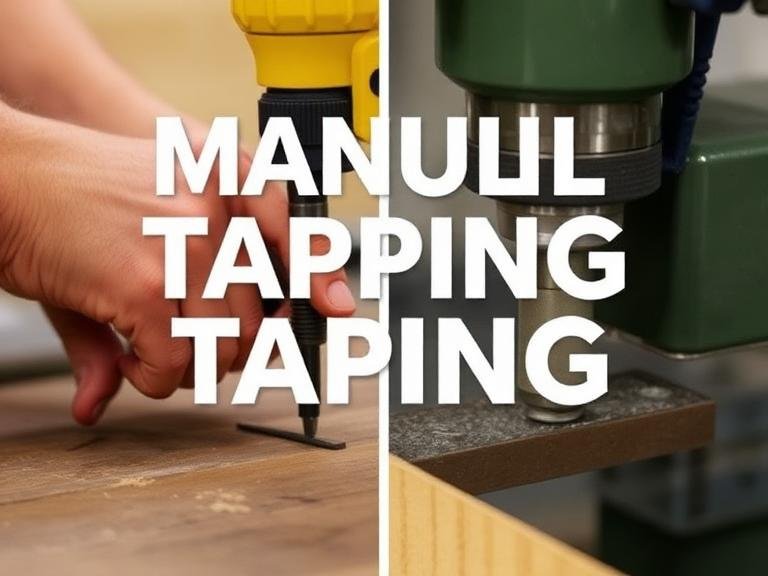
We hold a firm, opinionated stance on this topic: If you are running a high-volume production line and relying on manual tapping, you are bleeding money and compromising consistency. Conversely, if you attempt to set up a rigid CNC tapping cycle for a highly sensitive, one-off field repair on a vintage engine block, you are overcomplicating the task. Both methods possess distinct engineering advantages, strict limitations, and unique safety protocols. As an industry-leading manufacturer, MisolTap has engineered tools for both extremes. In this comprehensive guide, we will dissect the Manual vs. machine tapping debate, outlining the pros, cons, and essential safety tips you need to know to optimize your machining operations.
Table of Contents
- Summary Table: Manual vs. Machine Tapping Compared
- Manual Tapping: Pros, Cons, and When to Use It
- Machine Tapping: The Future of High-Volume Production
- Expert Tool Selection and Core Hole Preparation
- Critical Safety Tips for Threading Operations
- Frequently Asked Questions (FAQs)
- Industry References
Summary Table: Manual vs. Machine Tapping Compared
Before diving into the detailed engineering mechanics, it is crucial to understand the high-level distinctions between these two threading approaches. We have compiled a summary table to give you an immediate overview of Manual vs. machine tapping capabilities.
| Characteristic | Manual Tapping | Machine Tapping |
|---|---|---|
| Speed and Efficiency | Very slow; labor-intensive | Extremely fast; automated and highly efficient |
| Tactile Feedback | Excellent; machinist can “feel” the chip load | None; relies entirely on programmed torque limits |
| Consistency | Prone to human error (off-axis threading) | Flawless repeatability and strict axial alignment |
| Tooling Type Used | Hand taps (taper, plug, bottoming sets) | Spiral point, spiral flute, form taps |
| Setup Time | Instant; requires minimal fixturing | High; requires programming, fixturing, and testing |
| Best Application | Maintenance, repair, very low-volume runs | Mass production, tough alloys, blind holes |
Manual Tapping: Pros, Cons, and When to Use It
Manual tapping involves securing the workpiece in a vise and using a T-handle or straight tap wrench to manually drive the cutting tool into the pre-drilled core hole. Despite the rapid advancement of CNC technology, hand tapping remains an indispensable skill in the fabrication world.
The Advantages of Hand Tapping
The single greatest advantage of manual tapping is tactile feedback. A seasoned machinist can feel the exact moment the tap begins to bind or when the chip load becomes too heavy. This allows the operator to reverse the tap—usually a half-turn backward—to break the chip before catastrophic tool failure occurs. This sensitivity is paramount when repairing damaged threads in expensive, pre-existing components. In scenarios where a bolt has sheared off, machinists often rely on specialized tools like reverse thread taps to simultaneously cut new threads and extract the broken fastener.
Furthermore, manual tapping is incredibly flexible. You do not need to write G-code, set up a complex tool carousel, or utilize expensive workholding fixtures. If a maintenance technician needs to tap a single hole on a heavy piece of machinery that cannot be moved to a milling machine, manual tapping is the only logical solution.
The Disadvantages and Risks
From our experience, the primary flaw of manual tapping is maintaining perfect perpendicularity. If the tap enters the hole even slightly off-axis, the resulting threads will be oversized, cross-threaded, or structurally compromised. Human error is inevitable over long production runs. Additionally, the process is painstakingly slow. If your job requires threading hundreds of holes in a steel plate, manual tapping will destroy your profitability and subject your operators to severe repetitive strain injuries.
Machine Tapping: The Future of High-Volume Production
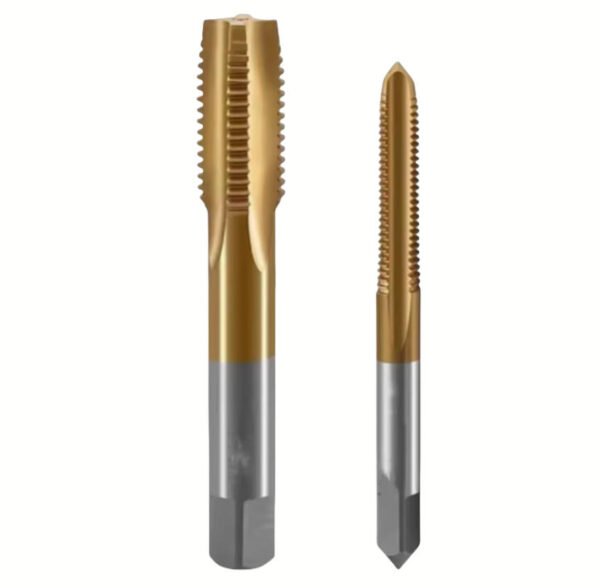
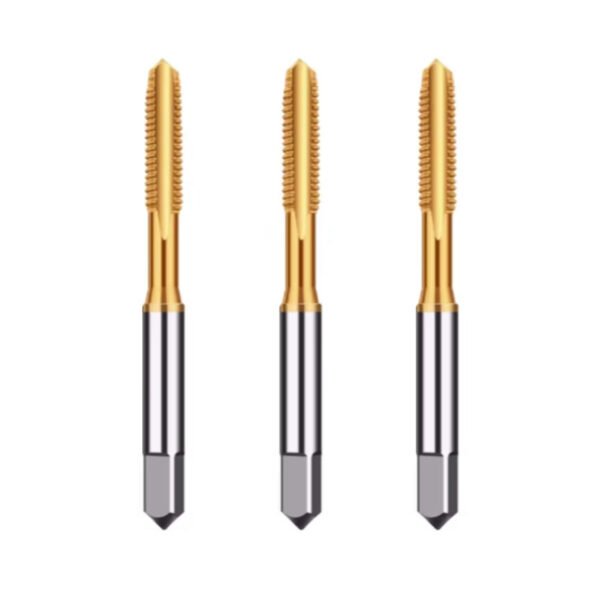
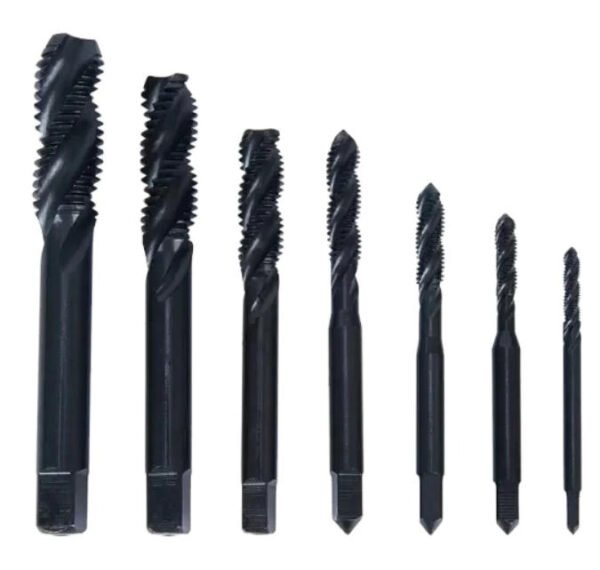
When we discuss the Manual vs. machine tapping debate in a modern manufacturing context, machine tapping is the undisputed heavyweight champion. This process utilizes lathes, milling machines, drill presses, or dedicated tapping arms to drive the tap. With the advent of rigid tapping cycles in modern CNC controllers, the machine precisely synchronizes the spindle rotation with the Z-axis feed rate, perfectly matching the thread pitch.
The Advantages of CNC and Drill Press Tapping
Machine tapping eliminates the variable of human error. Every single thread is cut perfectly concentric to the core hole, ensuring a Class 2B or 3B fit every single time. This is absolutely critical in highly regulated industries. For example, when cutting complex geometries for delicate electronic enclosures, such as those required by advanced PCBA Assembly Services, the consistency and axial rigidity of machine tapping are absolutely non-negotiable.
Furthermore, machine tapping allows for the use of advanced tool geometries. Spiral point taps (gun taps) shoot the chips forward ahead of the tool, making them perfect for high-speed through-hole machine tapping. Spiral flute taps draw the chips up and out of the hole, which is mandatory for deep blind holes. Form tapping, which displaces metal rather than cutting it, is only possible with the immense, controlled torque provided by machine spindles. To handle these demands, you must utilize a heavy duty tap and drill combination specifically engineered for high RPMs and aggressive feed rates.
The Drawbacks
The main drawback of machine tapping is the lack of “feel.” If a chip packs the flute or the material work-hardens unexpectedly, the spindle will not hesitate; it will simply snap the tap. To mitigate this, advanced tapping heads use tension-compression float or torque-limiting clutches. Additionally, the initial setup cost is high, requiring expensive collets, tapping fluids, and precise programming.
Expert Tool Selection and Core Hole Preparation
Regardless of where you stand on the Manual vs. machine tapping spectrum, your results will only be as good as your core hole preparation and your tool selection. A tap cannot fix a poorly drilled hole. We highly recommend paying strict attention to your drilling speed for metal. If you drill too fast, you risk work-hardening the walls of the hole, particularly in stainless steel or titanium, which will immediately destroy your tap upon entry.
Sizing is another critical factor where operators frequently fail. If you are cutting National Pipe Taper (NPT) threads, the margin for error is razor-thin because the threads must create a fluid-tight seal. We advise every machinist to consult a reliable pipe thread tap size chart before making any chips. Even minor deviations, such as using the wrong pre-drill for a 3/8 pipe thread tap size, will result in truncated thread crests and inevitable leakage under pressure.
When selecting your tools, do not cut corners. As one of the premier thread tap manufacturers, we ensure our high-speed steel (HSS) and carbide taps undergo rigorous heat treatment and PVD coating processes. Quality tooling dictates the longevity of your threading operation.
Critical Safety Tips for Threading Operations
Safety in threading is not just about protecting the operator; it is about protecting the workpiece. Tap breakage is violent and dangerous. The hardened steel of a tap can shatter like glass under excessive torsion, sending razor-sharp shrapnel across the shop floor.
- Always Use Proper Lubrication: Never tap dry unless you are cutting cast iron. High-quality tapping fluids reduce friction, prevent edge build-up (BUE), and assist in chip evacuation. The fluid requirements change drastically between aluminum, stainless steel, and exotic alloys.
- Clear Chips Relentlessly (Manual Tapping): The rule of thumb for manual cutting is “one turn in, half a turn out.” You must break the chip. If you force the tap forward while the flutes are packed with swarf, the tap will seize and break.
- Ensure Impeccable Surface Prep: When refurbishing older parts, corrosion and rust can wreck a new tap. Before re-threading a heavily corroded industrial component, we recommend utilizing an Industrial Laser Cleaning Machine to expose the bare metal without altering the dimensional tolerances of the core hole.
- Wear ANSI-Rated Eye Protection: Whether you are using a hand wrench or standing behind the Lexan doors of a CNC mill, protective eyewear is mandatory. Broken taps are unpredictable and highly dangerous.
Frequently Asked Questions (FAQs)
What is the main difference in tool design between Manual vs. machine tapping?
Manual taps (often sold in sets of taper, plug, and bottoming) have straight flutes designed to hold chips temporarily while the operator manually reverses the tool to break them. Machine taps, such as spiral point or spiral flute taps, are engineered to continuously evacuate chips forward or backward without the need to stop and reverse the spindle.
Can I use a hand tap in a CNC machine or drill press?
We strongly advise against it. Straight flute hand taps are not designed to evacuate chips efficiently at the continuous high speeds generated by a machine spindle. Using a hand tap in a machine will almost certainly lead to chip packing, excessive torque, and catastrophic tap breakage.
Is it possible to machine tap blind holes safely?
Yes, absolutely. To safely machine tap a blind hole, you must use a spiral flute tap. The spiral geometry acts like an auger, pulling the swarf up and out of the hole, preventing the chips from packing at the bottom of the bore and snapping the tool.
Industry References
To ensure our machining practices and safety protocols align with the highest global standards, we base our engineering recommendations on data provided by the following authoritative organizations:
- National Institute of Standards and Technology (NIST) – Advanced Manufacturing Guidelines
- Occupational Safety and Health Administration (OSHA) – Machine Guarding and Safety
- Society of Manufacturing Engineers (SME) – Metalworking and Machining Standards
Ultimately, the Manual vs. machine tapping decision comes down to volume, precision, and application. By understanding the distinct engineering profiles of each method and strictly adhering to core hole preparation standards, you can drastically reduce tool breakage and ensure flawless thread generation in every project.