
Since our founding in 2005, MisolTap has established itself as a leading Chinese manufacturer of high-performance thread cutting tools. We integrate R&D, production, and global sales into a seamless operation, providing our clients with robust and precise threading solutions tailored to modern manufacturing needs. We do not just supply tools; we engineer efficiency and eliminate catastrophic machining failures.
In modern precision manufacturing, there is absolutely no room for guesswork when selecting cutting tools. Every day, we see fabrication shops destroy expensive workpieces and paralyze their CNC production lines simply because an operator grabbed the wrong tap for the job. Threading is inherently one of the most dangerous operations in machining because it usually occurs at the very end of the manufacturing cycle. If a tap breaks inside a fully machined aerospace component, the financial loss is devastating.
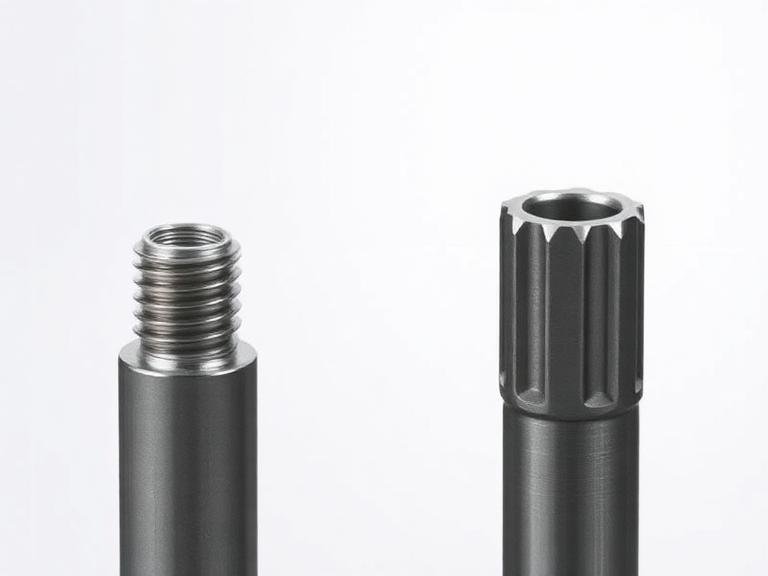
From our experience, the vast majority of these catastrophic failures do not stem from incorrect feed rates or poor coolant application, but rather from a fundamental misunderstanding of tool geometry. Specifically, failing to match the correct Thread tap length and flute types to the workpiece material and hole profile. You cannot use a standard straight flute hand tap in a deep, blind hole on a high-speed CNC mill and expect success. It is an engineering impossibility.
We recommend that every machinist, tool crib manager, and manufacturing engineer memorize the rigid rules governing tap geometry. This authoritative guide dissects exactly how Thread tap length and flute types interact with chip evacuation, torsional sheer, and material properties. We will eliminate the ambiguity and provide you with the exact technical knowledge required to optimize your threading operations.
Summary: Thread Tap Length and Flute Types Quick Reference
| Flute Geometry | Hole Suitability | Chip Evacuation Direction | Optimal Tap Length Profile |
|---|---|---|---|
| Straight Flute | Through Holes & Shallow Blind Holes | Minimal evacuation (packs chips in flutes) | Standard / Short (High Rigidity) |
| Spiral Point (Gun Tap) | Through Holes Only | Pushes chips forward, ahead of the cut | Standard / Extended Reach |
| Spiral Flute | Deep Blind Holes | Pulls chips upward, out of the hole | Standard (Prone to torsional shear if too long) |
| Form Tap (Fluteless) | Blind & Through Holes (Ductile Materials) | None (Cold forms threads, chipless) | Standard / Extended Reach |
Table of Contents
- 1. The Anatomy of Tap Length: Rigidity vs. Reach
- 2. Analyzing Flute Geometry: Controlling the Chip
- 3. The Interplay Between Thread Tap Length and Flute Types
- 4. Understanding Thread Dynamics and Fastening
- 5. Machining Parameters and Tool Life
- 6. Frequently Asked Questions (FAQs)
- 7. Authoritative References
1. The Anatomy of Tap Length: Rigidity vs. Reach
When discussing Thread tap length and flute types, we must first address the physical dimensions of the tool body. In the global market, tap lengths are governed by rigid standards, primarily ANSI (American National Standards Institute), DIN (Deutsches Institut für Normung), and ISO (International Organization for Standardization). A standard length tap is engineered to provide the maximum possible rigidity. Rigidity is your greatest ally. The shorter and thicker the tap, the less it will deflect under torsional load, and the lower the risk of catastrophic breakage.
However, modern part design frequently forces machinists to thread holes located deep inside a casting or past an interfering shoulder. In these scenarios, manufacturers must utilize extended length taps, commonly referred to as pulley taps, nut taps, or long-shank taps. We must be brutally honest: extended length taps are a compromise. The moment you increase the overall length of the tap shank, you exponentially increase its susceptibility to torsional shear (twisting and snapping). When forced to use an extended length tool, you must ruthlessly optimize your drilling speed for metal to ensure the pre-drilled hole is perfectly on size, minimizing the cutting pressure on the delicate extended tap.
2. Analyzing Flute Geometry: Controlling the Chip
The primary function of a flute is not just to create cutting edges; its most critical job is chip evacuation. If you do not control the metal chips, they will pack into the hole, bind the tool, and snap the tap. The various types of thread taps are defined entirely by how they manage this waste material.
Straight Flute Taps: The General Purpose Trap
Straight flute taps are the oldest and most common geometry. They feature straight channels running parallel to the axis of the tool. From our experience, straight flute taps are vastly overused. They do not actively push or pull chips; they simply provide a void for the chips to accumulate. If you are hand tapping a shallow hole or machining highly brittle materials like cast iron (which produces powdery chips rather than stringy chips), a straight flute tap is acceptable. However, using a straight flute tap in a deep blind hole in aluminum or stainless steel is a guaranteed recipe for failure.
Spiral Point Taps (Gun Taps): The Through-Hole Masters
We highly recommend spiral point taps for any through-hole application. These tools feature a specialized angular grind at the leading edge of the straight flute. This geometry intentionally shoots the continuous metal chip forward and out the bottom of the hole. Because the flutes themselves do not need to store the chips, the core web of a spiral point tap is significantly thicker and stronger than other designs. This allows them to run at much higher speeds. However, if you use a spiral point tap in a blind hole, it will pack the chips directly into the bottom of the hole until the tap violently shatters.
Spiral Flute Taps: The Blind Hole Lifesavers
When threading a blind hole (a hole that does not go all the way through the part), you must pull the chips up and out of the cavity. Spiral flute taps look like drill bits, with helical flutes that wrap around the tool body. The helix angle acts like an auger, lifting the stringy chips away from the cutting zone. We recommend high helix angles (around 45 degrees) for soft, gummy materials like aluminum, and lower helix angles (around 15 degrees) for tougher materials like titanium. Spiral flutes are the most delicate of all tap designs because the deep flutes reduce the core thickness of the tool.
Form Taps (Fluteless Taps): The Cold Forging Alternative
Form taps eliminate the chip evacuation problem entirely because they do not cut metal; they displace it. A form tap acts as a cold-forging tool, pressing the material outward to form the thread profile. This creates an exceptionally strong thread due to the unbroken grain structure of the metal. Because there are no flutes, the tool core is solid and immensely strong. However, form tapping requires a highly specific, slightly larger pre-drill size and can only be used in ductile materials like aluminum, brass, and low-carbon steel.
3. The Interplay Between Thread Tap Length and Flute Types
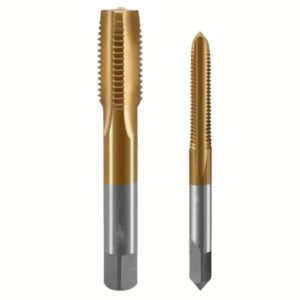
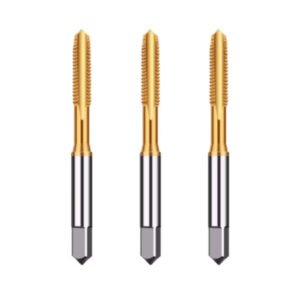
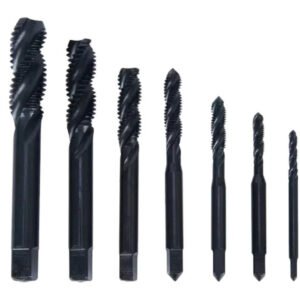
The true mastery of threading comes from understanding how Thread tap length and flute types must be paired correctly. As we stated earlier, extending the length of a tap reduces its rigidity. If you combine an extended length shank with a delicate 45-degree spiral flute, you have created a tool that is highly prone to snapping under heavy torque. If you absolutely must tap a deep blind hole, we strongly advise using a solid carbide spiral flute tap rather than High-Speed Steel (HSS), as carbide offers superior rigidity over long spans.
Furthermore, coolant delivery plays a massive role. When exploring optimal Thread tap length and flute types for deep holes, you must consider through-coolant taps. These tools have internal channels that blast high-pressure coolant directly at the cutting edge. This forces the chips up the spiral flutes and prevents the tool from overheating, completely transforming the reliability of long-reach threading operations in CNC environments. For specialized insights on coolant management, industry publications like Modern Machine Shop’s guide on tapping provide excellent peripheral data.
4. Understanding Thread Dynamics and Fastening
Choosing the correct Thread tap length and flute types is only half the battle; you must also understand the mechanical intent of the thread you are cutting. Manufacturers routinely confuse the applications of various thread profiles. For example, knowing the difference between an acme thread vs normal thread is critical. Acme threads are designed for heavy load translation (like lead screws), requiring massive torque to cut, which dictates a highly rigid, straight-fluted tandem tap approach. Standard 60-degree V-threads (UNC/UNF or Metric) are for standard fastening and offer much more flexibility in flute choice.
Additionally, when dealing with fluid and gas transfer, you must transition to pipe threads. Pipe taps have a taper that creates a pressure-tight interference fit. Understanding the physics of tapered vs straight thread dynamics is non-negotiable. Tapered pipe taps engage multiple threads simultaneously, generating astronomical radial cutting pressure. Therefore, when you consult a pipe thread tap size chart, you must select a tool with staggered teeth or specialized flute geometries to break up the massive chip load. For a deep dive into this, we recommend reviewing our 1/4 npt thread tap guide.
5. Machining Parameters and Tool Life
From our experience supplying tools globally, premature tap wear is almost always a symptom of a mismatch between the Thread tap length and flute types and the CNC parameters. You cannot run a spiral flute tap at the same surface footage as a spiral point tap. Spiral flutes inherently generate more friction because the chip is forced to travel a longer, helical path up the tool. To counteract this friction, you must utilize premium tool coatings like Titanium Carbonitride (TiCN) or Aluminum Titanium Nitride (AlTiN), which vastly improve surface hardness and lubricity.
We firmly believe that utilizing rigid tapping cycles on modern CNC machines is mandatory. Rigid tapping perfectly synchronizes the spindle rotation with the Z-axis feed, ensuring the tap enters and exits the hole without shearing the delicate flanks of the newly cut thread. Leading tooling manufacturers like Sandvik Coromant consistently validate that synchronized tapping cycles extend tool life by up to 40% when paired with the correct flute geometry.
6. Frequently Asked Questions (FAQs)
Why do my spiral flute taps keep breaking in deep holes?
This is a classic failure of matching Thread tap length and flute types. Spiral flutes have a thinner core web, making them structurally weaker. If chips pack in the deep flutes, the torque instantly spikes and shears the tap. Ensure you are using a high-concentration tapping fluid, consider peck-tapping cycles to break the chips, and verify that your pre-drill diameter is not undersized.
Can I use a spiral point (gun tap) in a blind hole?
We absolutely do not recommend it. Spiral point taps are engineered to push chips forward. In a blind hole, the chips have nowhere to go. They will compress at the bottom of the hole until the tap bottoms out on the compacted metal and shatters. Only use spiral point taps for through-holes.
Does tap length affect the quality of the thread?
Indirectly, yes. A longer tap shank decreases tool rigidity. This lack of rigidity can lead to harmonic chatter and micro-deflection during the cut, which results in oversized, bell-mouthed, or rough-finish threads. Always use the shortest tap possible for your specific application to maximize rigidity.
7. Authoritative References
To ensure uncompromising manufacturing standards, the engineering principles discussed in this guide align with the following global metrology and standards organizations:
- American Society of Mechanical Engineers (ASME): Specifically referencing ASME B94.9 for standard specifications governing tap dimensions, flute configurations, and thread cutting tolerances.
- International Organization for Standardization (ISO): Referencing ISO 2857 and ISO 529 for global metric tap shank dimensions and thread profiling metrics.
- National Institute of Standards and Technology (NIST): For advanced materials science data regarding torsional shear stress and machinability indexing in precision manufacturing.