
In the highly exact disciplines of aerospace machining, automotive engine rebuilding, and precision fluid dynamics, standard coarse threads often fall critically short of mechanical requirements. When engineers are dealing with thin-walled materials or mechanical assemblies subject to intense, high-frequency vibrations, they must transition to fine-pitch fasteners. To maintain, repair, or fabricate these specialized components, possessing a premium fine thread tap and die set is an absolute operational necessity. A single stripped fine thread in a titanium hydraulic fitting or an engine block can cost thousands of dollars in facility downtime and scrapped materials.
Authored by the engineering and metallurgy team at MisolTap. Since our founding in 2005, MisolTap has established itself as a leading Chinese manufacturer of high-performance thread cutting tools. We integrate R&D, production, and global sales into a seamless operation, providing our clients with robust and precise threading solutions tailored to modern manufacturing needs.
From our experience supplying the global heavy manufacturing sector, we consistently witness the fallout of utilizing inferior threading tools on high-stress components. Selecting the correct fine thread tap and die set requires a deep understanding of tool metallurgy, flute geometry, and international dimensional standards. A set designed for general mild steel will catastrophically fail when introduced to hardened alloys. In this comprehensive technical guide, we will analyze the engineering mechanics behind fine-pitch threads, establish the criteria for selecting professional-grade cutting tools, and review the top 6 fine thread tap and die set configurations dominating the precision machining market in 2026.
Table of Contents
- 1. The Engineering Mechanics of Fine Threads
- 2. Criteria for Selecting a Fine Thread Tap and Die Set
- 3. The Top 6 Fine Thread Tap and Die Set Options in 2026
- 4. Expert Application Techniques for Fine Threads
- 5. Summary Table: Top 6 Tool Configurations
- 6. Frequently Asked Questions (FAQs)
- 7. Industry References
1. The Engineering Mechanics of Fine Threads
Before investing in a dedicated fine thread tap and die set, it is vital to understand why fine threads are engineered into specific machinery. The primary difference between a coarse thread and a fine thread lies in the pitch—the distance from the crest of one thread to the crest of the next. Fine threads have a smaller pitch, which translates to a shallower thread depth. This physical geometry provides three distinct mechanical advantages.
First, because the thread is shallower, the minor diameter of the bolt or tapped hole remains larger. This means a fine-threaded fastener has a larger solid core cross-sectional area, making it significantly stronger in pure tension than a coarse thread of the same nominal diameter. Second, the smaller pitch angle creates a tighter helix. This drastically increases the friction between the male and female threads, making fine threads highly resistant to loosening under severe vibration. Finally, we recommend deploying a fine thread tap and die set whenever you are tapping into tubing or thin sheet metal. The smaller pitch allows for more individual threads to engage within a limited material depth, preventing the fastener from tearing out of the thin wall.
2. Criteria for Selecting a Fine Thread Tap and Die Set
Not all cutting tools are created equal. When procuring a fine thread tap and die set for professional use, the metallurgical composition of the tools dictates their lifespan and cutting accuracy. Cheap, high-carbon steel sets found in hardware stores are acceptable for cleaning out dirty threads (chasing), but they will rapidly dull or snap when attempting to cut new threads into raw bar stock.
From our experience, a true industrial fine thread tap and die set must be manufactured from High-Speed Steel (HSS) or advanced powder metallurgy substrates. HSS maintains its hardness even when subjected to the extreme heat generated during the friction of cutting tight pitches. Furthermore, professional sets adhere to strict international dimensional tolerances. Depending on your geographical region and the origin of your machinery, you must select tools conforming to specific shank and drive standards to ensure they fit securely in your machine collets and tap wrenches.
3. The Top 6 Fine Thread Tap and Die Set Options in 2026
Based on our proprietary R&D, metallurgical testing, and global client feedback, we have identified the six most reliable and highly engineered tool configurations available for precision fine threading applications this year.
1. MisolTap IOS-529 Master Precision Set
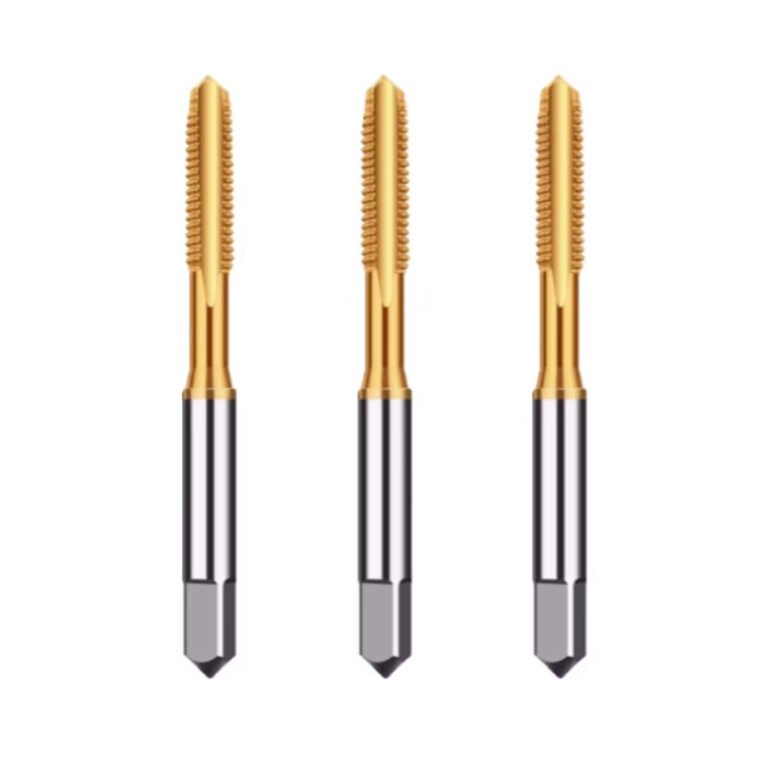
Leading the market for global compatibility is our proprietary master collection. When facilities require absolute versatility without compromising on tolerance, the MisolTap master fine thread tap and die set is the definitive choice. This comprehensive kit features the IOS-529 Thread Tap, manufactured from premium HSS to meet strict International Organization for Standardization metrics. The IOS-529 standard dictates specific shank dimensions that fit universally into most modern CNC tapping heads and manual tap wrenches. This set covers a vast array of fine metric pitches, making it the ultimate foundational toolkit for any advanced machine shop.
2. Metric Heavy Industrial DIN371 Set
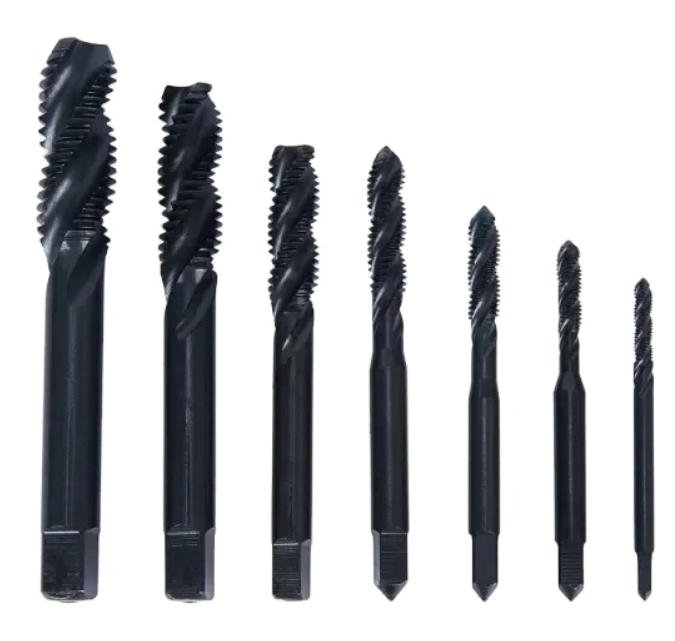
European machinery, particularly German automotive and industrial robotics, relies heavily on DIN standard tooling. For these high-torque applications, we highly recommend a fine thread tap and die set built around the DIN371 Thread Tap specification. The distinguishing feature of the DIN371 standard is its reinforced, thickened shank on smaller diameter taps. This reinforced shank provides immense structural rigidity, preventing the tap from flexing or snapping when cutting fine threads into hardened tool steels or cast iron engine blocks. It is the premier choice for heavy-duty metric manufacturing.
3. JIS Standard Automotive & Motorcycle Set
If you operate a repair facility specializing in Japanese automobiles, motorcycles, or ATVs, a standard metric set will inevitably fail you. Japanese engineering utilizes highly specific thread pitches and head dimensions. To service these vehicles properly, you require a specialized fine thread tap and die set featuring the JIS Thread Tap (Japanese Industrial Standard). Our JIS-compliant sets provide the exact thread geometry needed to safely restore stripped brake caliper mounts, suspension linkages, and aluminum engine casings on Japanese-manufactured equipment without cross-threading.
4. Aerospace Grade Cobalt-Infused Set
The aerospace sector frequently machines exotic alloys such as Inconel, Titanium, and hardened stainless steel. Standard HSS tools will rapidly degrade against these abrasive materials. For these extreme applications, the best fine thread tap and die set is forged from HSS-Co (High-Speed Steel infused with 5% to 8% Cobalt). The addition of cobalt vastly increases the tool’s red-hardness, allowing the tap and die to shear through titanium alloys without dulling or galling the delicate fine threads required for aircraft fluid fittings.
5. Gunsmithing and Micro-Mechanics Set
Firearm manufacturing and horology (watchmaking) require thread pitches that are exceptionally fine, often referred to as extra-fine or special pitches (e.g., 6-48 or 8-40 in imperial sizing). A gunsmithing fine thread tap and die set includes these ultra-specific, high-tpi (threads per inch) tools. Due to the microscopic nature of these threads, the dies in these sets are usually adjustable, allowing the machinist to dial in the exact fitment tolerance required for mounting high-recoil optics and precision trigger assemblies.
6. Hydraulic and Pneumatic Pipe Thread Set
Fluid dynamics require threads that not only fasten but also seal under immense pressure. While NPT (National Pipe Taper) is common, many high-pressure hydraulic systems utilize fine straight threads with O-ring bosses (such as UNF or metric fine). A hydraulic-specific fine thread tap and die set provides the exact pitch configurations required to machine custom manifolds and repair damaged hydraulic cylinder ports, ensuring a leak-proof seal in heavy construction equipment.
4. Expert Application Techniques for Fine Threads
Possessing a premium fine thread tap and die set is only half of the equation; proper machining technique is required to prevent tool breakage. Because fine threads have a much smaller pitch space, the flutes of the tap or the clearance holes of the die can quickly become packed with metal chips (swarf). If these chips are not cleared, they will bind the tool and shatter it.
From our experience, we recommend strictly utilizing the “peck tapping” method. For every half-turn you advance the tool into the metal, you must reverse it a quarter-turn to snap the chip. Furthermore, you must never use a fine thread tap and die set without generous application of a high-quality, sulfurized cutting fluid or specialized tapping paste. Lubrication reduces the intense friction at the cutting edge, preventing the metal from welding to the tool and ensuring the final thread profile is smooth and dimensionally accurate.
5. Summary Table: Top 6 Tool Configurations
To assist your procurement department, we have consolidated the primary applications for our top recommended tool configurations.
| Tool Set Configuration | Core Standard / Material | Primary Industrial Application |
|---|---|---|
| MisolTap Master Precision Set | IOS-529 Thread Tap (HSS) | General precision machining and global CNC compatibility. |
| Metric Heavy Industrial Set | DIN371 Thread Tap (Reinforced Shank) | European heavy machinery and high-torque tapping. |
| JIS Automotive Set | JIS Thread Tap (Japanese Standard) | Japanese motorcycles, ATVs, and automotive repair. |
| Aerospace Grade Set | HSS-Cobalt Infused | Machining Titanium, Inconel, and hardened stainless steel. |
| Gunsmithing / Micro Set | Extra-Fine Pitch HSS | Firearms manufacturing, optics mounting, and instruments. |
| Hydraulic Pipe Thread Set | Straight Fine Pitch (UNF/Metric Fine) | High-pressure fluid manifolds and cylinder repair. |
6. Frequently Asked Questions (FAQs)
Why is it harder to start cutting a thread with a fine thread tap and die set compared to a coarse set?
Fine threads have a much shallower bite angle. When starting a fine thread tap and die set on a bare shaft or in a drilled hole, it requires perfectly perpendicular alignment and steady downward pressure to encourage the first few threads to engage the material without slipping or cross-threading.
Can I use a standard drill bit size for a fine thread tap?
No. From our experience, this is a critical error. A fine thread tap requires a specifically calculated tap drill size that is different from its coarse counterpart. Always consult a certified machinist’s chart included with your fine thread tap and die set to select the exact drill bit diameter, ensuring a 75 percent thread engagement.
What makes the DIN371 Thread Tap different from the IOS-529 standard?
The DIN371 Thread Tap is specifically engineered with a reinforced shank for metric sizes up to M10. This means the shank diameter is equal to the major diameter of the thread, providing massive structural rigidity. The IOS-529 Thread Tap utilizes a reduced shank design, which allows the tap to pass completely through deep holes but offers slightly less lateral rigidity.
How do I maintain my fine thread tap and die set?
After each use, clean the cutting edges meticulously with a stiff nylon brush and solvent to remove microscopic metal shavings. We recommend lightly coating the entire fine thread tap and die set with an anti-rust machine oil before storing them in a dedicated wooden or molded plastic case to prevent the brittle cutting edges from chipping against one another.