
In the highly demanding sectors of precision manufacturing, automotive engineering, and industrial plumbing, executing flawless internal threads is non-negotiable. Among the most widely utilized dimensions in global manufacturing are the 1 2 thread tap sizes. Whether you are cutting a coarse fastening thread into a structural steel plate or threading a high-pressure pneumatic pipe fitting, understanding the exacting geometry and pre-drill requirements for 1 2 thread tap sizes is the foundation of mechanical integrity.
Since our founding in 2005, MisolTap has established itself as a leading Chinese manufacturer of high-performance thread cutting tools. We integrate R&D, production, and global sales into a seamless operation, providing our clients with robust and precise threading solutions tailored to modern manufacturing needs. From our experience supplying CNC machining centers and global fabrication hubs, the failure to consult an accurate 1 2 thread tap sizes chart is the leading cause of tool breakage and scrapped components. In this authoritative technical guide, we will analyze the various standards comprising 1 2 thread tap sizes, provide precise pilot hole charts, and outline the tooling necessary to achieve perfect thread engagement.
Table of Contents
- 1. The Anatomy of 1 2 Thread Tap Sizes
- 2. The Standard 1 2 Thread Tap Sizes Chart
- 3. Selecting the Correct Tooling for 1 2 Thread Tap Sizes
- 4. Machining Best Practices for Cutting 1/2 Inch Threads
- 5. Troubleshooting Common Issues with 1 2 Thread Tap Sizes
- 6. Summary Table: Application Guide for 1 2 Thread Tap Sizes
- 7. Frequently Asked Questions (FAQs)
- 8. References
1. The Anatomy of 1 2 Thread Tap Sizes
When an engineer or machinist specifies 1 2 thread tap sizes, they are referring to a nominal thread diameter of one-half inch (0.500 inches or 12.7 millimeters). However, identifying the nominal diameter is only the first step. The 1 2 thread tap sizes category encompasses a vast array of pitch variations (measured in Threads Per Inch, or TPI) and thread profile standards. Applying the wrong pitch to a mating fastener will instantly strip the threads and destroy the assembly.
The most prominent variations within the 1 2 thread tap sizes spectrum include the Unified National Coarse (UNC), Unified National Fine (UNF), Unified National Extra Fine (UNEF), National Pipe Taper (NPT), and British Standard Pipe (BSP). A 1/2-13 UNC thread, possessing 13 threads per inch, is the standard for heavy-duty structural bolting due to its deep thread root and high resistance to cross-threading. Conversely, a 1/2-20 UNF thread, featuring 20 threads per inch, offers superior tensile strength and is heavily relied upon in aerospace and automotive applications where fine adjustments and high-vibration resistance are mandatory.
We recommend strictly verifying the engineering drawing before assuming which of the 1 2 thread tap sizes is required. Furthermore, when dealing with fluid or gas transfer, the 1/2-14 NPT and 1/2-14 BSPP (British Standard Pipe Parallel) formats dominate. It is crucial to note that while both pipe variants share 14 TPI, their flank angles differ (60 degrees for NPT versus 55 degrees for BSP), meaning they are fundamentally incompatible. Navigating these distinctions relies entirely on consulting a verified 1 2 thread tap sizes chart.
2. The Standard 1 2 Thread Tap Sizes Chart
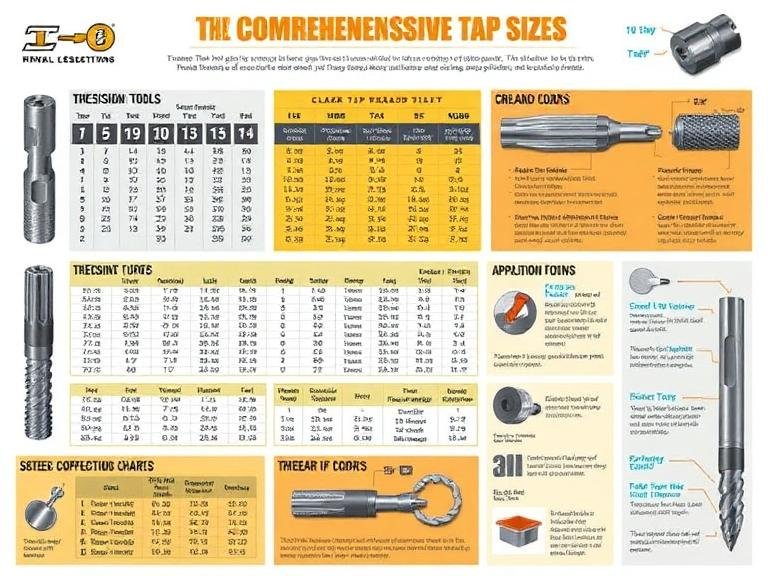
The foundation of cutting flawless 1 2 thread tap sizes is drilling the correct pilot hole. If the pre-drilled hole is too small, the cutting torque will exceed the tap’s metallurgical threshold, snapping the tool inside the workpiece. If the hole is too large, the resulting thread percentage will be insufficient, leading to fastener pull-out under load. Below is our highly calibrated 1 2 thread tap sizes chart, detailing the exact drill bit requirements to achieve an optimal 75 percent thread engagement.
| Thread Standard Designation | Nominal Diameter (Inch) | Threads Per Inch (TPI) | Recommended Tap Drill Size (Imperial) | Recommended Tap Drill Size (Metric) | Typical Application |
|---|---|---|---|---|---|
| 1/2-13 UNC | 0.500″ | 13 | 27/64″ | 10.72 mm | General fastening, heavy machinery, structural steel. |
| 1/2-20 UNF | 0.500″ | 20 | 29/64″ | 11.51 mm | Automotive suspension, aerospace components, precision alignment. |
| 1/2-28 UNEF | 0.500″ | 28 | 15/32″ | 11.91 mm | Optical instruments, thin-walled tubing, specialized connectors. |
| 1/2-14 NPT | 0.840″ (O.D.) | 14 | 23/32″ | 18.26 mm | Tapered pipe fittings for pressurized gas and fluid sealing. |
| 1/2-14 BSPP (G 1/2) | 0.825″ (O.D.) | 14 | 3/4″ | 19.05 mm | Parallel pipe fittings utilized primarily in European and Asian markets. |
From our experience, machinists must note that pipe threads within the 1 2 thread tap sizes category (such as NPT and BSPP) do not have a nominal diameter of exactly 0.500 inches. The 1/2 inch designation in pipe sizing historically refers to the internal bore of the pipe, meaning the actual cutting diameter of the tap is significantly larger, as reflected in the drill sizes above.
3. Selecting the Correct Tooling for 1 2 Thread Tap Sizes
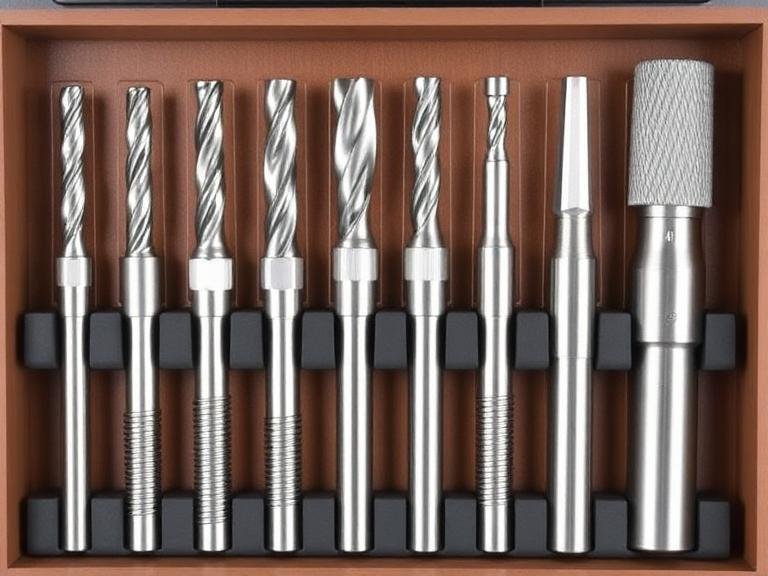
Choosing the correct pilot drill from the 1 2 thread tap sizes chart is only half the equation. The geometry, base material, and surface coating of the cutting tool itself are critical to achieving a Class 2B or 3B thread fit. At MisolTap, we engineer threading tools that conquer the most difficult alloys on the planet. For executing 1 2 thread tap sizes, we offer three distinct, high-performance product lines tailored to specific machining environments.
- IOS-529 Thread Tap: For global manufacturing standard compliance, our IOS-529 Thread Tap is the pinnacle of versatility. When cutting 1 2 thread tap sizes in medium-carbon steels or cast iron, this tap features an optimized flute geometry that effectively manages chip evacuation. It is available in both spiral point configurations for through-holes (pushing chips forward) and spiral flute configurations for blind holes (extracting chips upward).
- DIN371 Thread Tap: Rigidity is a massive concern when driving large diameter taps. While the DIN371 standard is famously utilized for reinforced shanks on smaller metric sizes, our DIN371 Thread Tap engineering principles are applied across our robust shank designs for heavy-duty cutting. When applying the high torque required for 1/2-13 UNC threads in tough stainless steels, the reinforced shank architecture prevents micro-flexing and tool deflection, guaranteeing perfect thread concentricity.
- JIS Thread Tap: For facilities operating Japanese CNC centers or repairing Asian-manufactured equipment, our JIS Thread Tap lineup is indispensable. The shank dimensions and driving squares adhere strictly to Japanese Industrial Standards, ensuring a flawless fit in standard collets and rigid tapping cycles. We recommend the JIS Thread Tap for high-speed aluminum and brass applications where rapid cutting and aggressive chip shear are required.
4. Machining Best Practices for Cutting 1/2 Inch Threads
Successfully cutting 1 2 thread tap sizes requires significant spindle horsepower and meticulous process control. Because the tool engages a large surface area of material, friction and heat generation are immense. We recommend adopting the following best practices on the shop floor to maximize the lifespan of your MisolTap cutting tools.
Firstly, lubrication cannot be overlooked. Attempting to cut 1 2 thread tap sizes dry will result in immediate galling, where the workpiece material cold-welds to the cutting edges of the tap. For ferrous metals, a high-quality sulfurized cutting oil is mandatory. For non-ferrous metals like aluminum, a highly concentrated water-soluble coolant or specialized tapping wax will prevent built-up edge (BUE) formation.
Secondly, consider the entry chamfer. Before introducing the tap into the pre-drilled hole, utilize a 90-degree or 120-degree countersink to create a slight chamfer. This chamfer acts as a centering guide, ensuring the tap engages perfectly perpendicular to the workpiece face. Angular misalignment is a primary reason why 1 2 thread tap sizes cut oversized, sloppy threads that fail subsequent thread gauge inspections.
5. Troubleshooting Common Issues with 1 2 Thread Tap Sizes
Even with a rigorous adherence to the 1 2 thread tap sizes chart, variables in material hardness and machine stability can induce threading errors. From our experience as tool manufacturers, understanding how to diagnose these errors rapidly saves immense amounts of production time.
If you encounter torn or rough threads when cutting 1 2 thread tap sizes, the root cause is almost universally related to chip packing or dull cutting edges. If you are tapping a blind hole using a straight flute tap, the chips have nowhere to evacuate, causing them to bind and tear the freshly cut thread flanks. We recommend switching to a 35-degree or 45-degree spiral flute IOS-529 Thread Tap to continuously pull chips out of the cavity.
If the tap frequently breaks during the reversal cycle, you are likely experiencing chip binding. This occurs when long, stringy chips wrap around the tap body. Utilizing a tap with a specific geometry designed to break chips into smaller, manageable pieces—often achieved through specialized edge preparation during our CNC grinding process at MisolTap—will eliminate this costly failure mode.
6. Summary Table: Application Guide for 1 2 Thread Tap Sizes
To streamline your tool room procurement, we have summarized the primary applications and recommended tooling strategies for the most common 1 2 thread tap sizes.
| Target Thread Specification | Hole Type | Primary Challenge | MisolTap Tooling Recommendation |
|---|---|---|---|
| 1/2-13 UNC | Through Hole | High torque required for deep thread roots. | Spiral Point IOS-529 Thread Tap to push chips forward ahead of the cut. |
| 1/2-20 UNF | Blind Hole | Extracting fine chips from the bottom of the cavity. | Spiral Flute JIS Thread Tap with high helix angle for rapid chip lifting. |
| 1/2-14 NPT | Tapered Pipe | Massive tool engagement leading to extreme friction. | Staggered tooth pipe tap with heavy sulfur-based cutting oil. |
| 1/2-14 BSPP | Parallel Pipe | Maintaining strict thread sealing tolerances. | Precision ground DIN371 Thread Tap style reinforced shank for zero deflection. |
7. Frequently Asked Questions (FAQs)
8. References
For further technical specifications, dimensional tolerances, and global machining standards concerning threaded fasteners, please consult the following authoritative organizations: