
In the highly precise world of industrial machining and metalworking, selecting the correct cutting tool is not merely a matter of preference; it is a critical engineering decision that dictates production efficiency, component quality, and overall operational costs. One of the most common dilemmas faced by machinists, procurement officers, and engineering students alike revolves around threading operations. Specifically, understanding the exact difference between a machine tap and a normal tap is essential for anyone involved in manufacturing. Using the wrong type of tap can lead to catastrophic tool failure, damaged workpieces, and significant production downtime.
Since our founding in 2005, MisolTap has established itself as a leading Chinese manufacturer of high-performance thread cutting tools. We integrate R&D, production, and global sales into a seamless operation, providing our clients with robust and precise threading solutions tailored to modern manufacturing needs. Over the years, we have analyzed thousands of threading applications across various industries, from automotive to aerospace. From our experience, many threading issues stem from a fundamental misunderstanding of tool geometry and application. In this comprehensive guide, we will dissect the difference between a machine tap and a normal tap, providing you with the authoritative insights needed to optimize your machining processes.
Table of Contents
- 1. What is a Normal Tap (Hand Tap)?
- 2. What is a Machine Tap?
- 3. The Core Difference Between a Machine Tap and a Normal Tap
- 4. Chip Evacuation and Flute Geometry
- 5. Material Composition and Manufacturing Standards
- 6. How MisolTap Standards Elevate Your Machining
- 7. Summary Table: Machine Taps vs. Normal Taps
- 8. Frequently Asked Questions (FAQs)
- 9. Industry References
1. What is a Normal Tap (Hand Tap)?
When we refer to a normal tap, we are generally discussing what the industry classifies as a hand tap. A normal tap is primarily designed to be operated manually using a tap wrench, though it can occasionally be used in a machine under very specific, low-speed conditions. These taps are traditionally manufactured with straight flutes and are sold in sets of three to accommodate the gradual cutting of a thread into a pre-drilled hole. The set typically consists of a taper tap, a plug tap (or second tap), and a bottoming tap.
The fundamental design of a normal tap requires the operator to manually reverse the tool every half-turn or so to break the metal chips. This manual chip breaking is necessary because straight flutes do not actively evacuate chips from the hole; instead, the chips accumulate in the flute spaces. If a normal tap is driven continuously without reversing, the accumulated chips will pack tightly, causing the tap to bind, seize, and ultimately snap inside the workpiece.
We recommend using normal taps primarily for maintenance, repair, and overhaul (MRO) applications, as well as for threading very short runs of components where setting up a CNC machine is not economically viable. They are excellent for chasing existing threads to clean out debris or minor damages. However, in modern high-volume manufacturing, the manual labor and slow speed associated with normal taps make them obsolete for primary production lines.
2. What is a Machine Tap?
Conversely, a machine tap is a highly specialized cutting tool engineered specifically for use in power-driven equipment such as CNC milling machines, lathes, and dedicated tapping centers. Unlike normal taps, machine taps are designed to cut a complete thread in a single, continuous, high-speed pass without the need to reverse and break chips. This capability is what drives modern automated manufacturing.
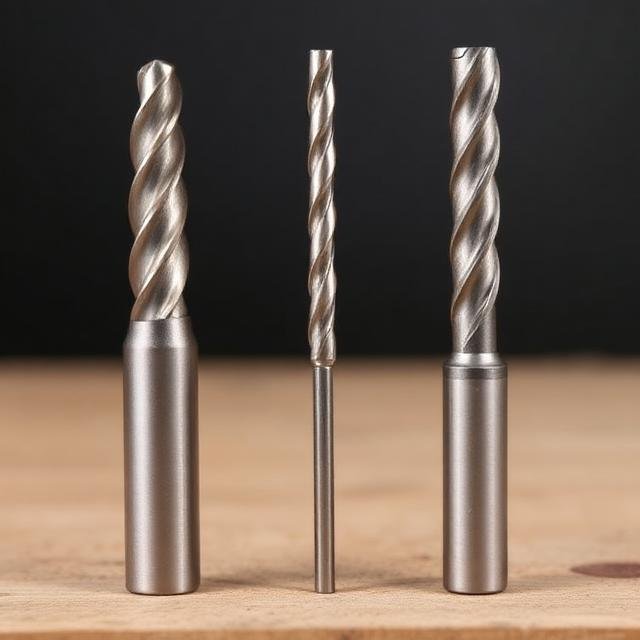
Machine taps feature advanced geometries tailored to specific materials and hole types. The two most prominent designs are the spiral point tap (often called a gun tap) and the spiral flute tap. A spiral point tap is engineered to push the metal chips forward, making it the ideal choice for through-holes where the chips can simply fall out the bottom. A spiral flute tap, on the other hand, is designed to pull the chips up and out of the hole, much like a drill bit, making it strictly necessary for blind holes where chips have nowhere else to go.
From our experience at MisolTap, the integration of high-performance machine taps drastically reduces cycle times. Because they are driven by rigid machine spindles with precise feed-to-speed ratios, they endure significantly higher torque and rotational speeds than a normal tap could ever withstand. They also benefit from advanced coatings like Titanium Nitride (TiN) or Titanium Carbonitride (TiCN), which dissipate heat and prolong tool life during continuous cutting operations.
3. The Core Difference Between a Machine Tap and a Normal Tap
To truly understand the difference between a machine tap and a normal tap, we must look at the engineering parameters that separate them. It is not merely about whether a human or a motor is turning the tool; it is about how the tool interacts with the workpiece material at a microscopic level. The primary differences lie in the cutting chamfer, the structural rigidity of the shank, and the method of thread engagement.
A normal tap set distributes the cutting load across three distinct tools. The taper tap has a long chamfer (usually 8 to 10 threads) to gradually start the cut. The plug tap has a moderate chamfer (3 to 5 threads), and the bottoming tap has a very short chamfer (1 to 2 threads) to finish the thread to the bottom of a blind hole. This distribution means the cutting force is lower, making it suitable for human hands. The difference between a machine tap and a normal tap here is stark: a machine tap completes this entire progression in a single tool. Its specific chamfer geometry is aggressively designed to take the full cutting load immediately, relying on the immense torque provided by the CNC spindle.
Furthermore, the shank of a machine tap is often reinforced or tailored to specific collets and tool holders used in CNC machinery. Normal taps generally have a standard square drive designed specifically to fit into a hand-held tap wrench. While machine taps also possess a square drive for positive engagement in a tapping chuck, their overall shank tolerances are machined to much tighter specifications to prevent runout (wobble) at high rotational speeds.
4. Chip Evacuation and Flute Geometry
Perhaps the most critical difference between a machine tap and a normal tap involves the science of chip evacuation. In metalworking, chips are the enemy of surface finish and tool life. If chips are re-cut or trapped, friction spikes, heat destroys the tool’s temper, and catastrophic failure ensues.
As previously mentioned, normal taps utilize straight flutes. These straight flutes provide maximum structural strength but offer zero assistance in moving chips out of the hole. The operator must rely on the manual back-and-forth motion to break the chips into small, manageable pieces that sit in the flutes until the tap is withdrawn. This limits normal taps to very low-speed operations.
The difference between a machine tap and a normal tap regarding flute geometry is revolutionary. Machine taps utilize active chip evacuation geometries. Spiral point machine taps have an angular grind at the tip that forcefully drives the continuous chip ahead of the tap. Spiral flute machine taps utilize a helical flute design, usually ranging from 15 to 45 degrees, which acts as an Archimedes screw to lift the continuous chip out of the blind hole. This allows for uninterrupted, high-speed cutting. We recommend always matching your machine tap geometry to the hole type; using a spiral point tap in a blind hole will inevitably pack chips at the bottom and shatter the tool.
5. Material Composition and Manufacturing Standards
Because the operational stresses are vastly different, the difference between a machine tap and a normal tap extends deeply into their metallurgical composition. Normal taps are often manufactured from standard High-Speed Steel (HSS) or even carbon steel in cheaper, consumer-grade sets. Carbon steel cannot withstand high heat and will lose its hardness quickly if subjected to friction.
Machine taps are almost exclusively manufactured from premium grades of High-Speed Steel blended with Cobalt (HSSE or HSS-Co) or solid micro-grain carbide. The addition of cobalt significantly increases the red hardness of the tool, allowing it to maintain a sharp cutting edge even when temperatures at the cutting zone exceed 600 degrees Celsius during high-speed CNC operations.
In addition to metallurgy, manufacturing standards play a huge role. At MisolTap, we adhere strictly to international standards to guarantee performance. The precision of the thread grinding process for machine taps is paramount to ensuring class-fit tolerances (such as 6H or 2B) in aerospace and automotive components.
6. How MisolTap Standards Elevate Your Machining

Understanding the difference between a machine tap and a normal tap is only the first step; sourcing the correct tool for your specific manufacturing standard is the next. Since our founding in 2005, MisolTap has dedicated itself to providing high-performance threading solutions that meet the rigorous demands of global manufacturing sectors.
We integrate R&D, production, and global sales to offer a diverse portfolio of machine taps engineered to various international standards. Depending on your machinery and geographic engineering preferences, we recommend the following products from our catalog:
- IOS-529 Thread Tap: Designed to meet the stringent specifications of the International Organization for Standardization. The IOS-529 Thread Tap features optimal shank and square dimensions, making it a highly versatile machine tap for generalized industrial applications requiring high precision and interchangeability.
- DIN371 Thread Tap: The European standard for machine taps, the DIN371 Thread Tap is defined by its reinforced shank. From our experience, the thicker shank of the DIN371 provides immense rigidity, drastically reducing vibration and runout when tapping smaller diameter threads (typically up to M10) in CNC machining centers.
- JIS Thread Tap: Built to the Japanese Industrial Standard, the JIS Thread Tap is optimized for Asian-manufactured CNC machinery and specific automotive applications. It offers unique overall length and thread length ratios, ensuring perfect compatibility with JIS-compliant tool holders and tapping chucks.
7. Summary Table: Machine Taps vs. Normal Taps
To provide a clear, quick-reference overview, we have summarized the core difference between a machine tap and a normal tap in the table below. This matrix should assist procurement and engineering teams in making immediate, correct tooling decisions.
| Feature / Parameter | Normal Tap (Hand Tap) | Machine Tap |
|---|---|---|
| Primary Operation | Manual (Tap Wrench) | Automated (CNC, Lathe, Tapping Center) |
| Cutting Process | Requires multiple passes (Sets of 3); reversing needed. | Single continuous pass; no reversing during cut. |
| Flute Geometry | Straight Flutes (No active chip evacuation) | Spiral Point (Forward) or Spiral Flute (Backward evacuation) |
| Typical Material | Carbon Steel or standard HSS | HSSE (Cobalt), Powdered Metallurgy, or Solid Carbide |
| Operating Speed | Very Low (Human speed) | Very High (Machine spindle RPMs) |
| Best Application | Maintenance, repair, chasing threads, low-volume. | High-volume production, deep holes, tough alloys. |
| Chip Management | Chips stay in flutes until manually broken and cleared. | Chips are actively pushed or pulled out of the hole. |
8. Frequently Asked Questions (FAQs)
9. Industry References
To further your understanding of thread cutting technologies and tooling standards, we recommend reviewing the following authoritative engineering resources:
- International Organization for Standardization (ISO) – For detailed documentation regarding the IOS-529 Thread Tap standards and global machining tolerances.
- Deutsches Institut für Normung (DIN) – The official source for understanding the geometric specifications and shank reinforcements of the DIN371 Thread Tap.
- Japanese Industrial Standards Committee (JISC) – The regulatory body defining the specifications, dimensions, and materials for the JIS Thread Tap.
- Machinery’s Handbook – The definitive reference text for mechanical engineers and machinists detailing the core difference between a machine tap and a normal tap regarding speeds, feeds, and thread calculations.
“`