
In the realms of plumbing, fluid dynamics, and precision manufacturing, thread standards are the critical language that ensures components fit together safely and securely. A single misunderstanding regarding thread nomenclature can lead to catastrophic pressure leaks, damaged equipment, and costly production downtime. One of the most common questions we encounter from machinists, engineers, and assembly technicians is whether the designations for internal pipe threads overlap. Specifically, is 1/2 FIP and 1/2 NPT the same?
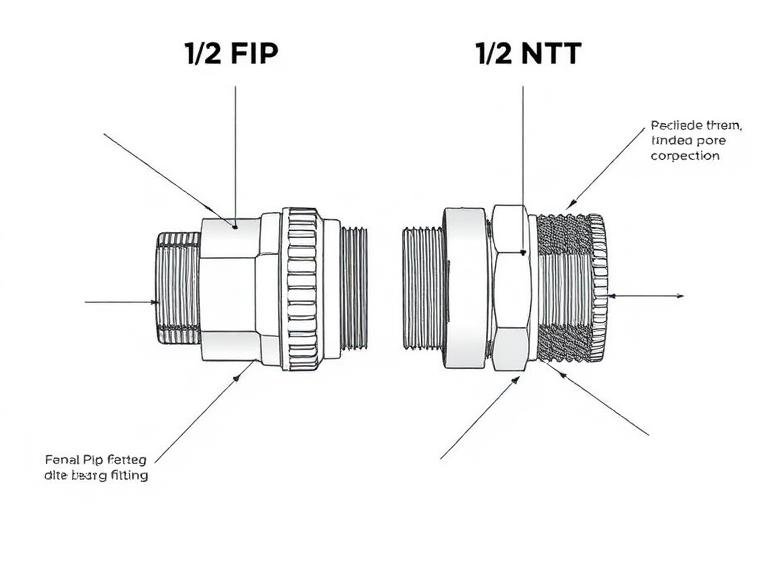
From our experience at MisolTap, producing millions of high-performance threading tools over the decades, we recognize that acronyms in the pipe fitting industry often cause unnecessary confusion. National Pipe Taper (NPT) is the overarching standard established by the American National Standards Institute (ANSI), whereas Female Iron Pipe (FIP) is an application-specific terminology used to describe the gender and material application of that exact same standard.
In this comprehensive technical guide, we will dissect the mechanical specifications of these threads, analyze the terminology, answer definitively whether 1/2 FIP and 1/2 NPT the same, and provide expert recommendations on selecting the proper thread cutting tools for your manufacturing operations.
Table of Contents
- 1. Understanding the NPT (National Pipe Taper) Standard
- 2. Defining FIP (Female Iron Pipe) Terminology
- 3. The Definitive Answer: Is 1/2 FIP and 1/2 NPT the same?
- 4. Dimensional Specifications of 1/2 Inch Pipe Threads
- 5. Machining Internal Pipe Threads: Expert Tool Selection
- 6. Summary Table: Pipe Thread Terminology
- 7. Frequently Asked Questions (FAQs)
- 8. Industry References and Standards
1. Understanding the NPT (National Pipe Taper) Standard
To accurately address the question at hand, we must first define what NPT actually means. NPT stands for National Pipe Taper, a U.S. standard for tapered threads used on threaded pipes and fittings. In contrast to straight threads—which are designed merely to hold two components together structurally—tapered threads are engineered specifically to provide a fluid-tight and gas-tight seal.
The NPT standard dictates a thread angle of 60 degrees. More importantly, it requires a taper angle of 1 degree, 47 minutes, and 24 seconds (1° 47′ 24″). Because the threads taper, the male and female ends compress against one another as they are tightened. This mechanical interference creates a seal, which is then perfected through the application of thread seal tape (PTFE) or pipe dope to fill any remaining microscopic spiral leak paths. When an engineer specifies a 1/2 NPT thread, they are referring to this exact geometric profile.
2. Defining FIP (Female Iron Pipe) Terminology
While NPT defines the geometric standard, the plumbing and pipefitting industries developed their own shorthand to specify the gender of the fitting on a job site. This is where FIP originates. FIP stands for Female Iron Pipe. It is occasionally referred to interchangeably as FPT (Female Pipe Thread).
FIP indicates that the fitting contains internal threads designed to accept a male pipe. Crucially, the threading profile used for FIP is the NPT standard. The term “Iron Pipe” is a historical artifact from the days when most plumbing was constructed using black iron or galvanized steel. Today, FIP threads are found on brass, copper, PVC, and stainless steel fittings, but the legacy terminology remains embedded in the industry lexicon.
3. The Definitive Answer: Is 1/2 FIP and 1/2 NPT the same?
When procurement officers and assembly line workers ask is 1/2 FIP and 1/2 NPT the same, we can provide a definitive answer: Yes. From a functional, dimensional, and machining standpoint, they are referring to the exact same internal thread profile.
If you purchase a fitting labeled 1/2 FIP, it is guaranteed to feature internal 1/2-inch NPT threads. Conversely, if a blueprint calls for an internal 1/2 NPT thread, a 1/2 FIP fitting will mate with it perfectly. The only distinction is linguistic: NPT is the formal engineering standard designated by ANSI/ASME, while FIP is the colloquial industry term specifying that the NPT thread is female (internal). Therefore, any manufacturer questioning if 1/2 FIP and 1/2 NPT the same can confidently proceed with their tooling setups knowing that no geometric differences exist.
4. Dimensional Specifications of 1/2 Inch Pipe Threads
Understanding the nominal sizing of pipe threads is notoriously unintuitive. A 1/2-inch pipe thread does not measure 0.500 inches across its diameter. The “1/2 inch” refers historically to the inner diameter (ID) of a standard schedule pipe, not the outer thread dimension.
For precision manufacturing, strict adherence to the dimensional specifications is mandatory. For a 1/2 NPT (or 1/2 FIP) thread, the specifications are as follows:
- Nominal Pipe Size: 1/2 inch
- Outside Diameter (OD) of Pipe: 0.840 inches (21.34 mm)
- Threads Per Inch (TPI): 14
- Thread Pitch: 0.07143 inches
- Recommended Tap Drill Size: 23/32 inch (18.25 mm) or specific taper reamer depending on material hardness.
5. Machining Internal Pipe Threads: Expert Tool Selection

Creating perfect 1/2 FIP (internal NPT) threads in a manufacturing environment requires rigorous tooling. Tapered threads generate significantly more cutting friction than straight threads because more cutting teeth are engaged simultaneously as the tap is driven deeper into the workpiece. From our experience at MisolTap, poor chip evacuation and incorrect tool coatings are the leading causes of tap breakage in pipe threading operations.
We recommend selecting cutting tools tailored to your specific CNC or manual machining parameters. At MisolTap, we engineer solutions designed to maximize tool life and thread accuracy:
- For European standard integrations: Our DIN371 Thread Tap features a reinforced shank, providing extreme rigidity to handle the high torque loads required when cutting 1/2 internal tapered threads in hardened steels.
- For international ISO compliance: The IOS-529 Thread Tap is optimized for general-purpose pipe tapping, offering excellent chip clearance and superior surface finish in non-ferrous materials like brass and aluminum.
- For Japanese industrial standards: We engineer the JlS Thread Tap, which is perfectly calibrated for high-speed automated tapping centers, reducing cycle times while maintaining strict thread tolerances.
When cutting 1/2 FIP threads, we strongly advise utilizing high-lubricity tapping fluids rather than standard water-soluble coolants. The taper interference requires a robust boundary layer of lubrication to prevent galling on the thread flanks.
6. Summary Table: Pipe Thread Terminology
To further clarify the industry acronyms surrounding pipe threads, we have compiled this quick-reference matrix.
| Abbreviation | Full Term | Thread Geometry | Application / Gender |
|---|---|---|---|
| NPT | National Pipe Taper | Tapered (1° 47′ 24″) | The overarching engineering standard (Male or Female). |
| FIP | Female Iron Pipe | Tapered (NPT) | Internal threads designed to accept a male fitting. |
| MIP | Male Iron Pipe | Tapered (NPT) | External threads designed to insert into a female fitting. |
| FPT | Female Pipe Thread | Tapered (NPT) | Directly synonymous with FIP. |
| MPT | Male Pipe Thread | Tapered (NPT) | Directly synonymous with MIP. |
| NPS | National Pipe Straight | Straight (No Taper) | Requires a gasket or O-ring to seal; will not seal with NPT. |
7. Frequently Asked Questions (FAQs)
Yes, but with a slight caveat. While they represent the same thread, FIP explicitly designates the gender (Female). If your bill of materials requires an internal thread, listing “1/2 FIP” or “1/2 Female NPT” will result in the exact same part being procured.
Yes. MIP (Male Iron Pipe) and FIP (Female Iron Pipe) are the male and female counterparts of the NPT standard. They are engineered to thread together and create a fluid-tight seal.
Absolutely. Because 1/2 FIP uses the NPT tapered standard, the metal-to-metal interference fit is not perfectly leak-proof on its own due to the spiral clearance at the thread roots and crests. We recommend applying Teflon (PTFE) tape or a high-quality liquid pipe sealant to the male threads before assembly to ensure a flawless seal.
We strongly advise against this. NPS stands for National Pipe Straight. While the pitch and diameter are similar, NPS does not taper. Threading a tapered NPT male into a straight NPS female will result in thread binding before a proper seal is achieved, inevitably causing high-pressure leaks.
8. Industry References and Standards
To ensure strict compliance with global manufacturing protocols, we recommend consulting the primary standards organizations governing thread dimensions and tolerances: