
In modern CNC machining and industrial metalworking, achieving absolute precision in internal threading is non-negotiable. A compromised thread can lead to catastrophic component failure, rejected batches, and severe financial losses. Finding the Best metric thread tap for your specific application is critical to maximizing tool life, reducing machine cycle times, and ensuring superior thread finish. As we progress into 2026, advancements in metallurgical substrates and surface coatings have redefined what operators should expect from their cutting tools.
About MisolTap
Since our founding in 2005, MisolTap has established itself as a leading Chinese manufacturer of high-performance thread cutting tools. We integrate research and development, production, and global sales into a seamless operation. Our primary mission is providing our clients with robust and precise threading solutions tailored to modern manufacturing needs. From heavy automotive machining to delicate aerospace components, we engineer tools that define industry standards.
From our experience on the manufacturing floor, there is no universal cutting tool that solves every problem. The Best metric thread tap for a shallow blind hole in aluminum will perform disastrously in a deep through-hole in hardened stainless steel. In this comprehensive guide, we will analyze the top thread cutting solutions available, break down flute geometries, and provide expert recommendations to optimize your machining operations.
Table of Contents
1. The Anatomy of a High-Performance Thread Tap
Before diving into specific models, it is essential to understand the structural engineering behind the Best metric thread tap. Taps are evaluated based on three primary characteristics: substrate material, cutting geometry (flute design), and surface coating.
The substrate is the core material of the tap. High-Speed Steel (HSS) is the industry standard, providing excellent toughness. HSSE (High-Speed Steel with Cobalt) adds superior heat resistance, making it ideal for tougher alloys. At the cutting edge of manufacturing, Powder Metallurgy (PM-HSS) and Solid Carbide substrates offer extreme wear resistance for high-volume production environments.
Flute geometry dictates chip evacuation. When cutting threads, material is removed in the form of chips (swarf). If these chips are not efficiently evacuated from the cutting zone, they will pack into the flutes, leading to tap breakage. The Best metric thread tap will feature a flute design perfectly matched to the hole type: spiral flutes to pull chips upward out of blind holes, and spiral points to push chips forward through open holes.
2. Top 6 Best Metric Thread Tap Solutions for 2026
Based on rigorous internal testing, metallurgical analysis, and feedback from our global partners, we have curated a list of the premier threading tools for 2026. Whether you are running a rigid tapping cycle on a 5-axis CNC mill or performing manual maintenance, these represent the Best metric thread tap choices available.
2.1 MisolTap MSL037 Spiral Groove Tap
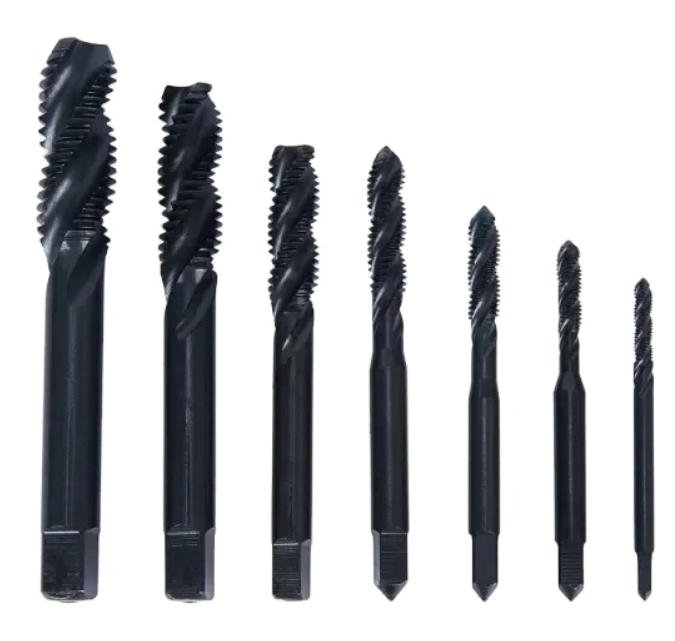
When dealing with blind holes—where the hole does not pass entirely through the workpiece—chip evacuation is your primary concern. We recommend the MisolTap MSL037 Spiral Groove Tap as the Best metric thread tap for these challenging applications.
Engineered with an optimized helix angle, the MSL037 physically lifts the continuous chips up and out of the hole toward the shank, preventing chip packing at the bottom of the bore. Manufactured from premium high-speed steel, this tap maintains exceptional edge sharpness. From our experience, utilizing the MSL037 in materials that produce long, stringy chips (such as low-carbon steel and certain aluminum alloys) drastically reduces tool breakage rates and improves internal thread surface finishes.
2.2 MisolTap MSL002 Straight Flute Thread Tap
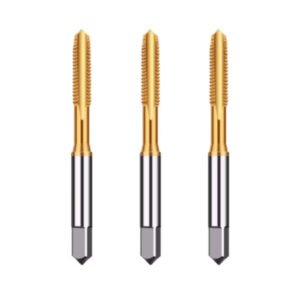
Straight flute taps are the workhorses of the machining world. The MisolTap MSL002 Straight Flute Thread Tap is universally recognized as the Best metric thread tap for general-purpose hand tapping and through-hole applications in free-machining materials.
The straight flute design provides massive structural rigidity. Because the flutes are not twisted, the core diameter of the tap remains exceptionally strong. The MSL002 is designed to hold a large volume of cutting fluid within the flutes, ensuring adequate lubrication reaches the cutting edges. If you are operating manual lathes, drill presses, or performing maintenance and repair operations (MRO), this tap delivers consistent, reliable performance.
2.3 MisolTap MSL001 Straight Flute Thread Tap
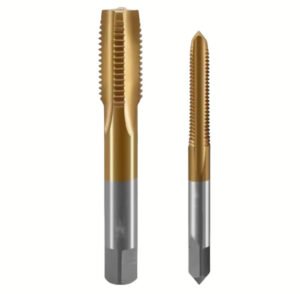
Machining short-chipping materials requires a specific approach. When working with cast iron, brass, or certain bronzes, the material crumbles into powder or tiny chips rather than forming long strings. For these applications, the MisolTap MSL001 Straight Flute Thread Tap is definitively the Best metric thread tap.
Because short chips do not need to be actively pulled out of the hole via a spiral helix, the robust straight flutes of the MSL001 offer maximum cutting edge engagement and tool stability. From our experience, using this tap on cast iron engine blocks or brass pipe fittings yields exceptionally precise pitch diameters. Its specialized relief angle minimizes friction, preventing the galling and tearing often associated with abrasive, short-chipping metals.
2.4 Premium High-Speed Steel Spiral Point Taps
Often referred to as “gun taps,” spiral point taps feature a straight flute body but incorporate an angular grind at the cutting point. This unique geometry shoots the chips forward, ahead of the tap. For high-speed CNC through-hole applications, many machinists consider this the Best metric thread tap design.
Because the chips are forced ahead of the tool, the flutes can be manufactured shallower, leaving a thicker, stronger core. This allows for significantly higher cutting speeds and feed rates compared to standard hand taps. We recommend spiral point geometry exclusively for through-holes; if used in a blind hole, the chips will pack at the bottom, resulting in immediate catastrophic tool failure.
2.5 Carbide Thread Forming Taps
Unlike cutting taps, forming taps do not create chips. Instead, they displace the material, cold-forming the internal thread. For ductile materials like copper, soft aluminum, and low-carbon steel, a forming tap is often the Best metric thread tap for high-volume production.
Because there are no flutes required for chip evacuation, forming taps have a solid core, making them the strongest threading tools available. They operate at higher speeds and produce threads with superior pull-out strength due to the work-hardening effect on the material grain structure. However, they require highly precise pre-drilled hole sizes and extreme lubrication.
2.6 Powder Metallurgy (PM) Coated Taps
For aerospace alloys like Inconel, Titanium, and hardened tool steels, standard HSS tools wear out instantly. In these aggressive environments, the Best metric thread tap is constructed from Powder Metallurgy High-Speed Steel (PM-HSS) and treated with advanced Physical Vapor Deposition (PVD) coatings like Titanium Aluminum Nitride (TiAlN).
The PM manufacturing process creates a perfectly uniform microstructure, eliminating the carbide segregation found in conventional steel casting. This results in a tap that possesses the extreme wear resistance of carbide but retains the shock-absorbing toughness of HSS. When pushing the limits of modern machining, PM taps are essential.
3. How to Choose the Best Metric Thread Tap
Selecting the Best metric thread tap requires a systematic evaluation of your machining environment. We recommend analyzing the following criteria before loading a tool into your spindle:
- Analyze the Hole Type: Is it a blind hole or a through-hole? Use spiral groove taps (like the MSL037) for blind holes to pull chips up. Use spiral point or straight flute taps for through-holes.
- Understand the Workpiece Material: Ductile materials require high positive rake angles to shear the metal cleanly. Abrasive materials like cast iron require sturdy, straight flutes (like the MSL001) to withstand abrasive wear.
- Determine the Machine Rigidity: Are you using a rigid, synchronized CNC spindle or a manual drill press with a floating tap tension-compression collet? Solid carbide taps require absolute rigidity; the slightest lateral movement will shatter them. For manual or less rigid setups, flexible HSS or HSSE substrates are required.
- Select the Correct Chamfer Length: Taper taps (7-10 threads) are best for starting straight threads. Plug taps (3-5 threads) are the standard for general use. Bottoming taps (1-2 threads) are necessary when you must thread as close to the bottom of a blind hole as physically possible.
4. Summary Table: Top Threading Solutions
| Tap Model / Type | Optimal Hole Type | Primary Material Compatibility | Key Advantage |
|---|---|---|---|
| MisolTap MSL037 Spiral Groove Tap | Blind Holes | Carbon Steel, Aluminum, Stainless | Pulls continuous chips up and out of the bore seamlessly. |
| MisolTap MSL002 Straight Flute | Through Holes / Hand Tapping | General Purpose, Mild Steel | Maximum structural core strength and high coolant retention. |
| MisolTap MSL001 Straight Flute | Through and Blind (Short Chip) | Cast Iron, Brass, Bronze | Exceptional rigidity against abrasive, crumbling materials. |
| Spiral Point (Gun) Taps | Through Holes Only | Steels, Alloys | Pushes chips forward, allowing for high-speed CNC tapping. |
| Carbide Form Taps | Blind and Through | Ductile Materials (Copper, Soft Alu) | Chipless cold-forming for maximum thread strength and tool life. |
| PM-HSS Coated Taps | Varies by Flute | Inconel, Titanium, Hardened Steel | Extreme heat and wear resistance for aerospace alloys. |
5. Frequently Asked Questions (FAQs)
What does “M6x1.0” mean when identifying the Best metric thread tap?
In the metric threading system, the “M” stands for Metric. The “6” represents the major diameter of the thread in millimeters (6mm). The “1.0” denotes the thread pitch, meaning the distance from one thread crest to the next is exactly 1.0 millimeter. Understanding this nomenclature is the first step in ensuring dimensional accuracy.
Can I use the MisolTap MSL037 Spiral Groove Tap in a manual hand wrench?
While it is physically possible, we do not recommend it. Spiral groove taps are designed with aggressive helix angles intended for continuous, synchronized machine rotation. When used by hand, the uneven torque can cause the fragile cutting edges to chip. For manual hand tapping, the Best metric thread tap is the MisolTap MSL002 Straight Flute Tap.
Why did my thread tap break inside the hole?
Tap breakage usually results from three main issues: improper chip evacuation (using a straight or spiral point tap in a blind hole), insufficient lubrication leading to material welding (galling), or an incorrectly sized pre-drilled tap hole. From our experience, ensuring you have the correct core drill diameter is just as important as selecting the Best metric thread tap.
6. Industry References
For further authoritative information on metallurgical standards, CNC machining protocols, and thread specifications, we recommend consulting the following resources: