
Since our founding in 2005, MisolTap has established itself as a leading Chinese manufacturer of high-performance thread cutting tools. We integrate R&D, production, and global sales into a seamless operation, providing our clients with robust and precise threading solutions tailored to modern manufacturing needs. From our experience, absolute precision in tooling is the foundation of mechanical integrity.
In the fluid power, hydraulics, and pneumatics industries, securing a leak-free connection is paramount. Among the various global thread standards, the British Standard Pipe (BSP) thread is universally recognized across Europe, Asia, and Australia. For machinists, fabricators, and mechanical engineers, understanding the exact 1 2 bsp thread tap sizes is a foundational requirement. A single dimensional error during the tapping process can lead to catastrophic pressure failures, costly material scrap, and severe safety hazards.
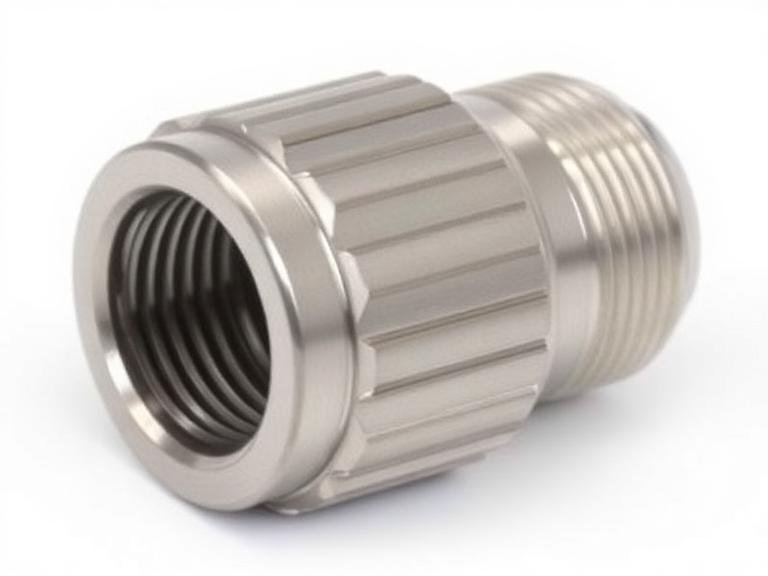
From our experience at MisolTap, we frequently encounter professionals who conflate the nominal pipe size with the actual physical diameter of the tap. It is crucial to recognize that the nominal “1/2” designation refers to the internal bore of the pipe, not the outside diameter of the thread itself. In this comprehensive technical guide, we will explore the precise measurements, drill bit requirements, and advanced machining strategies related to 1 2 bsp thread tap sizes. We recommend utilizing this guide as a permanent reference for your CNC programming and manual tapping operations.
Table of Contents
- 1. Understanding the BSP Standard
- 2. BSPP vs. BSPT: The Critical Distinction
- 3. Exact Dimensions for 1 2 BSP Thread Tap Sizes
- 4. Selecting the Correct Tapping Drill Size
- 5. Flute Geometry and Tap Selection
- 6. Machining Speeds, Feeds, and Lubrication
- 7. Specialized Threading Applications
- 8. Summary Table: 1 2 BSP Thread Tap Sizes
- 9. Frequently Asked Questions (FAQs)
- 10. Authoritative References
1. Understanding the BSP Standard
The British Standard Pipe (BSP) thread family is based on the Whitworth thread form, which utilizes a 55-degree flank angle with rounded crests and roots. This rounded profile is fundamentally different from the American National Standard Pipe Thread (NPT), which uses a 60-degree angle and flattened peaks and valleys. Because of this architectural difference, you cannot interchange BSP and NPT fittings, nor can you use NPT taps to create BSP threads.
When evaluating 1 2 bsp thread tap sizes, you are looking at a thread that is designed for a pipe with a nominal internal diameter of half an inch. However, the major diameter (the widest physical measurement of the thread) is significantly larger than half an inch. Grasping this concept is the first step toward mastering 1 2 bsp thread tap sizes in practical manufacturing environments.
2. BSPP vs. BSPT: The Critical Distinction
Before selecting 1 2 bsp thread tap sizes from your tooling inventory, you must identify which sub-category of the BSP standard your application requires. The standard is divided into two primary types:
- BSPP (Parallel): Also designated by the letter “G” (e.g., G 1/2). This thread maintains a constant diameter along its entire length. It does not form a seal through metal-to-metal wedging. Instead, sealing is achieved using an O-ring, bonded washer, or soft gasket.
- BSPT (Tapered): Also designated by the letter “R” for external threads and “Rc” for internal threads. This thread tapers at a ratio of 1:16 (an angle of 1 degree 47 minutes). The taper allows the threads to wedge together and form a pressure-tight seal, usually supplemented with PTFE tape or thread sealant.
From our experience, attempting to tap a tapered thread with a parallel tap will result in an immediate failure of the pressure system. Therefore, verifying whether your blueprint calls for a parallel or tapered form is vital before analyzing 1 2 bsp thread tap sizes.
3. Exact Dimensions for 1 2 BSP Thread Tap Sizes
Precision machining relies on exact numerical data. Regardless of whether you are working with parallel or tapered variants, the pitch parameters for 1 2 bsp thread tap sizes remain constant. Below are the definitive mechanical dimensions:
- Threads Per Inch (TPI): 14
- Thread Pitch: 1.814 mm (calculated as 25.4 mm divided by 14)
- Thread Angle: 55 degrees
- Major Diameter (Outside Diameter): 20.955 mm (0.825 inches)
- Pitch Diameter: 19.793 mm
- Minor Diameter (Core Diameter): 18.631 mm
We recommend calibrating your optical comparators and thread micrometers to these exact specifications when performing quality control checks on components tapped with 1 2 bsp thread tap sizes.
4. Selecting the Correct Tapping Drill Size
The success of any tapping operation is inextricably linked to the core hole prepared by the drill bit. If the hole is too large, the thread engagement will be weak, leading to stripping under pressure. If the hole is too small, the tap will bind, torque forces will skyrocket, and the tap will likely fracture inside the workpiece.
For standard parallel 1 2 bsp thread tap sizes, the universally accepted tapping drill size is 19.00 mm (or 3/4 inch if using fractional drills). For tapered threads (BSPT), a 19.00 mm drill is also commonly used, though some precision applications prefer to use an 18.60 mm drill followed by a specialized tapered reamer to pre-form the hole angle before tapping.
Drill speed is a critical factor when prepping the hole. If you run your drill too fast, you risk work-hardening the material, making the subsequent tapping process incredibly difficult. We strongly advise reading our comprehensive technical breakdown on proper drilling speed for metal to ensure your core holes are perfectly conditioned for 1 2 bsp thread tap sizes.
5. Flute Geometry and Tap Selection
Once you have established the dimensional requirements for 1 2 bsp thread tap sizes, you must select the appropriate flute geometry based on your workpiece material and the nature of the hole (blind vs. through-hole).
- Straight Flute Taps: The most common and versatile option. They are generally used for hand tapping or for machine tapping through-holes where chips can fall out of the bottom.
- Spiral Point Taps (Gun Taps): These feature an angular cut at the point that pushes chips forward ahead of the tap. They are strictly for through-holes but allow for much higher tapping speeds.
- Spiral Flute Taps: Essential for blind holes. The spiral flutes act like an auger, drawing the chips up and out of the hole to prevent chip-packing and tap breakage.
For those looking to procure top-tier tooling, understanding the manufacturing landscape is highly beneficial. Explore our insights on the thread tap manufacturers shaping the industry today.
6. Machining Speeds, Feeds, and Lubrication
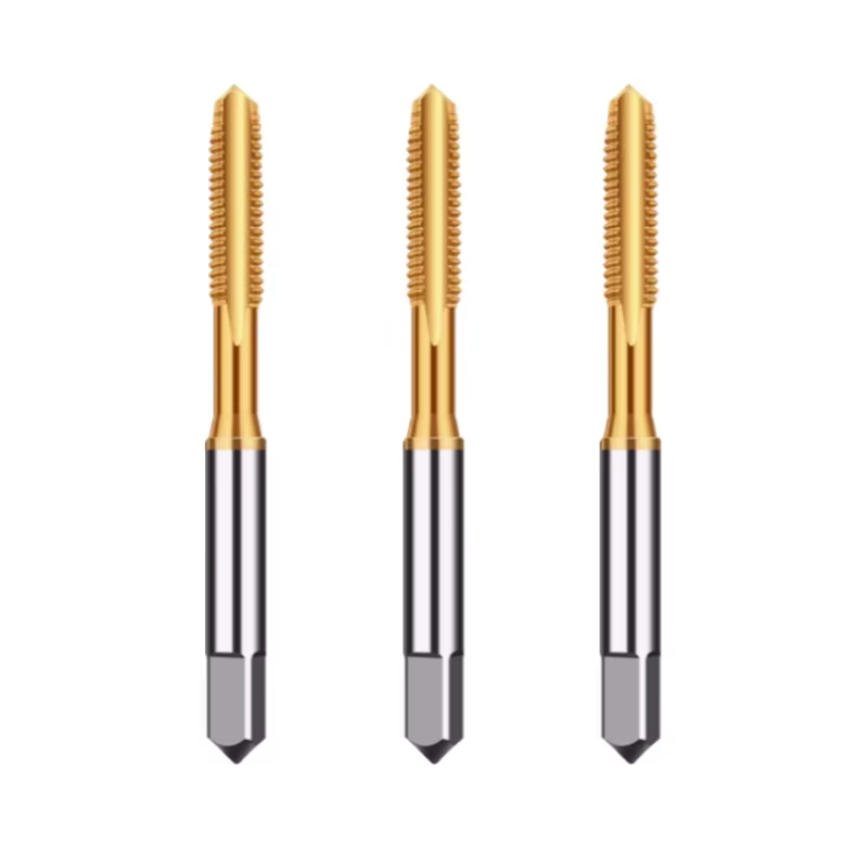
Deploying 1 2 bsp thread tap sizes in a CNC environment requires strict adherence to speed and feed calculations. Because the pitch is 1.814 mm, your machine’s feed rate must exactly match the spindle RPM multiplied by the pitch. Rigid tapping cycles ensure absolute synchronization between the Z-axis and the spindle rotation.
When cutting larger threads like the 1/2 BSP, the cutting forces are immense. For materials like 316 Stainless Steel or Titanium, standard High-Speed Steel (HSS) may wear prematurely. In these scenarios, utilizing taps alloyed with Cobalt (HSS-Co) or applying specialized coatings like Titanium Carbonitride (TiCN) will drastically extend tool life. For extreme applications, review our guide on the heavy duty tap and drill setups designed to tackle the toughest alloys.
Lubrication is non-negotiable. Standard flood coolant provides adequate cooling, but high-pressure tapping fluids or extreme pressure (EP) cutting pastes are recommended to provide the necessary lubricity, ensuring smooth thread flanks and preventing galling.
7. Specialized Threading Applications
While standard right-hand 1 2 bsp thread tap sizes are the norm, certain mechanical assemblies—particularly those involving rotating shafts or specific gas fittings—require a left-hand thread to prevent self-loosening. If your blueprint dictates a left-hand thread, the dimensions remain identical, but the cutting direction is reversed. For an in-depth look at this specific tooling, consult our article on the reverse thread taps.
Additionally, engineers often find themselves alternating between different pipe thread sizes in a single manifold. It is important not to confuse the 1/2 BSP with smaller dimensions. If you are also working with the next size down, we recommend referencing our definitive guide to the 3/8 pipe thread tap size to avoid costly mix-ups on the shop floor.
8. Summary Table: 1 2 BSP Thread Tap Sizes
To assist in your daily operations, we have compiled the essential data for 1 2 bsp thread tap sizes into a quick-reference table. You can print this section and keep it near your machining center for rapid verification.
| Parameter | Metric Measurement | Imperial Measurement |
|---|---|---|
| Nominal Size | 1/2 inch | 1/2 inch |
| Threads Per Inch (TPI) | 14 TPI | 14 TPI |
| Thread Pitch | 1.814 mm | 0.0714 inches |
| Major Diameter | 20.955 mm | 0.825 inches |
| Minor Diameter | 18.631 mm | 0.733 inches |
| Recommended Drill Size (BSPP) | 19.00 mm | 3/4 inch (Approx. 19.05 mm) |
| Thread Angle | 55 Degrees | 55 Degrees |
9. Frequently Asked Questions (FAQs)
Can I use a 1/2 NPT tap if I do not have a 1/2 BSP tap available?
Absolutely not. While they may look visually similar to the untrained eye, a 1/2 NPT thread operates at 14 threads per inch with a 60-degree flank angle, whereas the 1 2 bsp thread tap sizes operate at 14 threads per inch but with a 55-degree flank angle. Attempting to force an NPT fitting into a BSP hole will result in stripped threads and an immediate leak under pressure.
What is the difference between G 1/2 and Rc 1/2?
G 1/2 refers to the parallel version of the BSP thread (BSPP), which requires an external seal like an O-ring. Rc 1/2 refers to the internal tapered version (BSPT), which forms a seal through the wedging action of the tapered threads. Both utilize the same foundational 1 2 bsp thread tap sizes in terms of pitch and major diameter, but their geometric profiles differ significantly.
Why is my tap breaking when I use the correct 19.0 mm drill bit?
If you are using the correct drill bit for 1 2 bsp thread tap sizes but still experiencing breakage, the issue is likely chip packing or poor lubrication. If you are tapping a blind hole with a straight flute tap, the chips have nowhere to go and will crush the tap. Switch to a spiral flute tap, reduce your spindle speed, and use a high-quality sulfur-based tapping paste.
10. Authoritative References
To ensure strict compliance with international manufacturing and engineering standards, we recommend reviewing the official documentation governing fluid power threads. The dimensions and tolerances for 1 2 bsp thread tap sizes are strictly regulated by the International Organization for Standardization.