
In the world of metalworking, fabrication, and machining, the foundational step to almost every mechanical assembly is drilling a hole. However, one of the most frequently debated topics among novice machinists and facility operators is whether it is better to drill fast or slow through metal. The speed at which your cutting tool rotates, combined with the downward pressure applied, dictates not only the quality of the hole but also the lifespan of your tooling and the structural integrity of the workpiece.
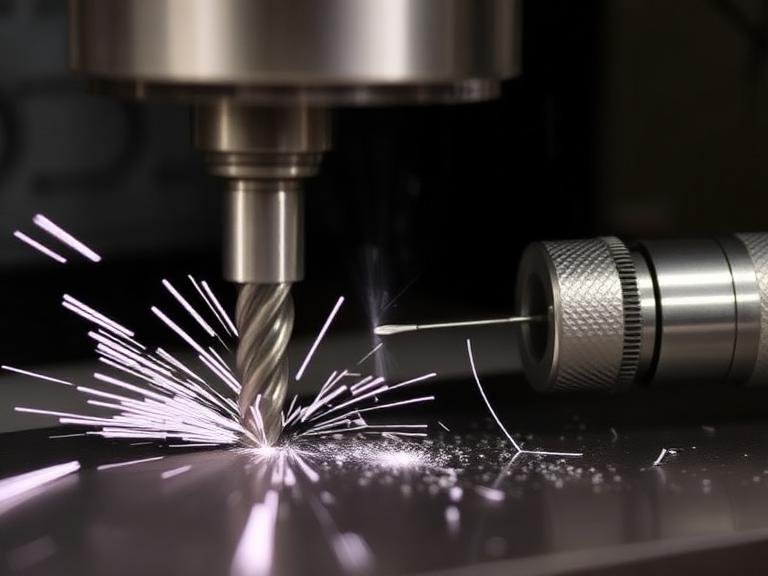
From our experience engineering precision cutting tools, the definitive answer is grounded in metallurgy and thermal dynamics. When people ask if it is better to drill fast or slow through metal, we recommend a slower rotational speed paired with a steady, moderate-to-heavy feed rate. High speeds generate excessive friction, which translates to extreme heat. This heat destroys the temper of your drill bit and can alter the molecular structure of the metal you are cutting, causing it to harden. In this comprehensive guide, we will explore the science behind spindle speeds, the dangers of work hardening, and how improper drilling directly leads to catastrophic failures during subsequent threading operations.
Table of Contents
- Summary Table: Drilling Speed and Feed Dynamics
- The Mechanics of Metal Cutting: Speed vs. Feed
- Why It Is Better to Drill Slow Through Metal
- The Danger of Work Hardening
- The Crucial Link Between Drilling Speed and Thread Tapping
- Expert Best Practices for Drilling Metal
- Frequently Asked Questions (FAQs)
- Industry References
Summary Table: Drilling Speed and Feed Dynamics
To provide immediate clarity on whether it is better to drill fast or slow through metal, we have compiled a summary matrix comparing the outcomes of different speed and feed combinations.
| Drilling Approach | Heat Generation | Tool Wear Rate | Chip Formation | Final Hole Quality |
|---|---|---|---|---|
| Slow Speed, Heavy Feed | Low to Moderate | Minimal (Extended Tool Life) | Thick, continuous chips | Excellent, dimensionally accurate |
| Fast Speed, Heavy Feed | Extreme | Rapid Tool Failure / Melting | Discolored, burnt chips | Poor, oversized, work-hardened |
| Fast Speed, Light Feed | High (Friction rubbing) | High (Dulls cutting edges) | Fine dust or small flakes | Work-hardened surface, glazed finish |
| Slow Speed, Light Feed | Low | Moderate (Rubbing rather than cutting) | Uneven, scraping action | Acceptable, but highly inefficient |
The Mechanics of Metal Cutting: Speed vs. Feed
To understand if it is better to drill fast or slow through metal, one must first differentiate between “speed” and “feed.” Speed refers to the rotational velocity of the drill bit, typically measured in Revolutions Per Minute (RPM) or Surface Feet Per Minute (SFM). Feed refers to the downward pressure or the rate at which the drill bit advances into the workpiece.
Metal cutting is a shearing process. The cutting lips of the drill bit must dig beneath the surface of the metal and shear away a layer of material, evacuating it up through the flutes as a chip. If you evaluate whether it is better to drill fast or slow through metal based on chip formation, slower is universally superior for ferrous metals. When you drill slowly with adequate pressure, the cutting edge bites deeply, transferring the heat of the cut directly into the chip rather than into the tool or the workpiece. The chip carries the thermal energy away. If you drill too fast, the cutting edge skips and rubs against the surface, generating localized friction heat without producing a substantial chip to carry that heat away.
Why It Is Better to Drill Slow Through Metal
When clients consult us on machining parameters, determining whether it is better to drill fast or slow through metal always leads to a discussion on tool preservation. High-speed steel (HSS) and even cobalt drill bits have specific thermal thresholds. When you spin a drill bit too fast against a hard metal surface, the temperature at the cutting edge can rapidly exceed 1,000 degrees Fahrenheit.
At these elevated temperatures, the metallurgical temper of the drill bit breaks down. The cutting edges soften, round over, and effectively melt. Once a drill bit is dulled by high-speed friction, it will no longer cut, regardless of how much downward pressure you apply. We recommend calculating your RPM based on the diameter of the drill bit and the specific alloy you are cutting. As a general engineering rule, the larger the diameter of the drill bit, the slower your RPM must be. Therefore, when concluding if it is better to drill fast or slow through metal, slower rotational speeds maximize the lifespan of your expensive cutting tools and ensure consistent, predictable machining cycles.
The Danger of Work Hardening
Beyond tool destruction, asking if it is better to drill fast or slow through metal requires analyzing the workpiece itself. Certain alloys, most notably 300-series stainless steel and titanium, possess a property known as work hardening. When these metals are subjected to localized heat and friction without active shearing—which occurs when you drill too fast with too little feed pressure—the crystalline structure of the metal actually reorganizes and hardens at the point of contact.
If you attempt to drill through a work-hardened layer, your drill bit will simply spin and screech against a surface that is now significantly harder than its original state. To penetrate work-hardened metal, you must drop your RPM drastically and apply immense feed pressure to break through the hardened crust. From our experience, preventing work hardening from occurring in the first place is the primary reason why it is unquestionably better to drill fast or slow through metal heavily leaning toward the slow, methodical end of the spectrum.
The Crucial Link Between Drilling Speed and Thread Tapping

At MisolTap, we integrate R&D, production, and global sales into a seamless operation to provide the world’s finest threading solutions. However, the success of our tools relies heavily on the quality of the pre-drilled hole. The debate over whether it is better to drill fast or slow through metal has direct, catastrophic consequences for tapping operations.
If a machinist drills too fast, generating excessive heat, the walls of the drilled hole become work-hardened. Furthermore, high-speed drilling often causes the bit to wander or drill an oversized, out-of-round hole. When you subsequently attempt to cut internal threads into a work-hardened, glazed hole, the threading tap will face exponential resistance. This excessive torque is the leading cause of tap breakage.
Our Capacity at MisolGroup is extensive. With over 50 sets of 5-axis CNC grinding machines and in-house vacuum heat treatment, we ensure every tap meets the strictest tolerances. We manufacture premium tools such as the IOS-529 Thread Tap, the DIN371 Thread Tap, and the JIS Thread Tap. These tools are engineered to shear metal efficiently. However, to maximize the performance of a DIN371 Thread Tap in a blind hole, or an IOS-529 Thread Tap in a through-hole, the initial drilling phase must be executed flawlessly. By choosing to drill slow and steady, you maintain the machinability of the internal bore, allowing our JIS Thread Tap and other configurations to cut clean, precise threads without binding or snapping.
Expert Best Practices for Drilling Metal
Understanding that it is better to drill fast or slow through metal depending strictly on the slow side for durability, we recommend the following expert protocols for your machining operations:
- Utilize Cutting Fluids: Never drill metal dry. High-quality cutting fluids, tapping oils, or soluble coolants provide essential lubrication. This reduces the coefficient of friction at the cutting edge, lowering temperatures and aiding in the evacuation of chips.
- Peck Drilling for Deep Holes: When drilling holes deeper than three times the diameter of your drill bit, utilize a peck drilling cycle. Drill downward slightly, then retract the bit entirely to clear the chips and allow coolant to flood the hole. This prevents chip packing and thermal buildup.
- Secure the Workpiece: As you apply the heavy feed pressure required for slow drilling, the workpiece can bind and spin violently if not properly clamped. Always secure your metal in a heavy-duty drill press vise or utilize robust step clamps on your milling table.
- Pilot Holes for Large Diameters: When drilling holes larger than 1/2 inch in diameter, we recommend drilling a smaller pilot hole first. The pilot hole should be slightly larger than the web thickness (the non-cutting center) of your final drill bit. This reduces the required feed pressure and prevents the large drill bit from wandering off-center.
Frequently Asked Questions (FAQs)
Why is it better to drill fast or slow through metal when dealing with aluminum?
Aluminum is an exception to the general rule. Because aluminum is a soft, highly thermally conductive non-ferrous metal with a low melting point, it does not work-harden like steel. You can utilize much higher spindle speeds for aluminum. However, you must use proper lubrication (like WD-40 or specific aluminum cutting fluids) to prevent the soft aluminum from melting and welding itself to the flutes of the drill bit.
What are the signs that I am drilling too fast?
The most obvious indicators of excessive speed are smoking cutting fluid, screeching or chattering noises, and the production of fine metallic dust instead of curling chips. If the tip of your drill bit turns blue or black, the temper has been ruined by heat, confirming that it is better to drill fast or slow through metal leaning entirely toward slower RPMs.
How does pre-drilling affect the lifespan of a MisolTap IOS-529 Thread Tap?
The lifespan of any premium tap, including our IOS-529 Thread Tap and DIN371 Thread Tap, is directly correlated to the condition of the pre-drilled hole. If the hole is dimensionally accurate and the metal has not been thermally glazed or work-hardened by drilling too fast, the tap will cut with minimal torque, ensuring thousands of clean threads before dulling. Proper drilling speed is the foundation of successful tapping.