
About MisolTap: Since our founding in 2005, MisolTap has established itself as a leading Chinese manufacturer of high-performance thread cutting tools. We integrate R&D, production, and global sales into a seamless operation, providing our clients with robust and precise threading solutions tailored to modern manufacturing needs.
Thread tapping is inherently one of the most mechanically demanding operations in the metalworking industry. Unlike drilling or milling, where chips are easily evacuated into open space, a tap operates in a confined hole, engaging multiple cutting edges simultaneously. This continuous, multi-point contact generates immense friction and localized heat. Without an effective fluid barrier, the metal from the workpiece will rapidly weld to the cutting edges of the tool, resulting in galling, torn threads, and catastrophic tap breakage. Implementing proper Lubrication tips for smooth thread tapping is not merely an optional best practice; it is an absolute mechanical necessity for extending tool life and ensuring dimensional accuracy.
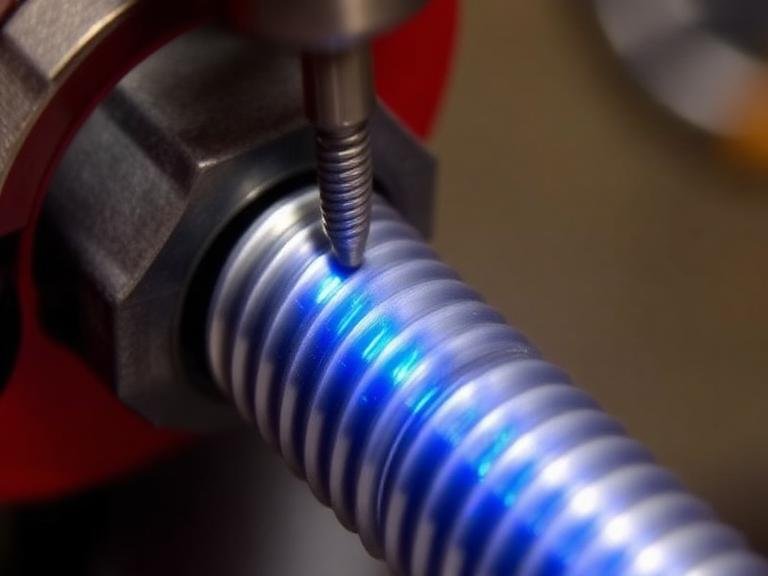
From our experience at MisolTap, we frequently analyze failed tools sent in by manufacturing partners. In the vast majority of cases, premature tap failure is not caused by a defect in the high-speed steel or carbide, but by inadequate or improper fluid application. Providing the correct chemical and physical boundary between the tool and the workpiece is the key to maximizing production efficiency. In this comprehensive guide, we detail the top 6 Lubrication tips for smooth thread tapping to help machinists, engineers, and fabricators achieve flawless internal threads every time.
Table of Contents
- 1. Prioritize Extreme Pressure (EP) Lubricity Over Cooling
- 2. Match the Cutting Fluid to the Workpiece Material
- 3. Apply Tapping Pastes for Vertical and Overhead Operations
- 4. Ensure Deep Penetration in Blind Holes
- 5. Optimize Application Methods and Fluid Pressure
- 6. Maintain Metalworking Fluid Cleanliness
- Summary Table: Tapping Lubrication Strategies
- Frequently Asked Questions (FAQs)
- Industry References
1. Prioritize Extreme Pressure (EP) Lubricity Over Cooling
When discussing comprehensive Lubrication tips for smooth thread tapping, we must first address the fundamental difference between tapping and other machining operations. High-speed operations like CNC milling and turning generate tremendous heat, making thermal dissipation (cooling) the primary goal. Tapping, however, is a low-surface-speed operation. The primary adversary here is not bulk heat, but extreme friction at the cutting edge. Therefore, water-soluble coolants that excel at cooling often lack the lubricity required to prevent metal-to-metal adhesion during tapping.
We recommend utilizing straight cutting oils or tapping fluids formulated with Extreme Pressure (EP) additives. These additives—typically sulfur, chlorine, or phosphorus compounds—react chemically with the freshly cut metal surface under high pressure to form a solid boundary film. This film prevents the tap’s cutting teeth from micro-welding to the workpiece. By prioritizing lubricity over cooling, you significantly reduce the torque load on the tap spindle, thereby preventing unexpected tool shear.
2. Match the Cutting Fluid to the Workpiece Material
There is no universal fluid that works perfectly across all metals. One of the most vital Lubrication tips for smooth thread tapping is matching the chemical composition of your lubricant to the metallurgy of your workpiece. For instance, tapping aerospace-grade titanium requires distinct fluid properties compared to threading soft aluminum.
For tough, work-hardening alloys like 304 or 316 stainless steel, heavy, dark, sulfurized oils are mandatory. These thick fluids provide the aggressive boundary lubrication needed to cut tough chips. Conversely, applying a heavy dark oil to aluminum can cause the soft chips to clump together, packing the flutes and snapping the tap. When working with non-ferrous metals like aluminum or brass, light synthetic fluids, soluble oils, or even penetrating aerosols are preferred because they prevent galling while allowing chips to flow freely. We strongly suggest that you pair the correct fluid with the best material for thread taps to maximize your machining efficiency and achieve superior thread finishes.
3. Apply Tapping Pastes for Vertical and Overhead Operations
Gravity is often the enemy of proper lubrication. If you are applying a highly fluid cutting oil to a vertical surface or performing an overhead tapping operation, the fluid will simply drip away before the tap even engages the material. This leaves the cutting edges starved of lubrication precisely when the highest torque is applied.
In these challenging scenarios, substituting liquid oil with a high-viscosity tapping paste or wax is among our most highly recommended Lubrication tips for smooth thread tapping. Pastes are designed to cling to the tool geometry. As the tap enters the hole and generates friction, the paste localized at the cutting zone melts perfectly into a heavy lubricating film. This strategy is exceptionally useful in maintenance and repair environments, such as when using a left hand thread tap set to extract broken bolts from an engine block, or when utilizing rethreading taps and dies to repair damaged threads on heavy machinery that cannot be repositioned.
4. Ensure Deep Penetration in Blind Holes
Blind holes present a unique mechanical challenge because there is nowhere for the chips to escape except back up through the flutes of the tap. If chips pack tightly at the bottom of the hole, the tap will seize instantly. Applying adequate fluid prevents these chips from welding together and keeps them slippery enough to evacuate upward.
When evaluating the dynamics of a plug tap vs thread tap, it is important to understand that plug taps push a certain volume of chips forward. Therefore, the bottom of the blind hole must contain enough lubricant to interact with those forward-pushing chips. One of our most practical Lubrication tips for smooth thread tapping in blind holes is to partially fill the hole with fluid before initiating the cut, rather than just coating the tap. Additionally, friction is heavily dictated by the initial hole diameter. Always consult a precision tap and drill size chart to ensure you are leaving the correct thread percentage. A hole that is drilled too small leaves zero clearance for cutting fluid, leading to immediate tool failure.
5. Optimize Application Methods and Fluid Pressure
The method of delivering the lubricant is just as important as the lubricant itself. Simply brushing oil onto the tap before it enters the workpiece is often insufficient for deep holes or continuous CNC production runs. As the tap descends, the top threads of the hole wipe the oil off the tool, leaving the critical leading chamfer completely dry when it encounters the deepest, hardest material.
When mastering how to use a thread tap in automated or semi-automated setups, we recommend utilizing programmable coolant nozzles aimed directly parallel to the tap’s axis, forcing fluid down into the flutes. For maximum performance in machining centers, through-tool coolant taps should be utilized. These tools feature internal channels that pump high-pressure cutting fluid directly to the cutting edge, forcefully flushing chips out of the hole and providing unparalleled continuous lubrication.
6. Maintain Metalworking Fluid Cleanliness
Even the most advanced extreme-pressure lubricants will fail if they are heavily contaminated with abrasive particles. Over time, metal swarf, dust, and fine chips accumulate in coolant sumps and fluid reservoirs. When this contaminated oil is pumped back onto a tap, the microscopic metal shards act like a lapping compound, rapidly dulling the delicate cutting edges of the tap and scoring the internal threads of the workpiece.
The final entry in our list of essential Lubrication tips for smooth thread tapping is to maintain rigorous fluid cleanliness. Employ proper filtration systems on your CNC machines to separate fine particulate matter from the cutting fluid. For manual operators using squeeze bottles or brush cans, ensure the containers are sealed when not in use to prevent shop dust from degrading the chemical integrity of the tapping fluid.
Summary Table: Tapping Lubrication Strategies
To provide a quick reference for shop floor operators and manufacturing engineers, we have summarized these Lubrication tips for smooth thread tapping into an easily digestible table.
| Lubrication Strategy | Operational Focus | Manufacturing Benefit |
|---|---|---|
| Prioritize Extreme Pressure (EP) Additives | Provide chemical boundary lubrication under high friction. | Prevents micro-welding, galling, and tap shear. |
| Material-Specific Fluid Matching | Match viscosity and active chemicals to workpiece metallurgy. | Ensures optimal chip evacuation and prevents work-hardening. |
| Utilize Tapping Pastes for Overhead Work | Counteract gravity on vertical or inverted surfaces. | Keeps the cutting edge constantly lubricated where liquids run off. |
| Ensure Deep Hole Penetration | Pre-fill blind holes to assist forward-pushing chips. | Prevents chip packing and catastrophic tool breakage at the bottom. |
| Optimize Fluid Pressure and Nozzle Aim | Direct high-pressure fluid parallel to the tap axis or through-tool. | Flushes chips out of the flutes and cools the cutting zone continuously. |
| Maintain Fluid Cleanliness and Filtration | Remove abrasive swarf from recirculating coolant systems. | Protects the tap’s cutting geometry and ensures high-quality thread finish. |
Frequently Asked Questions (FAQs)
Can I use standard WD-40 or multi-purpose spray for tapping steel?
While standard penetrating sprays can work adequately for very soft materials like aluminum or thin plastics, they are generally not recommended for tapping carbon steel or stainless steel. They lack the necessary extreme pressure (EP) additives. We recommend using a dedicated sulfurized dark cutting oil for ferrous metals to ensure proper boundary lubrication.
Why do my taps keep breaking in blind holes even when I use plenty of cutting oil?
Tap breakage in blind holes is most commonly caused by chip packing, not necessarily a lack of lubrication. If your fluid is too viscous, it can cause the chips to stick together and form a solid plug at the bottom of the hole. Ensure you are backing the tap out periodically to break chips (peck tapping), using a fluid that promotes chip evacuation, and verifying your initial hole size.
Are tapping pastes better than liquid cutting oils?
Neither is universally “better”; they serve different applications. Pastes are excellent for manual, vertical, or overhead tapping because their high viscosity allows them to cling to the tool. However, in high-speed, automated CNC applications, low-viscosity liquid fluids are strongly preferred because they flow quickly and actively flush chips out of the cutting zone.
Industry References
To ensure our readers have access to the most reliable and authoritative engineering standards regarding machining, metalworking fluids, and thread specifications, we recommend consulting the following resources: