
Extracting a shattered high-speed steel tap from a deeply bored blind hole inside a high-value titanium aerospace component is the absolute nightmare scenario for any CNC machinist. The extraction process—often requiring costly electrical discharge machining (EDM) operations—can instantly destroy the profit margin of an entire production run. Tap breakage in deep holes is rarely a random accident; it is the predictable result of accumulated torsional stress, catastrophic chip packing, and fundamental misunderstandings of machining physics. If you are snapping taps in deep cavities, your tooling strategy, feed rates, or clearance calculations are inherently flawed.
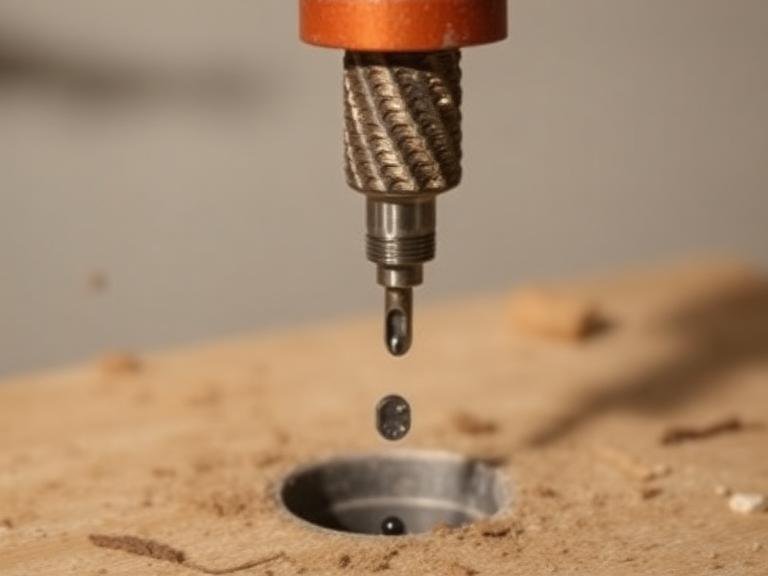
From our experience engineering cutting tools at MisolTap, we know that generic hand-tapping methodologies fail spectacularly when applied to modern, high-speed CNC environments. A deep hole is generally defined as any cavity where the thread depth exceeds 1.5 times the nominal diameter of the tap. At these depths, standard straight-flute tools become lethal traps for metal chips. In this definitive guide, we strip away the theoretical fluff and provide the exact, uncompromising mechanical protocols required to prevent tap breakage, ensuring your production lines remain uninterrupted and your scrap bins remain empty.
Quick Answer: How to Stop Breaking Taps
To definitively prevent tap breakage in deep holes, you must execute a combination of geometric and programmatic strategies. First, never aim for 100% thread engagement; size your pilot hole for a 75% or 60% engagement to exponentially reduce torsional cutting forces. Second, you must use Spiral Flute Taps for blind holes to aggressively pull chips upward and out of the cavity, preventing the chip-packing that acts as a silent killer. Third, always program your drill depth at least 0.050 inches deeper than your final tap depth to ensure the tap does not crash into the conical drill point. Finally, if the workpiece material is under 36 HRC, abandon cutting taps entirely and switch to Forming Taps (Roll Taps), which generate zero chips and completely eliminate the risk of hole-clogging.
Table of Contents
- What It Is: The Physics of Deep Hole Tapping
- How It Works: 8 Proven Prevention Strategies
- Commercial Benefits of Optimization
- Limitations and Edge Cases
- Who Should Implement These Protocols
- Who Does Not Need Complex Tapping Strategies
- Common Machining Mistakes
- Strict Buying Considerations
- Expert Recommendation
- Summary and Comparison Tables
- Frequently Asked Questions
What It Is: The Physics of Deep Hole Tapping
Deep hole tapping involves cutting or forming internal threads into a bore that extends significantly past the standard depth ratio (typically $> 1.5 \times Diameter$). The mechanical challenge here is isolation. As the tap descends deep into the workpiece, the flutes—the channels designed to evacuate waste material—become choked. When metal chips cannot escape, they fold over themselves, compacting into a dense, solid mass at the bottom of the hole. This phenomenon is known as “chip packing.”
Once chip packing occurs, the tap can no longer progress forward. However, the CNC spindle continues to apply rotational force. Because high-speed steel (HSS) and carbide taps are engineered for extreme hardness to maintain a sharp cutting edge, they are inherently brittle. When the torsional strain exceeds the ultimate tensile strength of the tap’s core, the tool violently shears inside the hole. Understanding the fundamental types of thread taps is your first line of defense in managing this physical reality.
How It Works: 8 Proven Prevention Strategies
1. Size Pilot Holes for Optimal Thread Percentage
The most pervasive myth in machining is that a threaded joint requires 100% thread engagement for maximum strength. This is mathematically and structurally false. A tapped hole with a 75% thread depth possesses only 5% less shear strength than a 100% thread, but requires a staggering 66% less cutting force to machine. For incredibly tough alloys like Inconel or Titanium, dropping engagement to 60% or even 50% is standard practice. To calculate the exact pilot hole size for a 75% engagement on unified imperial threads, use the standard formula:
$$D_{drill} = D_{major} – \frac{1}{N}$$
Where $N$ is the number of threads per inch. For metric applications, the formula simplifies to $D_{drill} = D_{major} – Pitch$. When dealing with fluid systems, consulting a strict pipe thread tap size chart is mandatory to ensure proper taper interference.
2. Switch to Form Taps for Chip-Free Machining
If you want to completely eliminate chip packing, you must eliminate the chips. Forming taps (also known as roll taps) do not feature cutting edges. Instead, they feature lobed geometries that displace the workpiece material through cold plastic deformation, pushing the metal into the shape of a thread. Because zero waste material is generated, there is nothing to clog the deep hole. However, this strategy is strictly limited to ductile materials with a hardness rating of 36 HRC or lower.
3. Match Tap Geometry to the Hole Type
Never use a straight-flute hand tap in a deep blind hole on a CNC machine. You must use a Spiral Flute Tap. The helical design of a spiral flute tap acts exactly like an auger, pulling the continuous metal chips upward and ejecting them safely out the top of the bore. Conversely, if you are machining a deep through-hole, you should utilize a Spiral Point Tap. This geometry features an angular grind at the tip that forcefully pushes the chips forward, ahead of the tap, allowing them to drop out the bottom of the workpiece without tangling in the flutes. Differentiating the sealing mechanics of tapered vs straight thread profiles also dictates your specific tapping depth strategy.
4. Over-Drill the Blind-Hole Clearance Depth
A staggering number of taps are shattered because the programmer failed to account for the geometry of the drill bit. Standard drills have a 118-degree or 135-degree point angle. If you program your drill to a depth of 1.000 inch and your tap to a depth of 1.000 inch, the tap will crash violently into the un-drilled conical section at the bottom of the bore. You must consistently program your pilot drill to plunge at least 0.050 inches deeper than the final required tap depth. Knowing the plug tap vs thread tap distinction prevents bottoming out in blind cavities.
5. Implement Peck Tapping Cycles
In extremely deep holes where even spiral flutes struggle to evacuate stringy chips, you must implement peck tapping. Similar to peck drilling, this specialized G-code cycle drives the tap into the hole for a few threads, stops, and reverses direction slightly. This reversing action mechanically breaks the continuous chip into smaller, manageable pieces that will not form a destructive “bird’s nest” around the tool shank.
6. Deploy High-Lubricity Specialty Fluids
Standard water-soluble CNC coolant is highly effective for dissipating heat, but it possesses terrible lubricity properties for high-friction operations. Deep tapping generates massive friction. In most professional situations, relying on water-soluble coolant for tapping gummy materials like 304 Stainless Steel is a recipe for cold welding and tool failure. You must utilize dedicated, oil-based tapping fluids or specialized tapping compounds brushed directly onto the tool.
7. Eliminate Runout with Premium Tool Holders
A tap is designed to endure torsional (twisting) forces, not lateral (bending) forces. If your CNC spindle or your collet chuck exhibits a Total Indicator Reading (TIR) runout of more than 0.001 inches (0.03 mm), the tap will wobble. As it enters the rigid pilot hole, this wobble forces the tap to bend sideways, instantly snapping the brittle high-speed steel. You must use highly precise ER tap collets featuring an internal square drive to prevent slipping, or employ floating tension-compression holders if your machine lacks synchronous rigid tapping capabilities.
8. Adopt Thread Milling in Hardened Alloys
When the workpiece material exceeds 50 HRC, traditional tapping becomes an unacceptable liability. In these heavy-duty scenarios, you must abandon tapping and switch to thread milling. A thread mill is a solid carbide cutting tool that uses helical interpolation to carve the threads into the wall of the bore. The tool diameter is significantly smaller than the hole, providing massive clearance for chip evacuation. Crucially, if a thread mill breaks, it simply falls out of the hole, whereas a broken tap becomes friction-welded into the part.
Commercial Benefits of Optimization
Implementing these strict tapping protocols instantly transforms your manufacturing economics. By eliminating tap breakage, you eradicate the machine downtime associated with emergency tool extraction and part salvaging. Scrapping a multi-thousand-dollar aerospace manifold because of a shattered three-dollar tap is a preventable tragedy. Furthermore, optimizing your drilling speed for metal before the tapping cycle ensures the pilot hole walls are not work-hardened, thereby extending the lifespan of your threading tools by up to 400%.
Limitations and Edge Cases
We must use commercial and practical judgment: these strategies are not universally applicable. Form tapping, while brilliant for eliminating chips, requires highly precise pilot hole tolerances; if the hole is oversized by even a thousandth of an inch, the displaced metal will not fully form the crest of the thread, leading to a rejected, out-of-spec fastener joint. Additionally, peck tapping significantly increases the total cycle time of the machining operation, which can bottleneck high-volume production runs.
Who Should Implement These Protocols
For commercial users, high-volume production facilities, and job shops handling high-value exotic alloys, mastering these 8 methodologies is absolutely non-negotiable. If you operate modern multi-axis CNC mills or lathes, applying these techniques guarantees lights-out manufacturing reliability. Vetting top thread tap manufacturers guarantees you receive tools with consistent core geometries capable of surviving deep bore pressures.
Who Does Not Need Complex Tapping Strategies
For beginners looking to understand the manual basics, learning exactly how to use a thread tap prevents initial tool breakage in shallow, uncritical applications. Hobbyists hand-tapping 1/4-inch deep holes in mild aluminum brackets do not need to invest in expensive thread mills or floating collet chucks. Basic hand taps and a standard T-handle wrench are sufficient for low-stress, shallow-depth garage projects.
Common Machining Mistakes
In our testing, the most devastating mistake operators make is attempting to use standard hand taps (straight flute taps) in automated CNC cycles. Hand taps are explicitly designed to be rotated forward, then reversed manually to break the chip. Running them continuously in a deep blind hole via a G84 rigid tapping cycle guarantees chip packing and instantaneous tool explosion. Another frequent error is ignoring the necessity of a heavy duty tap and drill setup when transitioning from mild steel to hardened tool steels.
Strict Buying Considerations

When procuring tooling for deep hole operations, you must evaluate the substrate and the coating. Selecting the best material for thread taps, such as Powder Metallurgy High-Speed Steel (HSSE-PM), provides the necessary torsional toughness that standard HSS lacks. You must also select application-specific coatings; Titanium Carbonitride (TiCN) offers excellent wear resistance for cast iron, while bright (uncoated) finishes prevent galling when tapping sticky aluminum alloys.
Expert Recommendation
From our experience, hoping a generic cut tap will survive a 3x-diameter blind hole is an unacceptable manufacturing risk. We strongly recommend that commercial facilities adopt a rigid hierarchy for deep hole threading: Default to Form Taps for all ductile materials under 36 HRC to eliminate chips entirely. If the material must be cut, upgrade immediately to premium Spiral Flute Taps paired with heavy-duty tapping oil. If the material exceeds 50 HRC, abandon tapping and integrate Thread Milling into your CAM programming.
About MisolTap Engineering
Since our founding in 2005, MisolTap has established itself as a leading Chinese manufacturer of high-performance thread cutting tools. We integrate R&D, production, and global sales into a seamless operation, providing our clients with robust and precise threading solutions tailored to modern manufacturing needs. Whether you require advanced spiral flute geometries or heavy-duty forming taps, our tooling is engineered to eliminate breakage and maximize your production yields.
Summary and Comparison Tables
| Failure Catalyst | Machining Solution | Application Target |
|---|---|---|
| Chip Packing in Blind Holes | Use Spiral Flute Taps or Form Taps | Deep cavities, blind bores |
| Chip Tangling in Through Holes | Use Spiral Point Taps | Open-ended through holes |
| Excessive Torsional Torque | Reduce Thread Engagement to 60-75% | Tough alloys, Titanium, Stainless |
| Lateral Binding and Shearing | Limit Spindle Runout (TIR < 0.001″) | All CNC precision tapping |
| Bottoming Out (Crashing) | Drill 0.050″ deeper than tap stroke | All blind hole operations |
| Feature Metric | Standard Cut Tap (Spiral Flute) | Form Tap (Roll Tap) |
|---|---|---|
| Chip Generation | High (Must be evacuated) | Zero (Material is displaced) |
| Material Hardness Limit | Can cut materials up to ~50 HRC | Strictly limited to < 36 HRC |
| Thread Strength | Standard sheared grain structure | Superior strength (Cold-worked grain structure) |
| Risk of Chip Packing | High if coolant pressure is low | None (No chips exist) |
| Pilot Hole Tolerance | Forgiving | Extremely Strict (Requires tight tolerances) |
| Machining Strategy | Pros (Advantages) | Cons (Limitations) |
|---|---|---|
| Thread Milling | Broken tools fall out harmlessly; Handles >50 HRC easily; One tool cuts multiple thread sizes. | Slower cycle times; Requires complex 3-axis helical interpolation CAM programming. |
| Rigid Tapping | Extremely fast cycle times; Simple G84 programming cycle; Excellent for high-volume runs. | Broken taps are friction-welded into the part; High risk of chip packing in blind holes. |
Frequently Asked Questions
Why do hand taps break so easily in a CNC machine?
Hand taps feature straight flutes designed to hold chips temporarily before the machinist manually reverses the wrench to snap and clear the chip. In a continuous, automated CNC rigid tapping cycle, a hand tap has no mechanism to eject the waste material. The chips pack densely into the straight flutes, instantly binding the tool and causing catastrophic torsional failure.
How deep should I drill my pilot hole before tapping?
For blind holes, you must drill at least 0.050 inches (1.27 mm) deeper than the absolute maximum depth the tap is programmed to reach. The tip of a standard drill bit is conical (typically 118 degrees), meaning the true full-diameter depth of the hole is shallower than the programmed Z-axis depth. Providing this extra clearance ensures the flat leading edge of the tap does not crash into the conical bottom of the hole.
Is 100% thread engagement necessary for a strong joint?
No. This is a highly destructive misconception. A threaded hole with 75% effective thread depth retains roughly 95% of the shear strength of a 100% thread, yet it requires only one-third of the cutting force to machine. Attempting to tap a deep hole to 100% engagement drastically increases the torque load on the tap, virtually guaranteeing tool breakage without yielding any meaningful structural benefit.
Authoritative Industry References
To ensure uncompromising engineering accuracy, the machining parameters and mechanical protocols detailed in this guide reference data from the following authorities:
- Haas Automation CNC Troubleshooting Guidelines – Industry standards for G-code rigid tapping cycles, spindle runout tolerances, and precise pilot hole depth calculations.
- Jarvis Cutting Tools Analysis – Metallurgical and geometric evaluations of tap failure modes, including the critical impact of chip evacuation and alignment in deep hole threading.
- GSR Threads Engineering Strategies – Comparative data regarding the torque reduction and tensile strength retention of 75% thread engagements versus 100% thread engagements.