
About MisolTap
Since our founding in 2005, MisolTap has established itself as a leading Chinese manufacturer of high-performance thread cutting tools. We integrate R&D, production, and global sales into a seamless operation, providing our clients with robust and precise threading solutions tailored to modern manufacturing needs. From small-scale fabrication to enterprise-level machining, our expertise ensures your threads hold strong.
Welcome to the ultimate Thread tap pitch guide. In the demanding world of modern machining, selecting the correct thread pitch is not merely a suggestion—it is a rigid engineering requirement. We have seen firsthand how incorrect pitch selection leads to stripped threads, shattered fasteners, and catastrophic mechanical failures in the field. Machinists cannot afford to guess. You need exact parameters, proven data, and expert recommendations to ensure every hole you tap meets the highest standards of precision and durability.
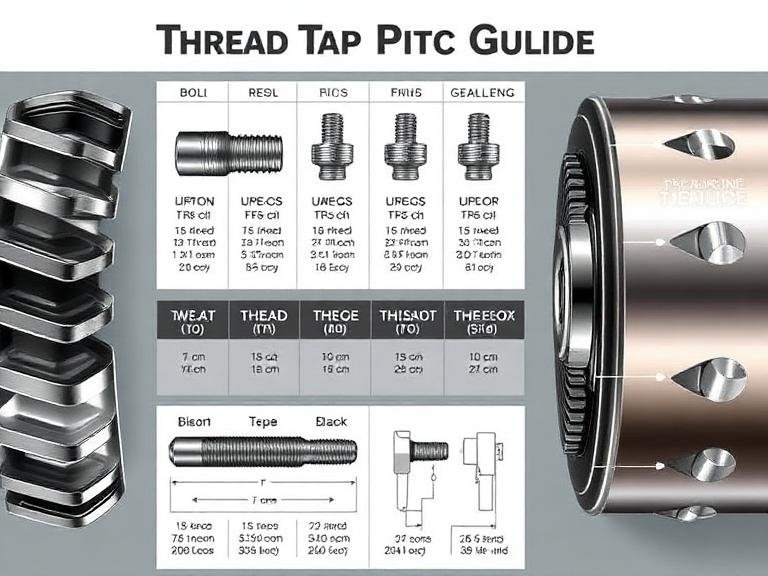
From our experience engineering tooling for decades, the distinction between a coarse pitch and a fine pitch dictates the entire lifecycle of the assembled part. Whether you are dealing with brittle cast iron, ductile aluminum, or work-hardened titanium, understanding how thread pitch interacts with material properties is what separates a novice from a master machinist. This comprehensive Thread tap pitch guide is designed to dissect the engineering principles behind thread tap pitches, giving you the authoritative knowledge required to choose the optimal configuration for your specific application.
Summary: Quick Thread Pitch Reference
| Thread Type | Pitch Characteristic | Primary Advantage | Ideal Materials | Common Application |
|---|---|---|---|---|
| Metric Coarse / UNC | Larger distance between crests | Faster assembly, tear resistance | Cast iron, aluminum, soft plastics | General construction, rapid assembly |
| Metric Fine / UNF | Smaller distance between crests | Higher tensile strength, fine adjustment | Steel, titanium, hard alloys | Aerospace, automotive, precision instruments |
| Extra Fine (UNEF) | Very tight crest spacing | Extreme vibration resistance | Thin-walled tubing, sheet metal | Optical mounts, delicate fluid systems |
Table of Contents
- 1. The Anatomy of Thread Pitch and TPI
- 2. Coarse vs. Fine Pitch: The Engineering Showdown
- 3. Material Considerations in Pitch Selection
- 4. Tool Geometry and Matching Tap Types
- 5. Sizing, Pre-Drilling, and Proper Execution
- 6. Practical Industry Applications
- 7. Frequently Asked Questions (FAQs)
- 8. References and Standards
1. The Anatomy of Thread Pitch and TPI
To master the principles in this Thread tap pitch guide, we must first establish strict definitions. In the metric system, “pitch” is defined as the exact distance in millimeters from the crest of one thread to the crest of the next. For example, an M8 x 1.25 tap produces threads that are exactly 1.25mm apart. Conversely, in the Imperial (Unified) system, we measure pitch in Threads Per Inch (TPI). A 1/4-20 tap cuts exactly 20 threads within one inch of linear distance.
These measurements dictate the fundamental geometry of the mechanical joint. A larger pitch (fewer threads per inch) creates a deeper, wider thread profile. A smaller pitch (more threads per inch) yields a shallower, narrower profile. We recommend always verifying the exact pitch requirements of your mating fastener before engaging the workpiece. A mismatch as small as a fraction of a millimeter will bind the fastener, gall the material, or entirely destroy the internal threads during insertion.
From our experience, machinists often overlook the relationship between pitch and the minor diameter of the internal thread. When you decrease the pitch (moving to a finer thread), the minor diameter increases. This leaves a thicker wall section on the tapped component, drastically improving structural integrity in thin-walled parts. Understanding this geometric relationship is the foundation of selecting the best material for thread taps to handle specific shear loads.
2. Coarse vs. Fine Pitch: The Engineering Showdown
The debate between coarse and fine threads is settled not by preference, but by applied physics. As an opinionated authority in cutting tools, we state categorically: neither is universally superior; their superiority is strictly situational.
When to Deploy Coarse Threads (UNC / Metric Coarse)
Coarse threads are the workhorses of the manufacturing world. Because the distance between threads is wider, the cross-sectional area of the thread flank is larger. This makes coarse threads significantly more resistant to stripping and cross-threading, especially in softer materials. We recommend utilizing coarse pitch taps when working in environments where debris, dirt, or plating build-up might foul a tighter thread.
Furthermore, coarse threads require fewer turns to achieve full assembly, cutting down on manufacturing time. If you need to know how to tap threads in metal efficiently for high-volume, low-stress consumer goods, a standard coarse pitch is your best option.
When to Deploy Fine Threads (UNF / Metric Fine)
Fine threads excel where coarse threads fail: high-tension, high-vibration, and precision environments. Because a fine thread has a shallower profile, the effective root diameter of the fastener remains larger, yielding higher tensile and shear strength. Furthermore, the smaller helix angle of a fine pitch prevents the fastener from vibrating loose.
We mandate fine pitch threads for applications involving fluid dynamics and pressure containment. For example, engineers designing components for Precision Ceramic Pumps rely heavily on fine and extra-fine pitches to ensure exact alignments and leak-proof seals under extreme operational pressures. Fine threads also offer vastly superior adjustability, making them mandatory in optical instruments and calibration tools.
3. Material Considerations in Pitch Selection
Your choice of thread pitch in this Thread tap pitch guide must directly correlate with the metallurgical properties of the workpiece. You cannot treat cast iron the same way you treat aerospace-grade aluminum. Tapping is a high-friction, high-torque operation, and the pitch governs how much material is sheared away per rotation.
When tapping highly ductile and soft materials—such as aluminum, brass, or unreinforced plastics—we strongly advocate for coarse pitches. A fine pitch in soft aluminum simply does not provide enough sheer area per thread; the threads will pull out completely under heavy axial loads. Conversely, when machining hard, high-tensile materials like 304 stainless steel or titanium, fine threads are drastically easier to tap. Coarse taps require the removal of larger chips and generate immense torque. In hard materials, trying to drive a coarse tap often results in tap breakage.
Expert Tip: If you are experiencing repeated tap breakage in tough alloys, we recommend switching from a standard tap to a fine-pitch alternative, or exploring specialized sets like a left hand thread tap set for specific reverse-tension assemblies. Decreasing the pitch reduces the chip load on the tap’s cutting edges.
Modern industrial equipment heavily dictates pitch requirements. Whether you are maintaining fleet vehicles or building specialized machinery for a Plastic Processing Equipment Manufacturer, matching the material’s yield strength to the correct thread pitch ensures longevity and prevents warranty claims related to stripped housings.
4. Tool Geometry and Matching Tap Types
Selecting the correct pitch is only half the equation; you must select the right tap geometry to execute the cut. In our Thread tap pitch guide methodology, we categorize tap types based on their chamfer and flute design.
You must understand the plug tap vs thread tap dynamics. A taper tap features 7 to 10 chamfered threads, distributing the cutting force over a broader area. This is ideal for starting a coarse pitch thread in a tough material. A plug tap (3 to 5 chamfered threads) is the general-purpose standard. A bottoming tap (1 to 2 chamfered threads) is absolutely necessary for cutting threads near the bottom of a blind hole, though using one to start a fine pitch thread is highly discouraged due to the immediate, high-torque chip load.
Additionally, for maintenance and repair operations, restoring damaged threads is critical. You should never use a standard cutting tap to repair a bruised thread. Instead, leverage rethreading taps and dies. Rethreading tools (thread chasers) do not cut new material; they cold-form and push the existing displaced metal back into proper alignment, preserving the original pitch geometry without weakening the host material.
5. Sizing, Pre-Drilling, and Proper Execution
The most expertly selected tap pitch will fail catastrophically if the pre-drilled hole is the wrong diameter. We cannot stress this enough: tap drill sizing is the single most common failure point in manual and CNC tapping operations.
As a rule, you are aiming for approximately a 75% thread engagement. A 100% thread engagement requires excessive torque that will shatter the tap, while only providing a marginal 5% increase in fastening strength over a 75% thread. To determine the correct hole size, you must reference a definitive tap and drill size chart before you even load a drill bit into the chuck.
For fine pitches, the margin of error is virtually nonexistent. Because the thread depth is shallow, an oversized drill bit will leave you with a 50% or less thread engagement, rendering the joint useless. Conversely, an undersized hole for a coarse pitch tap will jam the flutes with massive chips, resulting in instantaneous tool failure. Knowing exactly how to use a thread tap requires rigid adherence to tapping fluid protocols, peck-tapping techniques to break chips, and precise spindle alignment.
| System | Calculation Formula | Example |
|---|---|---|
| Metric | Major Dia (mm) – Pitch (mm) = Drill Size | M8 x 1.25: 8 – 1.25 = 6.75mm (use 6.8mm bit) |
| Imperial (UNC/UNF) | Major Dia (in) – (1 / TPI) = Drill Size | 1/4-20: 0.250 – 0.050 = 0.200″ (#7 drill bit) |
6. Practical Industry Applications
To contextualize the data in this Thread tap pitch guide, consider real-world deployment. In the automotive sector, standard suspension components utilize coarse threads due to the thick cast-iron knuckles and the need to resist mud and corrosion cross-threading. However, inside the engine block, components like spark plugs and fluid sensors rely entirely on fine pitch threads to guarantee hermetic seals and exact torque specifications.
In aerospace manufacturing, almost all tapped holes are UNF (Fine) or UNJF (a specialized fine thread with a controlled root radius to reduce stress risers). The reduction in weight provided by thinner wall sections, combined with the superior vibration resistance of fine pitches, makes coarse threads obsolete in the sky. At MisolTap, we engineer our cutting tools to surpass the strict dimensional tolerances required by these high-stakes industries, ensuring your production remains flawless.
7. Frequently Asked Questions (FAQs)
Q: Why shouldn’t I just use a coarse thread for everything to save time?
A: Using only coarse threads is a dangerous engineering compromise. While they assemble faster and are less prone to galling in soft metals, coarse threads lack the tensile strength and vibration resistance required for critical structural applications. From our experience, adopting a “one size fits all” approach leads to mechanical failures under dynamic loads.
Q: Can I force a fine-pitch bolt into a hole tapped for a coarse pitch?
A: Absolutely not. Attempting to mix thread pitches will immediately cross-thread and destroy both the fastener and the internal workpiece threads. The pitches must match perfectly. Always use a thread pitch gauge to verify the fastener before assembly.
Q: How do I choose between Metric and Imperial thread pitches?
A: This is strictly determined by the regional standards of the assembly and the origin of the mating parts. Modern global manufacturing heavily leans toward Metric (ISO) standards. However, legacy equipment and much of the aerospace industry still rely on Imperial (Unified National) standards. Do not attempt to interchange them.
Q: Does tapping fluid really matter depending on the pitch?
A: Yes. Coarse pitches generate larger, thicker chips that require high-lubricity cutting fluids to prevent the tap from binding in the hole. Fine pitches generate thinner chips but require excellent cooling properties, especially in hard metals, to maintain the cutting edge of the tap. We recommend always using high-quality tapping fluid regardless of pitch.
8. References and Standards
To ensure strict compliance with global machining parameters, the data within this Thread tap pitch guide adheres to the following international engineering standards:
- ASME B1.1-2019 – Unified Inch Screw Threads (UN, UNR, UNJ Form). Comprehensive specifications for Imperial thread pitches and tolerances.
- ISO 68-1:1998 – ISO general purpose screw threads — Basic profile — Part 1: Metric screw threads. The definitive global standard for metric pitch dimensions.
- NIST Machining Data – Engineering tolerances, tool life calculations, and advanced material shear strength standards for industrial applications.