
When evaluating High-speed steel vs. cobalt thread taps, the correct choice depends entirely on your workpiece material and machine rigidity. High-speed steel (HSS) is highly flexible, shock-resistant, and cost-effective, making it the undisputed champion for hand-tapping and threading softer materials like mild steel, brass, and aluminum. Cobalt taps (HSS-Co or HSSE), which contain 5% to 8% cobalt, possess superior “red hardness” and abrasion resistance. They are explicitly designed for CNC machining and aggressive threading in hard, abrasive alloys like 304/316 stainless steel, titanium, and Inconel. Using a cobalt tap in a hand wrench is a critical error that usually results in a shattered tool due to its inherent brittleness.
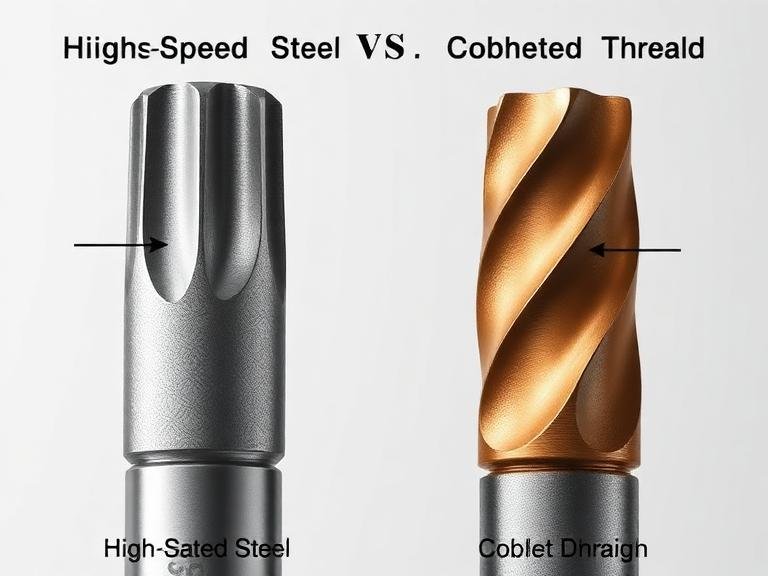
Machinists and shop floor managers bleed capital every day by selecting the wrong cutting tools. You can program the perfect feed and speed, but if your cutting tool metallurgy is fundamentally mismatched to your workpiece, your taps will burn, chip, or snap inside the hole. The debate surrounding High-speed steel vs. cobalt thread taps is not about which material is universally better; it is about which material is engineered for your specific operational reality.
From our experience working with high-volume manufacturing facilities, purchasing premium cobalt taps for every application is a massive waste of budgetary resources. Conversely, using standard HSS taps on aerospace-grade superalloys will bring your production to a grinding halt. In this definitive, opinionated guide, we dissect the metallurgical differences, outline the commercial realities of both substrates, and provide concrete advice on whether it is actually worth upgrading your tool crib.
Quick Answer: HSS or Cobalt?
- High-Speed Steel (HSS): The baseline standard. Tough, flexible, and affordable. Best for aluminum, mild steel, plastics, and any manual tapping operations.
- Cobalt (HSSE / HSS-Co): High heat resistance and extreme wear resistance. Brittle but highly effective. Mandatory for stainless steel, cast iron, and exotic aerospace alloys.
- The Core Trade-off: You are trading toughness (HSS) for hardness (Cobalt). As hardness increases, so does the risk of the tap snapping under lateral stress.
- Bottom Line: If you are running rigid tooling in a CNC mill cutting tough alloys, buy cobalt. If you are a maintenance technician using a T-handle wrench on a truck chassis, stick to standard HSS.
Table of Contents
- What It Is: The Metallurgy Explained
- How It Works: Red Hardness vs. Flexibility
- Benefits of Each Material
- Limitations and Mechanical Drawbacks
- Who Should Use It
- Who Does Not Need It
- Common Mistakes on the Shop Floor
- Buying Considerations for Machinists
- Expert Recommendation
- Pros vs. Cons and Comparison Tables
- Frequently Asked Questions
What It Is: The Metallurgy Explained
Before making a buying decision, you must understand the elemental chemistry of the tools you are threading into your expensive workpieces. High-Speed Steel (commonly graded as M2) is a complex tool steel alloy heavily alloyed with tungsten, molybdenum, chromium, and vanadium. It earns the name “high-speed” because it can cut metals at significantly higher speeds than older high-carbon steels without losing its temper.
Cobalt taps are technically just a premium sub-category of High-Speed Steel, commonly referred to as HSS-E or HSS-Co. The base alloy is identical to standard HSS, but it is supercharged with cobalt. M35 grade steel contains 5% cobalt, while M42 grade steel contains 8% cobalt. The addition of cobalt does not magically make the tap indestructible. Instead, it changes the thermal properties of the steel matrix, allowing the cutting edges to remain razor-sharp even when operating at blistering temperatures.
How It Works: Red Hardness vs. Flexibility
The entire premise of the High-speed steel vs. cobalt thread taps debate centers on a metallurgical concept known as “red hardness.” Red hardness is the ability of a cutting tool to maintain its sharp cutting edge even when it is literally glowing red hot from the friction of machining.
When you tap a hole in 316 stainless steel, the friction at the cutting edge is immense. Standard HSS will begin to soften at these elevated temperatures. The cutting edge rounds off, the tap begins to gall and tear the threads, and eventually, the tool binds and breaks. Cobalt, however, acts as a high-temperature binding agent. It prevents the grain structure of the steel from breaking down under extreme heat.
However, physics demands a sacrifice. By adding cobalt to increase heat resistance, the crystalline structure of the metal becomes highly rigid and brittle. Standard M2 HSS can bend slightly and absorb shock without snapping. M35 or M42 cobalt taps have practically zero flex. If your spindle alignment is off by even a fraction of a degree, a cobalt tap will shatter instantly.
Benefits of Each Material
In most professional situations, understanding the strengths of your tooling ensures maximum operational efficiency.
Benefits of HSS:
- Shock Absorption: HSS is incredibly tough. It can handle the uneven torque applied by a human hand using a tap wrench.
- Cost Efficiency: Standard HSS taps cost significantly less than their cobalt counterparts, making them ideal for high-volume jobs in soft materials where tool wear is minimal.
- Versatility: From left hand thread tap set applications to standard right-hand fastening, HSS is the backbone of general maintenance.
Benefits of Cobalt:
- Thermal Dominance: Cobalt taps thrive in high-heat environments where standard steel fails.
- Abrasion Resistance: Abrasive materials like cast iron and high-silicon aluminum rapidly dull standard edges; cobalt maintains its geometry.
- Extended Tool Life in Hard Alloys: When machining titanium or exotic aerospace alloys, a cobalt tap will produce significantly more threaded holes before requiring replacement, driving down your cost-per-hole.
Limitations and Mechanical Drawbacks
We recommend acknowledging the severe limitations of your tooling before plunging a tap into a highly engineered part. The primary limitation of HSS is its thermal ceiling. If you run an HSS tap too fast or dry (without adequate cutting fluid) in a hard metal, you will ruin the tool in seconds.
The devastating limitation of cobalt is its fragility. Cobalt taps cannot survive lateral stress. If you are drilling and tapping on a manual drill press with a wobbly quill, a cobalt tap will catch and shatter. Removing a shattered cobalt tap from a blind hole usually involves expensive electrical discharge machining (EDM) or scrapping the part entirely.
Who Should Use It
For commercial users and high-volume CNC operators: If your shop runs rigid tapping cycles on CNC mills and lathes, you should transition almost entirely to cobalt or powdered metal taps. The absolute rigidity of the CNC machine neutralizes the brittleness of the cobalt, allowing you to exploit its incredible tool life and speed capabilities. This is particularly relevant when deciding between a machine tap vs hand tap.
For heavy-duty applications: Machining pressure vessels, petrochemical piping, or aerospace brackets mandates the use of premium cobalt taps, often heavily coated in TiN or TiCN for added lubricity.
Who Does Not Need It
For beginners and maintenance crews: If you are a hobbyist working in a garage, a maintenance technician repairing a forklift, or a fabricator assembling aluminum extrusions, you do not need cobalt taps. You will likely snap them. Standard M2 HSS taps are perfectly adequate, vastly more forgiving, and much cheaper to replace. Furthermore, if you are learning how to tap threads in metal by hand, HSS is the only logical choice.
Common Mistakes on the Shop Floor
In our testing, we observe machinists making the same catastrophic errors repeatedly. The first is failing to adjust the pre-drill size based on the material. If you are threading stainless steel with a cobalt tap, drilling a standard 75% thread percentage hole will cause immense torque and likely snap the tap. You must consult a tap and drill size chart and step up to an 80% or 85% thread drill to relieve pressure.
The second major mistake relates to RPM. Operators often treat HSS and cobalt exactly the same. Because cobalt can withstand higher heat, you must adjust your drilling speed for metal and tapping RPM accordingly. Running a cobalt tap too slowly can actually cause work-hardening in materials like 304 stainless, making the threading operation infinitely more difficult.
Buying Considerations for Machinists
When purchasing tooling, do not just look at the upfront price tag; look at the cost-per-hole. An HSS tap might cost $15 and last for 50 holes in mild steel (30 cents per hole). A cobalt tap might cost $40 but last for 300 holes in that same steel (13 cents per hole). For commercial users, the expensive tool is actually the cheaper option over time.
You must also consider the tap geometry. There are many types of thread taps. Spiral point taps push chips forward (for through holes), while spiral flute taps pull chips backward (for blind holes). Putting a brilliant cobalt straight flute tap into a deep blind hole without chip clearance will result in a broken tap, regardless of the premium metallurgy.
Expert Recommendation
The MisolTap Verdict
Since our founding in 2005, MisolTap has established itself as a leading Chinese manufacturer of high-performance thread cutting tools. We integrate R&D, production, and global sales into a seamless operation, providing our clients with robust and precise threading solutions tailored to modern manufacturing needs.

Is it actually worth upgrading to cobalt? Yes, provided your machinery can support it. If you are tapping anything tougher than 1018 mild steel on a rigid CNC setup, we unequivocally recommend stepping up to an M35 or M42 cobalt tap. The dramatic reduction in tool changes and machine downtime justifies the premium price immediately. If you require specialized metric shanks, engaging a reputable din371 thread tap supplier guarantees you receive authentic, high-concentricity cobalt tooling engineered for modern collets.
Summary and Comparison Tables
| Material Type | Alloy Composition | Primary Strength | Ideal Application |
|---|---|---|---|
| High-Speed Steel (HSS / M2) | Tungsten, Moly, Chromium, Vanadium | Toughness & Flex | Hand tapping, mild steel, aluminum, brass. |
| Cobalt (HSS-E / M35) | HSS base + 5% Cobalt | Heat Resistance (Red Hardness) | CNC machining, stainless steel, cast iron. |
| Cobalt Super (HSS-Co / M42) | HSS base + 8% Cobalt | Extreme Abrasion Resistance | Aerospace alloys, Inconel, Titanium, Tool Steels. |
| Property | Standard HSS | Cobalt (M35/M42) |
|---|---|---|
| Heat Resistance | Moderate (Softens at high RPM) | Excellent (Retains edge at red heat) |
| Brittleness / Shock Risk | Low (Bends before breaking) | High (Shatters under lateral stress) |
| Tool Life in Hard Metals | Short | Very Long |
| Cost | Economical ($) | Premium ($$$) |
| Pros of Cobalt | Cons of Cobalt |
|---|---|
| Massive increase in tool life when cutting stainless steel and exotics. | Higher upfront purchase cost. |
| Allows for faster spindle speeds, reducing cycle times. | Extremely brittle; completely unforgiving of misalignment. |
| Maintains thread pitch accuracy longer due to superior wear resistance. | Unsuitable for hand-held tap wrenches or wobbly drill presses. |
| Reduces the risk of galling and tearing threads in gummy materials. | Overkill and financially wasteful for simple aluminum or plastic jobs. |
Frequently Asked Questions
Can I use a cobalt tap in a hand tap wrench?
In most professional situations, you should never use a cobalt tap in a manual hand wrench. Cobalt is exceptionally hard but highly brittle. The uneven torque and slight lateral wobbling generated by human hands will almost certainly cause the tap to snap inside the hole. Use standard HSS for all hand-tapping operations.
Is cobalt better than titanium-coated HSS?
It depends on the application. Titanium Nitride (TiN) is a surface coating applied to HSS to reduce friction and increase surface hardness. However, if the heat of the operation softens the underlying HSS substrate, the coating will collapse. Cobalt alters the entire substrate of the tool, providing deep structural heat resistance. For heavy-duty applications in stainless steel, a cobalt tap (often with its own specialized coating) is far superior to a merely coated standard HSS tap.
Does coolant matter when using cobalt taps?
Absolutely. Even though cobalt has excellent red hardness and resists heat, proper tapping fluid is mandatory. Threading is not just about cutting; it involves immense friction as the tap backs out of the newly cut threads. Using high-quality, sulfur-based dark cutting oil or a rich synthetic coolant prevents chip welding, extends tool life, and ensures an excellent surface finish on the threads.
Authoritative Industry Standards & References
To ensure precision in your machining operations, we adhere to the metallurgical definitions and tooling standards established by global authorities:
- ASTM International – The leading international standards organization defining the chemical compositions and hardness testing protocols for M-series high-speed tool steels.
- American National Standards Institute (ANSI) – Publishes the geometric standards, thread class tolerances, and dimensional data for machine and hand taps utilized in US manufacturing.
- ASM International – The world’s premier materials information society, providing foundational data on the effects of cobalt alloying in tool steel to achieve red hardness and abrasion resistance.