
Since our founding in 2005, MisolTap has established itself as a leading Chinese manufacturer of high-performance thread cutting tools. We integrate R&D, production, and global sales into a seamless operation, providing our clients with robust and precise threading solutions tailored to modern manufacturing needs.
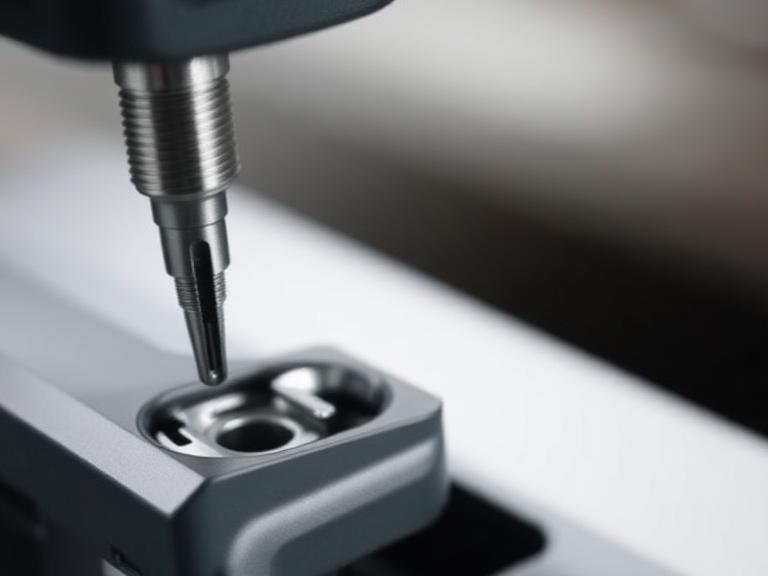
Procurement teams and manufacturing engineers routinely underestimate the massive operational impact of inferior tooling. When you purchase cheap, unverified cutting tools, you are not saving money; you are simply shifting the cost from your tooling budget directly onto your machine downtime and scrapped parts ledger. From our experience, identifying and sourcing thread taps from reliable manufacturers is the single most effective way to stabilize your cost-per-hole and guarantee geometric accuracy in high-volume production environments.
The global tooling market is saturated with trading companies acting as factories, pushing substandard high-speed steel (HSS) with inconsistent heat treatments. If you want to run a profitable machine shop or assembly line, you must vet your suppliers aggressively. We recommend looking past the glossy marketing brochures and directly analyzing the manufacturer’s grinding tolerances, metallurgical testing capabilities, and ISO certifications. Sourcing thread taps from reliable manufacturers requires a systematic approach, one that prioritizes engineering truth over sales rhetoric.
Table of Contents
- The Hidden Costs of Substandard Tooling
- Summary Table: Vendor Evaluation Criteria
- Validating Material Quality and Heat Treatment
- Precision Grinding and Geometry Inspections
- Navigating Specialized Threading Needs
- Step-by-Step Thread Tap Sourcing Strategy
- Supplier Red Flags to Avoid
- Frequently Asked Questions (FAQs)
- References
The Hidden Costs of Substandard Tooling
Many purchasing managers mistakenly evaluate tooling purely on initial unit cost. We consistently see this metric destroy profit margins. When a poorly manufactured tap snaps off inside a titanium or Inconel aerospace component, the cost of the broken tool is irrelevant. The true costs encompass the hourly rate of the machinist trying to extract the broken tap using EDM (Electrical Discharge Machining), the idle time of the CNC center, and the potential scrapping of a workpiece worth thousands of dollars. By exclusively purchasing thread taps from reliable manufacturers, you dramatically reduce the statistical probability of catastrophic tool failure.
Furthermore, poorly ground taps cause oversized or bell-mouthed threads. In critical applications like automotive braking systems or pressure vessels, a loose thread will fail quality control instantly. Real-world tooling economics dictates that spending 30% more upfront on thread taps from reliable manufacturers often yields a 200% increase in tool life and zero scrapped parts.
Summary Table: Vendor Evaluation Criteria
To streamline your auditing process, we have compiled the non-negotiable criteria you must apply when evaluating potential thread tap manufacturers globally.
| Evaluation Category | Substandard Supplier (Reject) | Reliable Manufacturer (Approve) |
|---|---|---|
| Material Traceability | Generic “HSS” without mill certificates. | Provides certificates for specific grades (e.g., M2, M35, PM-HSS). |
| Heat Treatment | Outsourced, batch-to-batch inconsistency. | In-house vacuum furnaces with cryogenic processing. |
| Grinding Technology | Manual or outdated multi-step grinding. | 5-axis CNC grinding from solid blanks in a single setup. |
| Coating Capabilities | Basic black oxide or standard TiN only. | Advanced PVD coatings (TiCN, TiAlN, custom multilayers). |
| Quality Assurance | Visual inspection only. | Laser micrometers and optical comparators for thread geometry. |
Validating Material Quality and Heat Treatment
The foundation of any cutting tool is its metallurgical integrity. If a supplier cannot clearly articulate their steel sourcing and heat-treating processes, walk away immediately. When assessing the best material for thread taps, standard HSS (M2) is acceptable for general purpose use on mild steels. However, if you are machining stainless steel or exotic alloys, you must demand HSSE (cobalt-alloyed M35 or M42) or Powder Metallurgy HSS (PM-HSS).
Sourcing thread taps from reliable manufacturers means you are paying for their heat treatment expertise. The transition from a soft steel blank to a hardened cutting tool capable of resisting abrasive wear requires exact temperature control. If the vacuum furnace temperature fluctuates by even a few degrees, the tap becomes too brittle and will shatter under torque, or remains too soft and the cutting edges will quickly roll over. We recommend demanding documentation of their tempering and cryogenic treatments, as these processes relieve internal stresses and stabilize the crystalline structure of the metal.
Precision Grinding and Geometry Inspections
Thread geometry is not subjective; it is dictated by rigid international standards. A supplier producing thread taps from reliable manufacturers will utilize 5-axis CNC grinding machines to profile the tool from a solid, hardened blank in a single clamping operation. This ensures absolute concentricity between the shank, the pitch diameter, and the chamfer.
During your technical audit, question the engineering team about their flute designs and rake angles. The choice of geometry dictates chip evacuation. For instance, knowing when to specify a spiral point versus a spiral flute is critical. Furthermore, understanding the nuances between tools is vital for your shop floor. We often see engineers confuse applications, which is why reviewing the plug tap vs thread tap dynamics with your supplier proves their technical competency. A true manufacturer will ask you about your workpiece material, machine rigidity, and coolant pressure before recommending a specific geometry.
You should also verify that their tooling aligns seamlessly with your drilling operations. Using a mismatched drill bit guarantees tap failure, which is why procuring a coordinated heavy duty tap and drill system directly from a primary manufacturer yields the best concentricity results.
Navigating Specialized Threading Needs
General-purpose tools cover roughly 70% of standard manufacturing. It is the remaining 30% that separates top-tier factories from trading companies. When sourcing thread taps from reliable manufacturers, you must evaluate their ability to produce specialized and custom tooling on short lead times.
For example, mechanical assemblies involving rotating shafts, turnbuckles, or specific automotive drivetrains often require left-handed threads to prevent self-loosening under rotational torque. If your supplier cannot produce a high-tolerance left hand thread tap set with the same precision and coating options as their standard right-hand catalog, they are likely outsourcing their specialty tools. Similarly, the ability to engineer custom reverse thread taps for specialized extraction or mechanical tensioning is a hallmark of a robust R&D department.
Additionally, do not overlook the maintenance, repair, and overhaul (MRO) side of manufacturing. A factory that understands the subtle differences between aggressive cutting taps and those used for chasing existing threads demonstrates deep industry knowledge. Utilizing the correct rethreading taps and dies prevents operators from cross-threading and destroying expensive castings during refurbishment operations.
Step-by-Step Thread Tap Sourcing Strategy
Procuring thread taps from reliable manufacturers requires discipline. We recommend implementing the following step-by-step strategy to insulate your supply chain from subpar tooling.
- Step 1: Define Your True Machining Parameters. Before contacting any factory, map out your materials, hole types (blind vs. through), and thread classes.
- Step 2: Request Engineering Support, Not Just a Price List. Send a complex drawing to the supplier and ask for their tooling recommendation. If they send a quote without asking about your spindle speeds, feed rates, or asking how to use a thread tap in your specific CNC setup, they are not a reliable technical partner.
- Step 3: Audit Their Physical Production. If you cannot visit the factory in person, mandate a live video tour. Look for the brand names on their CNC grinding machines (e.g., Walter, Rollomatic, ANCA). World-class thread taps from reliable manufacturers are not made on manual grinders.
- Step 4: Execute a Tool Life Test. Never switch your entire production line to a new supplier based on a brochure. Procure a sample batch and run them against your current tooling. Measure the exact number of threaded holes per tool before the “Go/No-Go” gauge fails. Ensure your operators are consulting a precise tap and drill size chart to eliminate pre-drilling errors during the test.
Supplier Red Flags to Avoid

From our experience, trading companies posing as direct manufacturers are the biggest threat to your tooling budget. They lack control over the metallurgical process and will switch their sub-suppliers based on raw material costs, leaving you with wildly inconsistent tool life.
Watch out for suppliers who refuse to disclose their coating partners if they do not coat in-house. Advanced PVD coatings like TiCN or TiAlN require immense technical skill to apply evenly without rounding the microscopic cutting edges of the tap. Furthermore, if a supplier cannot provide detailed dimensional inspection reports for the specific batch of tools they are shipping you, they are relying on your quality control department to find their defects. True thread taps from reliable manufacturers arrive with certified documentation proving pitch diameter and lead accuracy.
Frequently Asked Questions (FAQs)
Why is PM-HSS considered superior to standard HSS for thread taps?
Powder Metallurgy High-Speed Steel (PM-HSS) is created by atomizing molten steel into a powder and then compacting it under extreme pressure. This process eliminates carbide segregation, resulting in a perfectly uniform microstructure. PM-HSS taps offer significantly higher toughness and wear resistance compared to conventionally cast HSS, making them ideal for high-volume CNC tapping in tough alloys.
How can I visually distinguish between a high-quality thread tap and a cheap imitation?
While visual inspection cannot reveal heat treatment quality, you should look closely at the cutting edges and the thread roots. High-quality thread taps from reliable manufacturers feature ultra-smooth, polished flutes for superior chip evacuation and sharp, well-defined crests without burrs. Cheap taps often exhibit rough grinding marks in the flutes and inconsistent chamfer lengths.
Does the color of the coating determine the quality of the tap?
No. While gold (TiN), grey-blue (TiCN), or dark purple (TiAlN) indicate the type of Physical Vapor Deposition (PVD) coating used, the color alone does not guarantee quality. A cheap factory can apply a decorative, ultra-thin layer of TiN that offers zero actual heat or wear resistance. You must verify the coating thickness and adhesion strength through the manufacturer’s engineering data.
References
- National Institute of Standards and Technology (NIST) – Manufacturing Engineering Laboratory guidelines on advanced dimensional metrology and cutting tool tolerances.
- American Society of Mechanical Engineers (ASME) – Standards for unified screw threads (ASME B1.1) and tapping performance evaluations.
- Society of Manufacturing Engineers (SME) – Technical resources on CNC machining, advanced metallurgy, and optimal chip formation strategies.