
In modern manufacturing, cutting tools are treated as disposable commodities, yet they represent one of the most critical variable costs in any CNC machining operation. Every time a tap breaks, chips, or wears out prematurely, you are not just losing a piece of high-speed steel; you are losing machine uptime, scrapping expensive material, and delaying delivery schedules. For job shop owners and procurement managers, purchasing threading tools piecemeal from local retail distributors is a structural financial error.
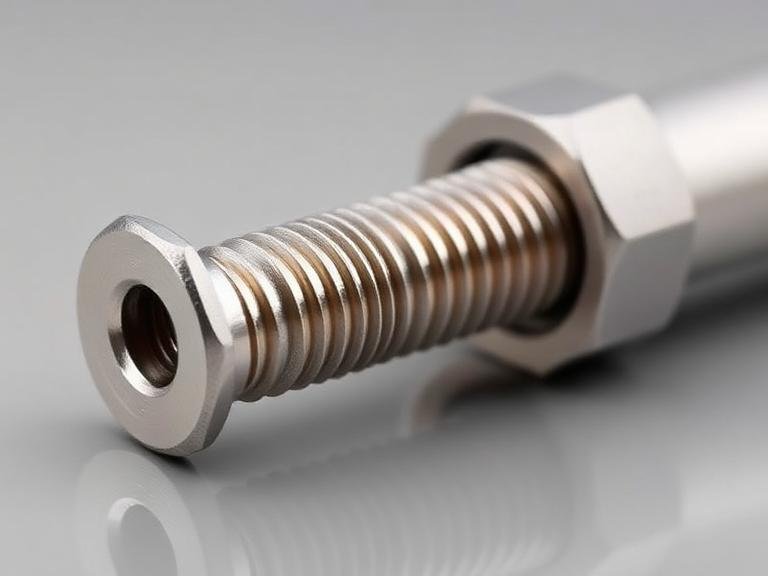
From our experience engineering and supplying tooling to tier-one manufacturers, the transition from retail purchasing to volume acquisition separates profitable machine shops from struggling ones. Understanding the profound benefits of buying thread taps in wholesale is a mandatory step for scaling operations. In this comprehensive industry guide, we break down exactly why bulk procurement transforms your production floor, identify the technical advantages of batch consistency, and provide actionable intelligence to help you make a decisive buying upgrade.
Quick Answer: Why Buy Thread Taps in Bulk?
The primary benefits of buying thread taps in wholesale include drastic unit cost reductions (often 30% to 60% less than retail), uninterrupted production schedules due to on-hand inventory, rigorous metallurgical batch consistency that stabilizes CNC feed rates, significantly reduced procurement administration, and the ability to access custom-engineered tooling directly from the manufacturer.
Table of Contents
- What It Is and How Wholesale Tool Procurement Works
- Quick Summary Table: Retail vs. Wholesale
- The 5 Benefits of Buying Thread Taps in Wholesale
- Limitations: When Wholesale Makes No Sense
- Who Should Buy Wholesale (And Who Does Not Need It)
- Comparison Table: Procurement Strategies
- Pros and Cons of Bulk Tap Acquisition
- Common Mistakes in Commercial Tool Procurement
- Buying Considerations & Specifications
- Expert Recommendation
- The Bottom Line
- Frequently Asked Questions
What It Is and How Wholesale Tool Procurement Works
Wholesale procurement in the industrial tooling sector is not simply buying a ten-pack of tools off an e-commerce website. True wholesale involves establishing a B2B relationship directly with a manufacturer or a master distributor to purchase tools in quantities of hundreds or thousands. By bypassing the traditional retail supply chain—which includes middleman markups, individual packaging costs, and localized warehousing fees—the end-user accesses the tooling at near-production cost.
How it works is straightforward but requires commercial foresight. A machine shop analyzes its historical consumption of specific taps (for example, M8x1.25 spiral flute taps) over a six-to-twelve-month period. They then issue a blanket purchase order to a specialized din371 thread tap supplier. The manufacturer produces this volume in a single run or a controlled series of runs, shipping the inventory directly to the end-user’s facility. This mechanism locks in pricing, guarantees availability, and creates a direct feedback loop between the machinist and the metallurgist.
Quick Summary Table: Retail vs. Wholesale
| Procurement Method | Unit Cost | Lead Time Risk | Batch Consistency | Best For |
|---|---|---|---|---|
| Retail / Just-In-Time | Highest (up to 200% markup) | High (Subject to local stock) | Variable (Mixed manufacturing runs) | Prototypes, emergency replacements |
| Wholesale / Direct | Lowest (Direct from factory) | Zero (Inventory held on-site) | Excellent (Single heat-treat batch) | Production runs, OEM parts, CNC job shops |
The 5 Benefits of Buying Thread Taps in Wholesale
1. Drastic Unit Cost Reduction
In most professional situations, the profit margin on a machined part is won or lost in tool life and tool cost. Retail distributors routinely mark up cutting tools by 50% to 150% to cover their overhead, inventory carrying costs, and sales commissions. When you leverage the benefits of buying thread taps in wholesale, you strip away these middle layers. Over a fiscal year, a medium-sized CNC shop spending $50,000 annually on taps via retail can often reduce that spend to $25,000 or less simply by consolidating orders directly with the manufacturer.
2. Uninterrupted Production and Supply Chain Security
Nothing destroys a production schedule faster than waiting for a specific tooling delivery. If you rely on next-day air shipping for a specialized tap, your $200,000 machining center is sitting idle while FedEx moves a $30 piece of steel. Buying in bulk means you establish a secure on-site tool crib. You isolate your production floor from global supply chain shocks, shipping delays, and local distributor stockouts.
3. Metallurgical and Geometric Batch Consistency
This is a critical technical factor that novice buyers ignore. In high-volume CNC tapping, tool consistency is paramount. If you buy taps piecemeal, you are receiving tools manufactured months apart, from different steel lots, and potentially different heat-treatment batches. This variance forces programmers to constantly adjust spindle speeds and feed rates to prevent tool breakage. When you buy wholesale, you receive thousands of taps from the exact same production batch. The coating thickness, the thread grind, and the core hardness are identical. This allows you to “set and forget” your machining parameters with absolute confidence.
4. Access to Direct Manufacturer Customization
When you establish a wholesale relationship, you are no longer limited to off-the-shelf catalog items. If your engineers are tapping a proprietary aerospace alloy and standard geometry isn’t clearing chips properly, a wholesale partner can alter the tool. You can dictate the exact relief angles, request a specific TiCN or AlTiN coating, or shift between tapered vs straight thread profiles customized for your application. Retailers cannot offer bespoke tool geometry; only a true ios 529 thread tap supplier can integrate your feedback into the manufacturing process.
5. Streamlined Procurement Administration
Processing a purchase order costs money. The administrative burden of sourcing, quoting, raising a PO, receiving, and paying an invoice for a handful of tools every week is a massive hidden cost. Wholesale purchasing condenses dozens of administrative actions into one or two strategic buying events per year. Furthermore, consolidating freight into single pallet shipments drastically reduces annual shipping expenditures.
Limitations: When Wholesale Makes No Sense
We must be objective: bulk acquisition is not the correct strategy for every business. The primary limitation is cash flow. Tying up capital in thousands of cutting tools makes zero commercial sense if your shop primarily does low-volume, high-mix prototype work. If you never cut the same thread twice, a massive inventory of 1/4-20 taps will sit gathering dust.
Additionally, you risk inventory obsolescence. If you secure a massive tooling order for a specific automotive client, and that client suddenly cancels their contract or alters the part design, you are left holding highly specific, unsellable tooling. Wholesale procurement requires accurate forecasting and stable production contracts.
Who Should Buy Wholesale (And Who Does Not Need It)
For commercial users and heavy-duty applications: If you are operating multi-pallet horizontal machining centers, Swiss-type lathes turning out thousands of medical screws, or automotive transfer lines, wholesale purchasing is a fundamental requirement. Any operation running shifts 24/7 must maintain deep tool cribs to ensure continuous operation.
For beginners and low-volume operations: Maintenance departments, hobbyist machinists, and rapid-prototyping labs do not need wholesale volume. For these users, flexibility is more important than unit cost. They should rely on robust retail suppliers and utilize resources like a 1/4 npt thread tap guide to select single, high-quality tools for specific, one-off repair jobs.
Comparison Table: Procurement Strategies
| Feature | Wholesale Tool Procurement | Retail Tool Procurement |
|---|---|---|
| Pricing Structure | Factory-direct, volume-tiered discounts. | High markup to cover local logistics. |
| Tool Customization | High. Specific coatings and geometries available. | None. Must purchase standard catalog items. |
| Technical Support | Direct access to factory metallurgical engineers. | Limited to distributor sales representatives. |
| Inventory Risk | Buyer assumes storage and obsolescence risk. | Seller assumes inventory risk. |
Pros and Cons of Bulk Thread Tap Acquisition
| Pros of Wholesale Buying | Cons of Wholesale Buying |
|---|---|
| Massive reduction in cost-per-hole tapped. | Requires significant upfront capital outlay. |
| Eliminates machine downtime caused by tool shortages. | Requires physical space for a climate-controlled tool crib. |
| Guaranteed metallurgical consistency across the batch. | Risk of dead stock if a long-term production contract is canceled. |
| Reduces administrative PO processing and freight costs. | Requires accurate, data-driven consumption forecasting. |
Common Mistakes in Commercial Tool Procurement
In our testing and consulting with machine shops, the most frequent mistake made during wholesale procurement is buying exclusively on price. Purchasing 5,000 low-grade carbon steel taps because they are cheap is a false economy. They will snap in the workpiece, costing you thousands in scrapped parts and EDM removal time. You must specify High-Speed Steel (HSS-E) or Powdered Metallurgy (PM-HSS) depending on the material you are machining.
Another fatal error is misunderstanding the application geometry. Procurement managers often order standard hand taps for CNC operations to save money. You must understand the difference between a machine tap vs hand tap. A machine tap has specialized flute geometry (like spiral point or spiral flute) designed specifically to evacuate chips at high RPMs. Putting a hand tap in a rigid CNC holder is a guaranteed recipe for tool explosion.
Finally, failing to train operators. Before you even finalize a bulk PO, your machinists must understand exactly how to tap threads in metal using the specific cutting fluids and feed rates required by the newly sourced tools.
Buying Considerations & Specifications
When negotiating a wholesale contract, you are not just buying a piece of metal; you are buying an engineered cutting solution. Do not accept vague specifications. Demand exact technical parameters from your manufacturer.
| Technical Specification | Why It Matters for Wholesale Orders |
|---|---|
| Substrate Material | Specify HSS-E (Cobalt) for stainless steel and aerospace alloys. Do not accept standard HSS for high-heat CNC applications. |
| Surface Coating | Demand TiN, TiCN, or TiAlN coatings based on your coolant setup. Coatings extend tool life by up to 300%, maximizing your bulk investment. |
| Dimensional Standards | Ensure strict compliance with DIN 371/376, ISO 529, or ANSI standards to guarantee the taps fit perfectly into your existing collets and holders. |
| Thread Profile | Be extremely specific regarding the profile. Do not confuse standard 60-degree V-threads with specialized profiles. Reference the acme thread vs normal thread specifications if you are manufacturing lead screws. |
| Size Verification | Always cross-reference your required pitch diameter limits with a verified 1/2 thread tap size chart before authorizing a massive production run. |
Expert Recommendation: Securing Your Supply Chain
The MisolTap Advantage in Wholesale Procurement
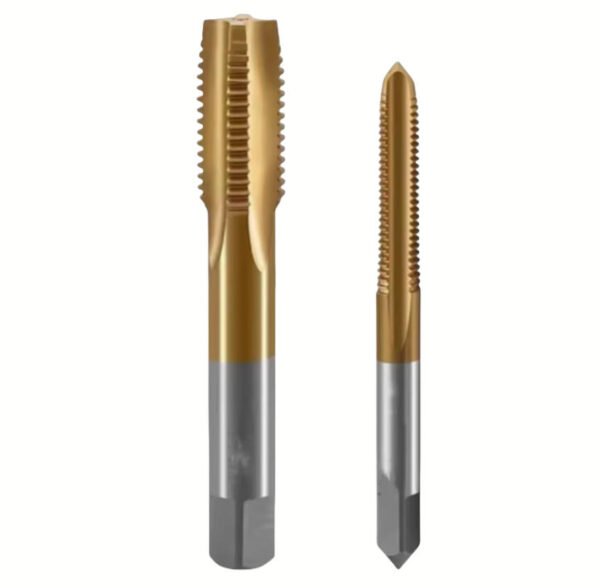
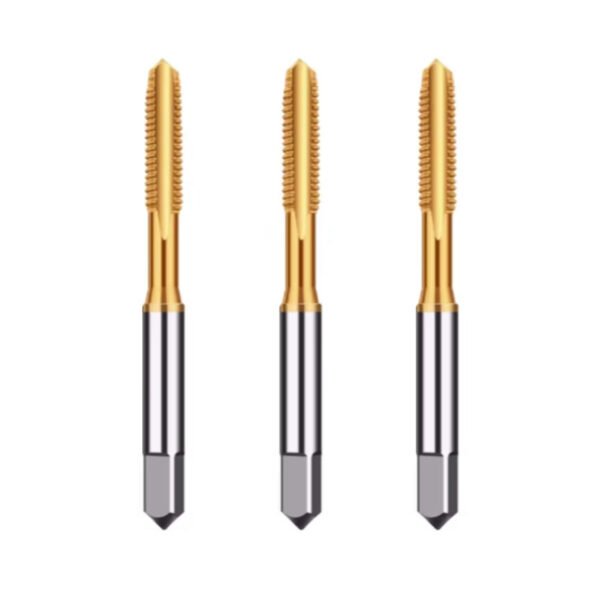
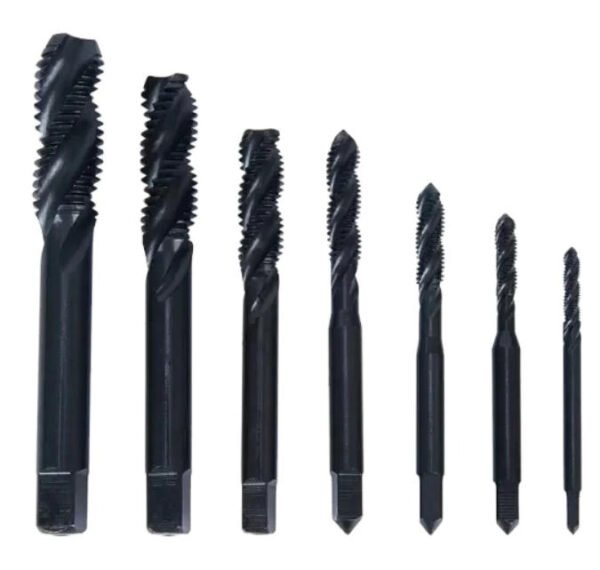
Since our founding in 2005, MisolTap has established itself as a leading Chinese manufacturer of high-performance thread cutting tools. We integrate R&D, production, and global sales into a seamless operation, providing our clients with robust and precise threading solutions tailored to modern manufacturing needs.
We recommend that any machine shop generating over $1M in annual revenue transition immediately to direct-manufacturer wholesale sourcing. By partnering with a vertically integrated manufacturer like MisolTap, you do not just get a lower price; you gain an engineering partner. We control the metallurgy, the flute grinding, and the coating process in-house, ensuring that the 5,000th tap performs identically to the first. This is how you stabilize your CNC processes and protect your profit margins.
The Bottom Line
Realizing the benefits of buying thread taps in wholesale requires a shift from reactive purchasing to strategic procurement. Buying cutting tools one at a time from local distributors is a severe drain on operational capital and introduces dangerous metallurgical inconsistencies into your machining data. For commercial manufacturers running dedicated production lines, locking in a direct wholesale contract with a verified tooling manufacturer guarantees your spindle keeps turning, your cost-per-part plummets, and your supply chain remains entirely under your control. Assess your annual tool consumption today, and stop paying retail premiums for industrial commodities.
Frequently Asked Questions
What is the minimum order quantity (MOQ) for buying thread taps wholesale?
MOQs vary significantly by manufacturer and tool size. For standard sizes (like M6 or 1/4-20), a true factory-direct wholesale order typically starts at 500 to 1,000 pieces. However, for highly specialized or extra-large diameter taps, manufacturers may accommodate MOQs as low as 50 pieces.
Does bulk purchasing affect the shelf life of cutting tools?
High-speed steel and carbide thread taps do not degrade over time if stored correctly. However, they are susceptible to rust if exposed to high humidity. Wholesale orders should be shipped in factory-sealed, oil-dipped plastic tubes and stored in a climate-controlled tool crib to guarantee indefinite shelf life.
Can I mix different tap sizes and types in a single wholesale order?
Yes. Most tier-one manufacturers allow you to build a blanket purchase order consisting of multiple line items (e.g., mixing spiral point machine taps, hand taps, and forming taps). As long as the total aggregate order meets the manufacturer’s volume threshold, you will secure the bulk discount rate.
Authoritative Industry References
- International Organization for Standardization (ISO) – Technical Committee on Taps and Threading Dies (ISO/TC 29/SC 2)
- Society of Manufacturing Engineers (SME) – Machining and Tooling Cost Management Strategies
- Modern Machine Shop – The Economics and Financial Impact of Cutting Tool Purchasing in CNC Operations