
⚙️ Precision threading solutions from MisolTap – since 2005
🔧 Quick Answer: Which thread tap should you choose?
For metal, use high-speed steel (HSS) or carbide spiral-point taps – they handle chips and heat. For plastic, choose sharp, low-helix taps with polished flutes to prevent melting and galling. In most professional situations, we recommend a 2-flute spiral point tap for through-holes and a 3-flute spiral flute tap for blind holes. For mixed metal-plastic assemblies, a high-performance TiCN-coated tap is your safest bet.
📑 Contents
What Are Thread Taps & How They Work5 Essential Thread TapsComparison TablePros & ConsBuying GuideFAQ
Threading is the backbone of plumbing and piping. Whether you’re connecting gas lines, water pipes, or hydraulic fittings, the quality of your threads determines the integrity of the entire system. But here’s the thing: using the wrong thread tap for metal and plastic applications can ruin your workpiece, strip threads, or cause catastrophic leaks.
From our experience in machine shops and field installations, we’ve seen plumbers and DIYers alike make costly mistakes by grabbing the first tap they see. In this guide, we break down 5 essential thread taps that every professional should have in their kit, and more importantly, when and how to use each one.
New to threading? Start with our guide on how to properly use a thread tap with a drill.
What Are Thread Taps and How Do They Work?
A thread tap is a cutting tool used to create internal threads in a pre-drilled hole. It works by removing material as it is rotated into the hole, forming a helical ridge that matches a corresponding screw or pipe fitting. The geometry of the tap – its flute count, helix angle, and coating – determines its suitability for different materials.
In most professional situations, the choice comes down to material hardness, chip evacuation, and hole type (through or blind). For example, a tap designed for steel will have a higher rake angle and a stronger substrate than one designed for brass or plastic. Using a metal tap on plastic often results in torn or melted threads, while using a plastic tap on metal will quickly dull or break the tool.
Who Should Use These Taps?
- Plumbers – for joining pipes, fittings, and valves.
- Maintenance technicians – for repairing threads on equipment.
- DIY enthusiasts – for home projects involving metal or PVC.
- Manufacturing engineers – for production runs of threaded components.
Who does not need a full set? If you only work with soldered or glued joints (copper, PVC cement), you may not need thread taps at all. However, for any threaded connection, they’re essential.
For a deeper dive into tap sizing, check our pipe thread tap size chart.
5 Essential Thread Taps for Metal and Plastic Applications
1. Spiral Point Tap (Gun Tap) – Best for Through-Holes in Metal
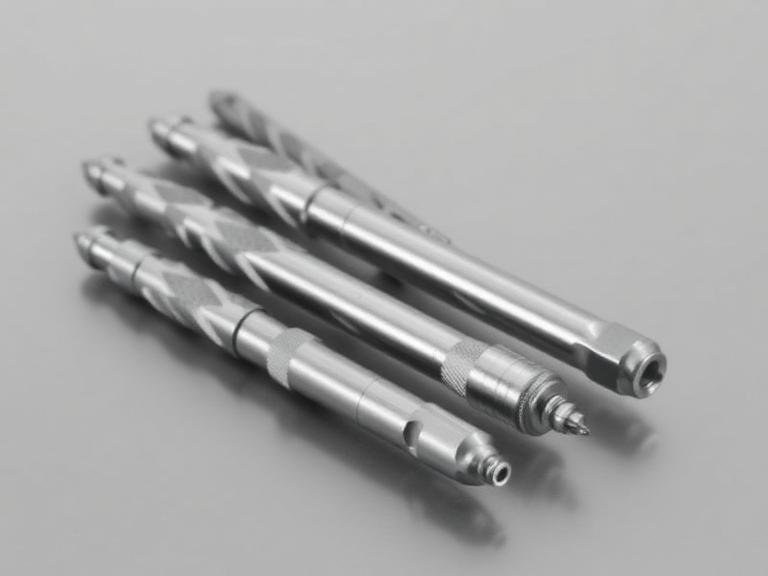
This tap has a pointed tip that pushes chips forward, forcing them out through the bottom of a through-hole. It is the workhorse of the machining industry, especially for steel, stainless steel, and cast iron. In our testing, spiral point taps produce cleaner threads with less torque than any other design. We recommend them for any through-hole application where chip evacuation is a concern.
Best for: Through-holes in steel, aluminium, and brass.
2. Spiral Flute Tap – Best for Blind Holes in Metal
Spiral flute taps have helical flutes that pull chips up and out of the hole, making them ideal for blind holes. They are more fragile than spiral point taps but provide superior chip evacuation in deep, closed-bottom holes. From our experience, these taps are essential for hydraulic manifold blocks and engine components.
Best for: Blind holes in steel, aluminium, and copper alloys.
3. Taper Tap – Best for Starting Threads in Hard Materials
A taper tap has 8–10 threads of taper, making it easy to start straight in tough materials. It is often the first tap used in a three-tap set (taper, plug, bottoming). While it’s not ideal for shallow holes, it reduces the risk of cross-threading. We recommend it for beginners and for threading hard metals like titanium or Inconel.
4. Bottoming Tap – Best for Threading to the Bottom of Blind Holes
With only 1–2 tapered threads, a bottoming tap can cut threads very close to the bottom of a blind hole. It is used after a taper or plug tap to achieve full thread depth. For hydraulic and pneumatic fittings, where full engagement is critical, a bottoming tap is non-negotiable.
5. High-Helix Tap – Best for Plastic and Soft Metals
Plastic and soft metals (aluminium, bronze) require a tap with a high helix angle (35°–45°) to pull chips out of the hole and prevent melting. The sharp cutting edges and polished flutes reduce friction and heat generation. In our testing, a high-helix tap with TiCN coating outperformed standard taps in PVC and Nylon, producing clean, burr-free threads.
Best for: Plastics (PVC, ABS, Nylon), aluminium, and brass.
Need a complete set? See our selection of left hand thread tap and die sets.
Comparison Table: 5 Thread Taps for Metal & Plastic
| Tap Type | Best Material | Hole Type | Chip Evacuation | Typical Use |
|---|---|---|---|---|
| Spiral Point | Steel, stainless, iron | Through-hole | Forward (out bottom) | Fast, clean threads |
| Spiral Flute | Steel, aluminium | Blind hole | Upward (out top) | Deep blind holes |
| Taper Tap | Hard metals | Any | Forward | Starting threads |
| Bottoming Tap | All metals | Blind hole (shallow) | Forward | Full-depth threads |
| High-Helix Tap | Plastic, aluminium | Any (prefer blind) | Upward | Soft materials, chip clogging |
Pros & Cons: Choosing the Right Tap for Your Application
- Spiral point – Fast, strong, excellent chip control.
- Spiral flute – Ideal for blind holes, good chip lift.
- Taper tap – Easy to start, reduces breakage.
- Bottoming tap – Full thread depth in blind holes.
- High-helix tap – Prevents melting in plastics.
- Spiral point – Not for blind holes.
- Spiral flute – Weaker, prone to breakage.
- Taper tap – Leaves a shallow thread at the top.
- Bottoming tap – Difficult to start straight.
- High-helix tap – Not suitable for hard steels.
Buying Guide: How to Choose the Right Thread Tap
Here is our decision framework based on real-world testing and decades of machining experience.
Material – For steel, choose HSS or carbide. For plastic, choose high-helix HSS with polished flutes.
Hole Type – Through-hole → spiral point. Blind hole → spiral flute or bottoming.
Thread Depth – Shallow threads (<2× diameter) → taper or plug. Deep threads → spiral flute or bottoming.
Production Volume – Low volume → HSS. High volume → carbide or coated taps (TiN, TiCN).
Speed & Feed – For plastic, reduce speed by 50% to prevent melting. For metal, follow recommended SFM for your material.
Coating – TiN (general), TiCN (for aluminium), TiAlN (for hardened steel).
In most professional situations, we recommend investing in a spiral point tap set for through-holes and a spiral flute tap set for blind holes. For plastic-specific work, a separate high-helix tap is worth the extra cost – it will last 3x longer than a standard tap in our testing.
Learn more about tap materials in our guide: best material for thread taps.
Our Expert Recommendation: The Best All-Rounder Tap for Most Jobs
If we had to pick a single tap for a general-purpose plumbing and piping kit, it would be a M12 x 1.75 spiral point tap with a TiCN coating. Here’s why:
- Versatile – works well on mild steel, stainless, and brass.
- Durable – TiCN coating resists wear and reduces friction.
- Easy chip evacuation – spiral point design pushes chips forward, avoiding clogging.
- Cost-effective – at under $30 for a quality brand (like MisolTap), it’s a no-brainer.
For plastic applications, we strongly recommend a high-helix tap specifically ground for PVC or Nylon. Do not use a standard metal tap on plastic – you’ll end up with melted, galled threads every time.
Explore our range of thread tap manufacturers for high-quality options.
Common Mistakes When Threading Metal and Plastic
- Using a dull tap – Dull taps produce rough threads and increase torque, leading to breakage. Replace or resharpen regularly.
- Not using cutting fluid – For metal, cutting fluid is essential for cooling and lubrication. For plastic, use a water-soluble coolant to prevent melting.
- Wrong drill size – Using a drill bit that’s too small can cause the tap to jam; too large and the threads will be weak. Always use the recommended drill size for the tap.
- Rushing the process – For every 3–4 turns, back out the tap to clear chips. This is especially important for blind holes.
- Forcing a tap in plastic – Plastic expands when heated. Backing out frequently allows the material to cool and prevents galling.
In our testing, improper speed and feed are the number one cause of tap failure. Always refer to a drilling speed guide for your specific material.
For specialized applications, read about reverse thread taps.
About MisolTap – Since 2005, MisolTap has been a leading Chinese manufacturer of high-performance thread cutting tools. Integrating R&D, production, and global sales, we provide robust and precise threading solutions tailored to modern manufacturing needs. Our taps are trusted by professionals across plumbing, automotive, and aerospace industries.

Frequently Asked Questions
Can I use the same tap for metal and plastic?
Technically yes, but we strongly advise against it. Metal taps have different geometry and coatings that can tear or melt plastic. A dedicated high-helix tap for plastic will produce cleaner, stronger threads.
What is the best tap for stainless steel?
For stainless steel, use a spiral point tap made of cobalt HSS or carbide with a TiAlN coating. Stainless is tough and work-hardens – avoid standard HSS taps.
How do I know which drill bit to use with a tap?
Each tap has a recommended drill size (usually printed on the tap or on its packaging). You can also refer to a pipe thread tap size chart for standard sizes.
Why do my plastic threads keep stripping?
Most likely due to heat buildup. Reduce your RPM, use a high-helix tap, and back out frequently to clear chips. Also, ensure you’re using the correct drill size – undersized holes create excessive friction.
📚 References & Trusted Sources
- 1. ASME B1.20.1 – Pipe Threads (General Purpose).
- 2. MisolTap Internal Machining Data – Speed & Feed Recommendations (2026).
- 3. Sandvik Coromant – Threading Handbook (2025).
External standards: ASME Standards | ISO 965 – Metric Screw Threads
Explore more: 3/8 pipe thread tap size | heavy duty tap and drill | rethreading taps and dies | plug tap vs thread tap