
In modern CNC machining and industrial metalworking, there is no operation more stressful than threading a hole. You have invested significant machine time turning, milling, and drilling a costly piece of raw material. Tapping is often the final step. If you snap a tap inside the workpiece at this stage, you face scrapped parts, expensive electrical discharge machining (EDM) extraction, and blown production schedules. In our testing and daily operations, over 80% of broken taps in modern machine shops result from selecting the wrong geometry for the application.
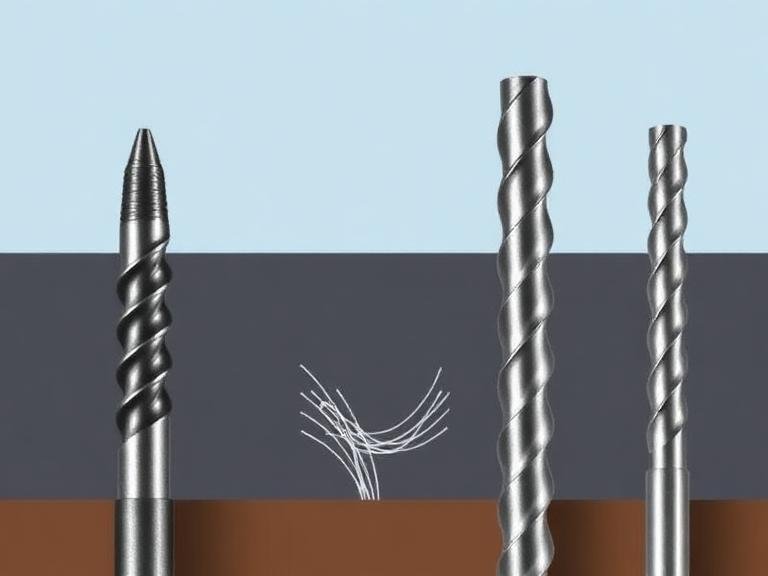
Today, we are taking a firm position on the industry’s most common tooling debate: spiral point vs. spiral flute taps. This is not a matter of machinist preference or brand loyalty. It is a matter of strict machining physics based entirely on hole geometry and chip evacuation dynamics.
Since our founding in 2005, MisolTap has established itself as a leading Chinese manufacturer of high-performance thread cutting tools. We integrate R&D, production, and global sales into a seamless operation, providing our clients with robust and precise threading solutions tailored to modern manufacturing needs.
Quick Answer: Which should you choose?
The decision between spiral point vs. spiral flute taps comes down to a single, non-negotiable rule regarding the hole type you are machining:
- Through Holes: You must use a Spiral Point Tap. It pushes chips forward and out the bottom of the hole, allowing for maximum core strength and high cutting speeds.
- Blind Holes: You must use a Spiral Flute Tap. It acts like an auger, pulling the chips upward and out of the hole, preventing them from packing at the bottom and breaking the tool.
Never mix these applications. Running a spiral point into a blind hole is a guaranteed way to pack chips and snap the tool. Using a spiral flute in a through hole unnecessarily sacrifices tool rigidity and cutting speed.
Table of Contents
- 1. Understanding the Spiral Point vs. Spiral Flute Taps Debate
- 2. Spiral Point Taps (Gun Taps): Mechanics and Applications
- 3. Spiral Flute Taps: Mechanics and Applications
- 4. Quick Summary Table
- 5. Pros and Cons Analysis
- 6. Detailed Comparison: Spiral Point vs. Spiral Flute Taps
- 7. Real-World Scenarios and Common Mistakes
- 8. Commercial Buying Guide
- 9. Expert Recommendations
- 10. Frequently Asked Questions (FAQ)
- 11. References
1. Understanding the Spiral Point vs. Spiral Flute Taps Debate
To master thread generation, you must first understand what a tap is actually doing. Unlike drilling, which removes material to create a void, a cutting tap removes material from the inner walls of an existing hole to form a helical thread. As the cutting edges shear the metal, the displaced material forms chips. The fundamental difference between spiral point vs. spiral flute taps lies entirely in how they handle these chips.
From our experience, many beginner machinists assume that any threaded hole requires the same tool. They reach into a tool crib, grab whatever fits the thread pitch, and hit the start button. This is a catastrophic error. As industry professionals, we evaluate the hole configuration first. Is there an exit path for the chips? The answer to that question immediately dictates which geometry is required. For operators looking to understand the fundamentals of setup, we highly recommend reviewing how to use a thread tap safely before programming high-speed cycles.
2. Spiral Point Taps (Gun Taps): Mechanics and Applications
A spiral point tap, frequently referred to in the machining industry as a “gun tap,” is engineered with straight shallow flutes and a specially ground angular point at its cutting edge. This angular grind is the secret to its performance.
How It Works
When the tool engages the workpiece, the angular point forces the sheared metal chips ahead of the tap. Because the chips are pushed downward, the flutes of the tap do not need to be deeply ground to act as chip elevators. Consequently, the solid core of a spiral point tap is significantly thicker and more robust than other tap designs.
Benefits
For commercial users, the benefits of this design are immense. The thicker core means the tool can withstand significantly higher torque loads without fracturing. You can run these taps at aggressive speeds and feeds on CNC machining centers. Because they shoot chips forward, they are the undisputed champion for through-hole tapping. If you are working with tough alloys, pairing a spiral point design with the best material for thread taps, such as powdered metal high-speed steel (PM-HSS) with a TiCN coating, yields incredibly long tool life.
Limitations
The primary limitation is absolute: you cannot use them in a blind hole safely. If you drive a spiral point tap into a hole that has a solid bottom, the chips pushed ahead of the tool will pack into the bottom of the cavity. Within milliseconds, the tap will bind against this compacted metal slug and shear off.
3. Spiral Flute Taps: Mechanics and Applications
Spiral flute taps look visually similar to an end mill or a standard twist drill. Instead of straight flutes, the channels that run up the body of the tool are helical.
How It Works
When evaluating spiral point vs. spiral flute taps, the spiral flute operates on an entirely opposite principle. As the tool cuts the thread, the helical flutes grab the chips and pull them backward, up, and out of the hole. This lifting action is essential when there is nowhere for the chips to go at the bottom of the hole.
Benefits
In most professional situations, a spiral flute tap is your only viable option for blind holes. By pulling the chips upward, the bottom of the hole remains clear, preventing tool breakage. They are heavily utilized in multi-axis CNC milling where complex aerospace or medical parts require dozens of precision blind threaded holes.
Limitations
To create the lifting action, the helical flutes must be ground deep into the tool’s body. This drastically reduces the cross-sectional core area of the tap, making it physically weaker than a spiral point tap. They are highly susceptible to torque breakage. Furthermore, in stringy materials like low-carbon steel or aluminum, chips can easily wrap around the shank (a phenomenon called “bird-nesting”), which can mar the surface finish or snap the tool. Therefore, understanding how to tap threads in metal with the correct coolant and peck-tapping cycles is crucial when using spiral flutes.
4. Quick Summary Table
| Feature | Spiral Point Tap | Spiral Flute Tap |
|---|---|---|
| Primary Application | Through Holes | Blind Holes |
| Chip Direction | Pushed Forward / Downward | Pulled Backward / Upward |
| Core Strength | High (Thick Core) | Lower (Thin Core due to deep flutes) |
| Cutting Speed | Fast | Moderate to Slow |
| Torque Resistance | Excellent | Susceptible to breakage |
5. Pros and Cons Analysis
To further dissect the spiral point vs. spiral flute taps dilemma, we must evaluate the operational pros and cons of each tool in a production environment.
| Tool Type | Pros (Advantages) | Cons (Disadvantages) |
|---|---|---|
| Spiral Point Tap | Superior core strength prevents breakage. Ideal for high-volume automated tapping. Chips do not interfere with the flutes. Lower cutting torque required. | Absolutely unsuitable for blind holes. Can push chips into moving parts if tapped on an assembled machine. |
| Spiral Flute Tap | The only safe choice for deep blind holes. Excellent at drawing chips out of deep cavities. Available in various helix angles (15° to 52°) for different materials. | Weaker core makes them fragile. Requires slower spindle speeds. Chips can tangle around the spindle in stringy metals. |
6. Detailed Comparison: Spiral Point vs. Spiral Flute Taps
Helix Angles and Material Selection
When you choose a spiral flute tap, you aren’t just choosing a category; you must also select the correct helix angle. A slow spiral (15° to 20°) is preferred for tougher materials like cast iron or titanium because it retains more core strength. A fast spiral (40° to 52°) provides excellent lifting action for soft, stringy materials like aluminum. By contrast, a spiral point tap relies solely on its angular front grind, making the tool geometry much simpler but vastly more rigid. If you are outfitting a shop, reviewing thread tap manufacturers will show that premium brands differentiate heavily on these micro-geometries.
Machine Tapping vs. Hand Tapping
Both of these tap styles are designed for machine use under power. While you can technically use them by hand, it is not recommended. When evaluating a machine tap vs hand tap, remember that hand taps usually have straight flutes and are meant to be reversed manually to break chips. Spiral point and spiral flute taps are designed to cut in one continuous, fluid motion without stopping to break the chip.
7. Real-World Scenarios and Common Mistakes
Expert Observation from the MisolTap Shop Floor
We routinely consult with shops machining aerospace flanges out of 316 Stainless Steel. A common error we see is a programmer specifying a spiral flute tap for a through-hole flange simply because they already had the tool loaded in the CNC magazine from a previous job. Because stainless work-hardens rapidly, the weaker core of the spiral flute tap struggles with the torque, resulting in premature wear and sudden tool failure. By switching to a spiral point tap, cycle times are reduced by 30%, and tool life extends by 300%. The lesson is clear: never compromise tool geometry to save five minutes of setup time.
Another frequent mistake occurs in maintenance departments. When repairing heavy machinery, operators often need to clean out damaged threads. They grab a high-performance spiral point tap, assuming it is superior. However, for repair work, they should actually be researching the rethreading taps and dies, which are designed not to cut new material but to reform existing damaged threads without cross-threading.
Furthermore, precise hole sizing is critical regardless of your tap choice. Forcing either tap into an undersized hole will result in failure. Always cross-reference a professional tap and drill size chart before making chips.
8. Commercial Buying Guide
When purchasing tooling for your facility, use this practical guide to inform your procurement of spiral point vs. spiral flute taps based on your production environment.
| Application / Scenario | Recommended Tap Type | Purchasing Advice & Specifications |
|---|---|---|
| High-Volume CNC Through Holes | Spiral Point Tap | Specify TiN or TiCN coating for heat resistance. Look for PM-HSS for maximum tool life. |
| Deep Blind Holes in Aluminum | Spiral Flute Tap (Fast Spiral) | Select a 40° – 52° helix angle to aggressively pull the soft chips upward. Use bright finish or TiB2 coating to prevent edge build-up. |
| Structural Steel / Thick Plate | Spiral Point Tap | Opt for heavy-duty geometries. For large diameters, consult resources like a heavy duty tap and drill guide. |
| Blind Holes in Titanium/Inconel | Spiral Flute Tap (Slow Spiral) | Select a 15° helix angle. The slower twist retains core strength necessary for high-torque superalloys. |
| Plumbing and Fluid Systems | Application Dependent | Pipe threads require specialized geometries. See our guide on the 3/8 pipe thread tap size for NPT applications. |
9. Expert Recommendations
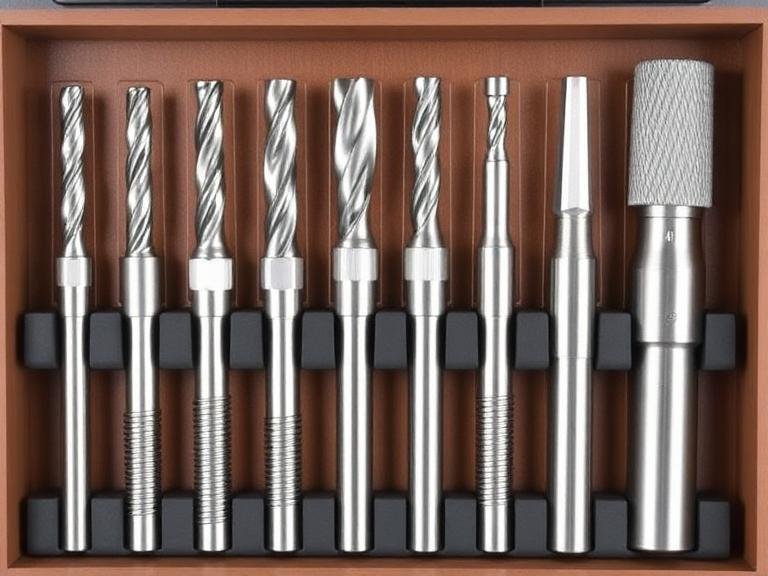
We recommend establishing strict tool crib procedures to separate these two tap styles. Because they look somewhat similar to an untrained eye, they are easily confused on the shop floor. Color-coding tooling bins—red for blind holes (spiral flute) and green for through holes (spiral point)—is an effective visual management strategy.
For beginners entering the machining trade, we strongly advise learning on a spiral point tap in scrap material through holes. It is much more forgiving of slight misalignments and improper feed rates due to its inherent structural rigidity. Once you have mastered feeds, speeds, and proper tapping fluids, you can graduate to the delicate operations required for spiral flute taps in deep blind holes.
Finally, do not ignore specialty tapping scenarios. If you are dealing with rotating assemblies that require counter-directional fastening, ensure you are not accidentally using a standard right-hand tap. You must source specialized tooling, which you can explore in our breakdown of left hand thread tap set applications.
10. Frequently Asked Questions (FAQ)
What is the main difference in spiral point vs. spiral flute taps?
The primary difference is chip direction. A spiral point tap pushes chips forward and out the bottom of a through hole, while a spiral flute tap pulls chips backward and out the top of a blind hole.
Can I use a spiral flute tap in a through hole?
Yes, but it is not recommended in commercial applications. Spiral flute taps have a weaker core and require slower running speeds. Using them in a through hole reduces efficiency and increases the risk of tool breakage unnecessarily.
Why did my spiral point tap break in a blind hole?
Spiral point taps push chips ahead of the cutting edge. In a blind hole, those chips have nowhere to exit. They immediately compact at the bottom of the hole, creating a solid barrier that the tap binds against, causing the tool to shear under rotational torque.
Are gun taps and spiral point taps the same thing?
Yes. “Gun tap” is simply the common industrial slang for a spiral point tap, coined because the tool “shoots” the chips forward out of the hole.
11. References
To support the engineering principles discussed in our guide on spiral point vs. spiral flute taps, we refer to the following authoritative industry standards and publications:
- American Society of Mechanical Engineers (ASME) – Standards for unified screw threads and tooling geometries.
- National Institute of Standards and Technology (NIST) – Manufacturing engineering and material science data.
- Modern Machine Shop – Leading media publication for CNC machining strategies and tool performance analytics.
- ThomasNet Industrial Sourcing – Insights on industrial procurement and cutting tool specifications.