
Machining stainless steel separates professional fabricators from amateurs. Because of its high chromium and nickel content, alloys like 304, 316, and 17-4PH possess extraordinary tensile strength and corrosion resistance. However, these exact properties make tapping threads into stainless steel one of the most frustrating operations on the factory floor. If you use standard hardware store tooling, the material will work-harden instantly, destroying the cutting edge and snapping the tap deep inside your expensive workpiece. Understanding which thread taps for stainless steel actually perform under commercial pressure is critical to your profitability.
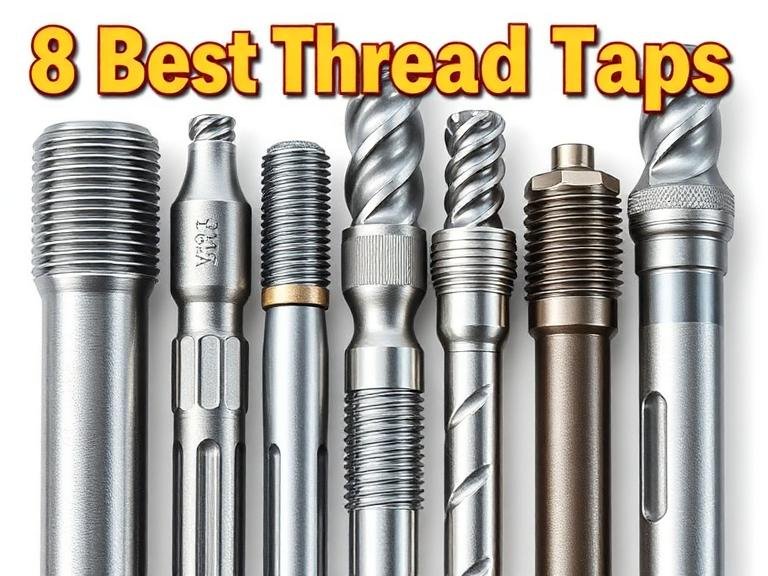
In most professional situations, overcoming the challenges of cutting threads in stainless steel requires abandoning standard High-Speed Steel (M2 HSS) tools. You must upgrade to specialized metallurgical compositions, specific flute geometries, and advanced physical vapor deposition (PVD) coatings. This guide will walk you through the structural differences of premium threading tools and outline the 8 best categories of thread taps for stainless steel available in the modern manufacturing market.
Quick Answer: The Best Taps for Stainless Steel
If you need an immediate procurement recommendation, here is the executive summary for tapping stainless steel successfully:
- The Material: Standard M2 HSS will fail. You must use Cobalt HSS (M35 with 5% cobalt or M42 with 8% cobalt) or HSS-E-PM (Powder Metallurgy) taps.
- Through Holes: Specify an M35 Cobalt Spiral Point Tap to push chips forward ahead of the cutting action.
- Blind Holes: Specify an M35 Cobalt Spiral Flute Tap (typically with a 35 to 45-degree helix) to pull the gummy stainless chips up and out of the hole.
- The Golden Rule: Never stop the tap mid-cut. Stainless steel work-hardens within one second when friction is applied without forward cutting motion.
Table of Contents
- What It Is: Engineered Tooling for Hard Alloys
- How It Works: Beating Thermal Degradation
- The 8 Best Thread Taps for Stainless Steel
- Commercial Benefits of Premium Tooling
- Limitations to Consider
- Who Should Use It & Who Does Not Need It
- Common Machining Mistakes
- Strategic Buying Considerations
- Comparison Tables
- Expert Recommendation
- The Bottom Line
- Frequently Asked Questions
What It Is: Engineered Tooling for Hard Alloys
Thread taps for stainless steel are precision-ground rotary cutting tools specifically formulated to resist the immense heat and abrasive wear generated by cutting high-tensile austenitic and martensitic steels. Unlike standard tooling, these taps are alloyed with cobalt to increase their “red hardness”—the ability of the steel to maintain a sharp cutting edge even when temperatures at the friction zone exceed 1,000°F (538°C).
Furthermore, they utilize specialized geometries. Because stainless steel chips tend to be stringy and gummy, they clog standard flutes rapidly. Premium taps for stainless utilize eccentric relief angles and carefully calculated rake angles that shear the material cleanly, minimizing the rubbing action that leads to catastrophic work-hardening. Whether you are learning how to use a thread tap in a manual mill or programming a rigid tapping cycle on a CNC machine, starting with the correct base material is non-negotiable.
How It Works: Beating Thermal Degradation
When you begin cutting threads into a 316 stainless steel block, the material actively resists deformation. Because stainless has very poor thermal conductivity, the heat generated by the cutting action does not dissipate into the workpiece; instead, it transfers directly into the cutting teeth of the tap. If the tap is made of standard steel, this heat softens the cutting edge, causing the tool to rub rather than cut. This rubbing action instantly hardens the surface of the stainless steel to a glass-like state, a phenomenon known as work-hardening. Once the metal work-hardens, the tap binds and shatters.
Proper thread taps for stainless steel solve this by combining heat-resistant cobalt alloys with extreme sharpness. To properly execute the cutting action, you must also utilize heavily sulfurized tapping fluid to lubricate the boundary layer and carry heat away. We recommend reading our detailed breakdown on how to tap threads in metal to understand the mechanics of chip evacuation during this process.
The 8 Best Thread Taps for Stainless Steel
In our testing across various industrial applications, we have categorized the optimal thread taps for stainless steel based on their specific engineering advantages. Here are the eight best configurations available:
1. M35 Cobalt Spiral Flute Taps (The Standard for Blind Holes)
For tapping blind holes (holes that do not go all the way through the material), an M35 (5% Cobalt) spiral flute tap is the undisputed champion. The spiral flutes act like an auger, actively lifting the stringy stainless chips up and out of the hole, preventing them from packing at the bottom and breaking the tool.
2. M42 Cobalt Spiral Point Taps (For Through Holes)
Also known as “gun taps,” spiral point taps feature a specialized angular grind at the tip that forcefully pushes the chips forward, ahead of the tap. Utilizing an M42 (8% Cobalt) base ensures maximum wear resistance. Because they shoot the chips forward, they are exclusively used for through holes where the chips have an exit path.
3. HSS-E-PM (Powder Metallurgy) Taps
Powder metallurgy creates a high-speed steel with an incredibly fine and uniform grain structure. HSS-E-PM taps bridge the gap between the toughness of cobalt steel and the extreme wear resistance of solid carbide. They are exceptional for tapping highly abrasive aerospace grades of stainless steel.
4. TiCN Coated Machine Taps
Titanium Carbonitride (TiCN) is a physical vapor deposition coating applied to the tap. It increases the surface hardness to over 80 HRC and dramatically reduces friction. When assessing the machine tap vs hand tap debate for CNC production, a TiCN coated machine tap is the definitive choice for high-speed automated tapping in 304 stainless.
5. Solid Carbide Thread Taps
For heavy-duty applications in rigid, high-volume CNC machining centers, solid carbide taps offer unmatched tool life. However, they are exceptionally brittle. Any misalignment, chatter, or lack of spindle synchronization will snap a solid carbide tap instantly. They are strictly for rigid setups, never for hand tapping.
6. Steam Oxide Treated Hand Taps
Steam oxide (often appearing black) is a surface treatment that creates a micro-porous layer on the tool. This layer holds tapping oil directly against the cutting edge, providing continuous lubrication and preventing the stainless steel from micro-welding (galling) to the tap. This is an excellent, cost-effective choice for manual repair work.
7. Thread Forming (Roll) Taps for 300-Series
Unlike cutting taps that create chips, thread forming taps displace the metal, cold-rolling the threads into the walls of the hole. Because austenitic stainless steels (like 304) are highly ductile, forming taps work brilliantly and produce threads that are significantly stronger than cut threads. Furthermore, because there are no chips, tool breakage due to chip-packing is completely eliminated.
8. Interrupted Thread Taps
An interrupted thread tap features alternating missing teeth along its thread profile. This design drastically reduces the surface area in contact with the workpiece, which halves the cutting friction and torque required. These are lifesavers when tapping exceptionally gummy or deep holes in difficult stainless alloys.
Commercial Benefits of Premium Tooling
Purchasing engineered thread taps for stainless steel directly impacts your bottom line. While an M35 cobalt tap may cost three times as much as a standard carbon steel tap, it will routinely thread twenty times as many holes in stainless steel before dulling. For commercial users, the true cost of a tool is calculated by the “cost per tapped hole.”
More importantly, premium tooling eliminates the catastrophic cost of scrap. If a cheap tap breaks off flush inside a nearly finished machined component, removing it often requires expensive electrical discharge machining (EDM) hole-popping, or the entire part must be scrapped. Investing in the correct tool mitigates this immense financial risk.
Limitations to Consider
We recommend acknowledging the limitations of these tools. High-cobalt taps and solid carbide taps are significantly more brittle than standard carbon steel taps. They cannot tolerate lateral stress. If you are using a wobbly handheld drill or applying uneven pressure with a T-handle wrench, you will snap these expensive tools easily.
Additionally, specialty taps require strict adherence to exact pilot hole dimensions. You cannot guess the drill size. Always consult a professional tap and drill size chart to ensure you are drilling for a 65% to 75% thread engagement. Drilling the hole even a fraction of a millimeter too small in stainless steel will exponentially increase the torque required and guarantee tap breakage.
Who Should Use It & Who Does Not Need It
For commercial users and CNC machinists: If you are manufacturing medical devices, food processing equipment, or marine hardware out of stainless steel, specifying premium cobalt or PM taps is an absolute mandatory requirement for production stability.
For beginners and hobbyists: If you are simply tapping a few holes in mild steel, aluminum, or plastics in a home garage, you do not need to spend the premium on M42 Cobalt or TiCN coated taps. A standard M2 HSS tap set will serve you perfectly well without the high procurement cost.
Common Machining Mistakes
From our experience consulting with machine shops, tapping stainless steel fails due to three common operator errors:
- Stopping Mid-Thread: In manual tapping, operators often stop turning to rest. In stainless steel, stopping while the tool is engaged allows the localized heat to instantly work-harden the material. You must maintain a steady, continuous rotation.
- Wrong Lubrication: WD-40 or thin machine oil is useless on stainless. You must use a thick, high-pressure, sulfurized cutting fluid designed specifically for heavy ferrous metals.
- Confusing Tap Styles: Attempting to use a standard plug tap to cut threads to the very bottom of a blind hole will result in chip packing. Understanding the plug tap vs thread tap dynamics is vital; you must clear chips and switch to a bottoming tap for the final threads.
Strategic Buying Considerations
When purchasing your tooling, always verify the material grade. Look for explicit markings of “HSSE,” “M35,” or “M42” on the shank. Furthermore, evaluate the shank standard you require for your tool holders. If you are operating metric machinery, sourcing from a reputable din371 thread tap supplier ensures the tap shank and driving square will fit perfectly into standard rigid tapping collets. Alternatively, older machinery may require standard ISO dimensions, necessitating an ios 529 thread tap supplier.
If you are working with specialized hardware or hydraulic fittings that require reverse threading, ensure your tooling provider offers a dedicated left hand thread tap set manufactured from the same high-cobalt materials, as stainless steel does not forgive inferior tools regardless of thread direction.
Summary & Comparison Tables
Comparison Table: Tap Base Materials for Stainless Steel
| Base Material | Alloy Composition | Hardness (HRC) | Best Application | Relative Cost |
|---|---|---|---|---|
| Standard HSS (M2) | High-Speed Steel (No Cobalt) | 60 – 62 | Aluminum, Mild Steel (Not recommended for Stainless) | Low |
| HSSE Cobalt (M35) | HSS + 5% Cobalt | 63 – 65 | 304/316 Stainless, General Production Tapping | Medium |
| HSSE Cobalt (M42) | HSS + 8% Cobalt | 65 – 67 | 17-4PH, Hardened Stainless Alloys, High Heat | High |
| HSS-E-PM | Powder Metallurgy Steel | 65 – 68 | High-Volume CNC Production, Abrasive Stainless | Very High |
| Solid Carbide | Tungsten Carbide | 70+ | Extreme high-speed rigid tapping only | Premium |
For specific sizing, especially in larger diameters where torque forces multiply drastically, always consult a dedicated 1/2 thread tap size chart to ensure your pilot hole calculations are flawless before engaging the tool.
Pros and Cons Table: Thread Cutting Taps vs. Thread Forming Taps in Stainless
| Tool Type | Pros in Stainless Steel | Cons in Stainless Steel |
|---|---|---|
| Cutting Taps (Spiral Flute/Point) | Requires less machine torque; better for older machines. Works in harder, less ductile stainless grades. | Creates stringy chips that can clog blind holes and snap the tool. Threads are slightly weaker. |
| Forming Taps (Roll Taps) | Zero chips produced (no chip packing). Cold-works the material, creating a thread with superior tensile strength. | Requires massive machine torque. Only works on highly ductile stainless (like 304). Requires extreme precision on pilot hole diameter. |
Expert Recommendation
The MisolTap Engineering Perspective

Since our founding in 2005, MisolTap has established itself as a leading Chinese manufacturer of high-performance thread cutting tools. We integrate R&D, production, and global sales into a seamless operation, providing our clients with robust and precise threading solutions tailored to modern manufacturing needs.
From our experience supplying aerospace and medical manufacturers globally, we strongly recommend standardizing your tool crib with M35 Cobalt Spiral Flute Taps coated in TiCN for all general stainless steel blind hole applications. The combination of the 5% cobalt base for heat resistance and the TiCN coating for surface lubricity provides the most consistent, cost-effective tool life across the widest range of 300-series stainless alloys. For CNC operators, utilizing a rigid tapping cycle with high-quality sulfurized coolant is the definitive path to zero-defect production.
The Bottom Line
Stop Scrapping Parts with Cheap Tooling
Attempting to cut threads in stainless steel with inferior taps is an exercise in futility that ultimately costs commercial shops thousands of dollars in scrapped parts and machine downtime. The exact thread taps for stainless steel you choose must be engineered to fight the material’s severe tendency to work-harden. By upgrading to M35/M42 cobalt steel, matching the flute geometry to your hole type (spiral point for through, spiral flute for blind), and applying the correct heavy cutting fluids, you transform a notoriously difficult machining operation into a predictable, highly profitable process.
Frequently Asked Questions
While gold-colored TiN coatings offer some improvement over uncoated taps, they are not the best choice for stainless steel. Titanium Carbonitride (TiCN) or Titanium Aluminum Nitride (TiAlN) coatings provide significantly higher surface hardness and better heat resistance, making them vastly superior for combating the abrasive nature and high heat generation of stainless steel.
Tap breakage during manual tapping of stainless is almost always caused by one of three factors: using a pilot hole that is too small, failing to use heavy sulfurized cutting oil, or stopping your rotation while the tap is engaged, which instantly work-hardens the metal and locks the tap in place.
M35 high-speed steel contains 5% cobalt, offering an excellent balance of toughness and heat resistance for general stainless tapping. M42 contains 8% cobalt, providing even higher “red hardness” and wear resistance, making it ideal for the toughest, highest-tensile stainless alloys, though it is slightly more brittle than M35.
Authoritative Industry References
- International Organization for Standardization (ISO) – Fastener and Thread Standards: Global dimensional tolerances and specifications for internal metric threads and cutting tools.
- ASM International – Materials Properties Database: Metallurgical data regarding the work-hardening characteristics and thermal conductivity of austenitic stainless steels.
- Modern Machine Shop – Machining Guidelines: Best practices for speeds, feeds, and rigid tapping cycles in high-tensile alloys and aerospace materials.