
In the high-stakes realm of commercial CNC machining, attempting to force an off-the-shelf catalog tool into a proprietary, specialized application is a fast track to broken tooling, scrapped parts, and blown production budgets. When dealing with exotic aerospace alloys, non-standard thread pitches, or highly specific tolerance requirements, standard tooling simply fails. From our experience, the difference between a profitable production run and a manufacturing nightmare almost always comes down to the precision of your cutting tools. If your operation requires specific geometries, coatings, and substrates, investing in custom thread taps is not an extravagance; it is a mechanical necessity.
At MisolTap, we have witnessed countless engineers struggle to navigate the complexities of ordering bespoke threading tools. Ordering custom thread taps requires a deep understanding of metallurgy, chip evacuation dynamics, and machine spindle capabilities. In this comprehensive engineering guide, we will cut through the generic advice and explain exactly how to spec, order, and implement custom thread taps to maximize your tool life and drastically reduce your cycle times.
Quick Answer: Are Custom Thread Taps Worth It?
Yes. If you are machining high-volume parts, working with exotic materials like Titanium or Inconel, or require proprietary thread pitches, custom thread taps are absolutely worth buying. They are engineered to solve your specific chip evacuation and tool wear problems, ultimately lowering your cost-per-tapped-hole.
How to order them effectively: You must provide the manufacturer with five critical pieces of data:
- The exact material you are cutting (e.g., 316L Stainless Steel).
- The thread size, pitch, and required tolerance class (e.g., 6H, 2B, 3B).
- The hole type (blind hole or through hole) to determine flute geometry.
- The maximum tapping depth.
- Your machine’s coolant delivery method (e.g., through-tool coolant).
Table of Contents
- What Are Custom Thread Taps?
- How the Custom Manufacturing Process Works
- Quick Summary: Standard vs. Custom Specifications
- The Commercial Benefits of Custom Taps
- Limitations and Cost-Benefit Analysis
- Pros and Cons of Custom Threading Tools
- Who Should Use Custom Thread Taps
- Who Does Not Need Them
- Comparison Table: Catalog Taps vs Custom Taps
- Common Mistakes When Ordering
- Buying Considerations: Engineering Your Tool
- Buying Guide Checklist
- Expert Recommendation from MisolTap
- Frequently Asked Questions
What Are Custom Thread Taps?
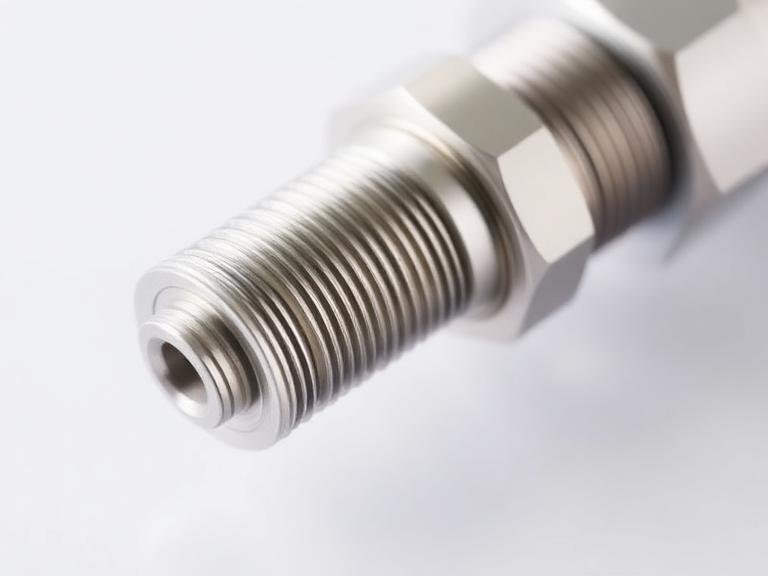
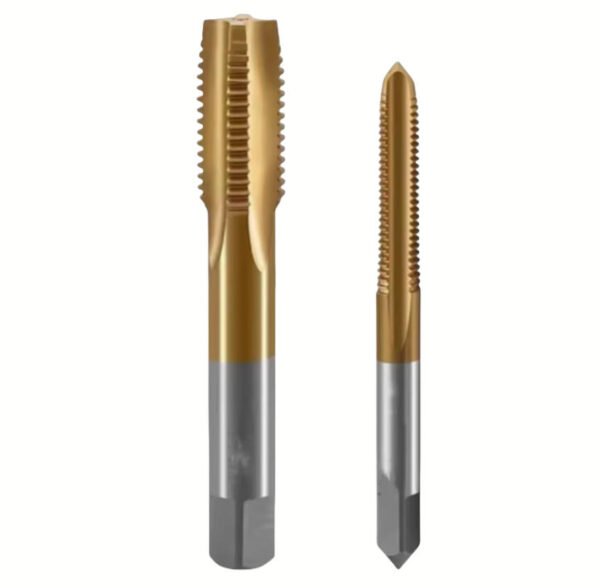
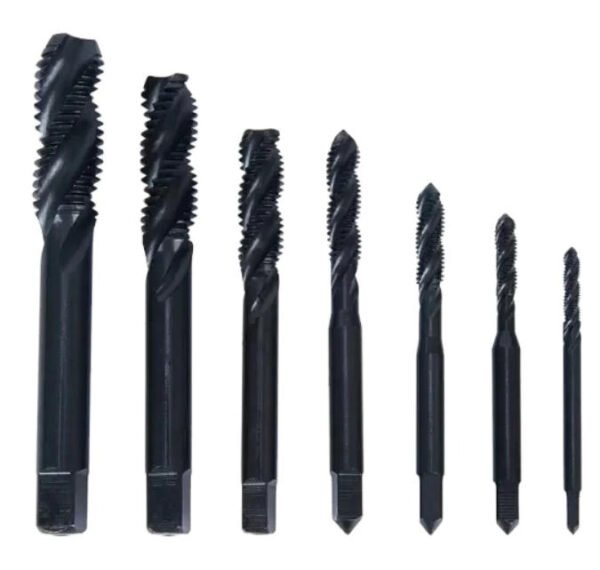
Custom thread taps are bespoke internal thread-cutting tools engineered and ground to exact buyer specifications. Unlike generic tools found in industrial supply catalogs—which are designed with middle-of-the-road geometries to cut a wide variety of mild steels reasonably well—custom taps are hyper-optimized for one specific task. They are designed from the ground up, factoring in the base substrate (such as Cobalt High-Speed Steel or Solid Carbide), proprietary flute angles, specific chamfer lengths, and specialized PVD (Physical Vapor Deposition) coatings.
Whether you need an elongated shank to reach deep into an engine block, or specialized reverse thread taps for counter-rotational fastening systems, custom manufacturing allows you to dictate every micrometer of the tool’s geometry to suit your unique application.
How the Custom Manufacturing Process Works
The process of acquiring custom thread taps begins long before metal touches a grinding wheel. It starts with an engineering consultation. In most professional situations, you will submit a blueprint of your part or a detailed tool specification sheet. The tool engineers will analyze the target material’s hardness, tensile strength, and chip-forming characteristics.
Once the specifications are locked in, the manufacturer selects the best material for thread taps to match your application. The raw cylindrical blanks are then loaded into 5-axis CNC tool-and-cutter grinding machines. These high-precision machines grind the flutes, the threads, and the cutting chamfer to sub-micron tolerances. Finally, the tools undergo edge preparation to remove microscopic burrs and are sent to a vacuum chamber to receive specialized coatings like Titanium Carbonitride (TiCN) or Aluminum Titanium Nitride (AlTiN) to drastically increase surface hardness and thermal resistance.
Quick Summary: Key Customization Parameters
| Parameter | Standard Catalog Tap | Custom Thread Tap Option |
|---|---|---|
| Substrate Material | Standard HSS or basic HSSE | Premium Powdered Metal (PM-HSS), Solid Carbide |
| Thread Pitch | Standard UNC, UNF, Metric (Coarse/Fine) | Any proprietary or ultra-fine pitch required |
| Flute Geometry | Generic spiral or straight flute | Custom helix angles optimized for specific chip evacuation |
| Shank Dimensions | DIN, ANSI, or JIS standard lengths | Extended lengths, relieved necks for deep-hole tapping |
| Surface Treatment | Bright finish or basic TiN | Advanced multi-layer PVD coatings (TiAlN, CrN) |
The Commercial Benefits of Custom Taps
Why undergo the effort of ordering custom thread taps? The return on investment (ROI) is staggering when applied correctly. For heavy-duty applications, the primary benefit is an exponential increase in tool life. When a tap is perfectly engineered with the correct rake angle and coating for the material being cut, it encounters less friction, generates less heat, and suffers significantly less edge wear.
Furthermore, custom tooling prevents catastrophic part failure. In our testing, attempting to tap a deep blind hole in aerospace-grade titanium with a standard tool almost always results in chip packing and tap breakage. Extracting a broken tap from a $5,000 titanium component is a nightmare. A custom tap with highly engineered spiral flutes ejects those chips flawlessly, eliminating part scrap and machine downtime.
Limitations and Cost-Benefit Analysis
Despite their superiority, custom thread taps are not the answer for every situation. You must exercise commercial judgment. The two main limitations are lead time and initial unit cost. Engineering, programming CNC grinders, and applying custom coatings take time. You cannot typically get a custom tap delivered overnight. Additionally, custom tool manufacturers usually require a Minimum Order Quantity (MOQ) to justify the setup costs of the CNC machines.
If you are a commercial operation machining 10,000 parts, the higher upfront cost of custom tooling is absorbed almost immediately by the reduction in tool changes and cycle times. However, if you are prototyping a single part out of mild aluminum, buying custom tooling is a waste of capital.
Pros and Cons of Custom Threading Tools
| Pros (Advantages) | Cons (Limitations) |
|---|---|
| Maximum tool life in tough, exotic alloys. | Higher initial cost per unit. |
| Eliminates chip packing and tool breakage in deep holes. | Longer lead times for engineering and manufacturing. |
| Can be designed with extended shanks to reach difficult areas. | Often requires a Minimum Order Quantity (MOQ). |
| Allows for the creation of proprietary, tamper-proof thread profiles. | Overkill for standard, low-volume mild steel jobs. |
Who Should Use Custom Thread Taps
For commercial users in high-stakes industries, custom tooling is a baseline requirement. Aerospace manufacturers cutting high-temp superalloys, medical device engineers threading surgical-grade stainless steel implants, and automotive suppliers running high-volume, automated transfer lines are the ideal candidates. In these environments, every second shaved off a cycle time and every tool change avoided translates directly into thousands of dollars in profit. If you require heavy duty tap and drill performance, custom ordering is the only logical path.
Who Does Not Need Them
For beginners, maintenance crews, and hobbyists, custom thread taps are entirely unnecessary. If you are simply chasing out dirty threads on an old engine block, utilizing standard rethreading taps and dies is sufficient. Likewise, job shops that deal primarily in low-volume, low-complexity materials (like 1018 steel or 6061 aluminum) will find that premium off-the-shelf catalog tools offer perfectly acceptable performance without the lead-time delays.
Comparison Table: Catalog Taps vs Custom Taps
| Feature | Off-the-Shelf Catalog Taps | Custom Engineered Thread Taps |
|---|---|---|
| Application Focus | General purpose; cuts multiple materials moderately well. | Laser-focused on a single, specific material and hole type. |
| Availability | Immediate. Usually ships same-day from distributors. | Requires engineering lead time and custom CNC grinding. |
| Hole Depth Capability | Standard depths (usually 1.5D to 2.5D). | Can be engineered for deep-hole tapping (3D, 4D, or more). |
| Cost Efficiency | Cheaper upfront, but higher cost-per-part in tough alloys. | Expensive upfront, but dramatically lowers cost-per-part in production. |
Common Mistakes When Ordering
We see engineers make the same costly errors repeatedly when submitting specifications. The most devastating mistake is failing to calculate the correct pre-drill hole diameter for the specific material being cut. Understanding the tap and drill size chart is mandatory. If you drill the hole too tight in stainless steel, your custom tap will snap regardless of how well it is engineered.
Another common mistake is confusing the tap style needed for the hole type. Specifying a spiral point tap (which pushes chips forward) for a blind hole will result in packed chips and tool failure. You must understand the plug tap vs thread tap dynamics, and know exactly when to specify spiral flutes to pull chips up and out of the hole.
Buying Considerations: Specifying Your Tool
When you are ready to place an order with top thread tap manufacturers, you must bring complete data to the table. Do not ask for “a tap that cuts steel.” You must specify the exact alloy designation, the required thread class (e.g., Class 3B for aerospace), and whether the thread is right-hand or left-hand. If you require specialized left hand thread tap set geometries, this must be explicitly stated.
Furthermore, you must communicate your machine’s capabilities. A custom carbide tap requires high RPMs and an incredibly rigid spindle. If you intend to use the tool in an older, worn-out machine, you must inform the manufacturer so they can specify a more forgiving substrate, like Powdered Metal HSS, rather than brittle solid carbide. Knowing the proper drilling speed for metal and your machine’s coolant pressure (for through-coolant taps) dictates the final tool design.
Buying Guide Checklist
| Specification Category | What You Must Provide to the Manufacturer |
|---|---|
| Workpiece Material | Exact alloy grade, hardness (HRC/HB), and condition (cast, forged, annealed). |
| Thread Specifications | Major diameter, pitch (TPI or mm), tolerance class, and thread standard (e.g., UN, Metric, NPT). |
| Hole Characteristics | Blind hole or through hole? Pre-drill diameter. Total depth of full threads required. |
| Machine Environment | CNC machine rigidity, available RPM, tapping attachment type (rigid vs floating), and coolant type/pressure. |
Expert Recommendation
Since our founding in 2005, MisolTap has established itself as a leading Chinese manufacturer of high-performance thread cutting tools. We integrate R&D, production, and global sales into a seamless operation, providing our clients with robust and precise threading solutions tailored to modern manufacturing needs.
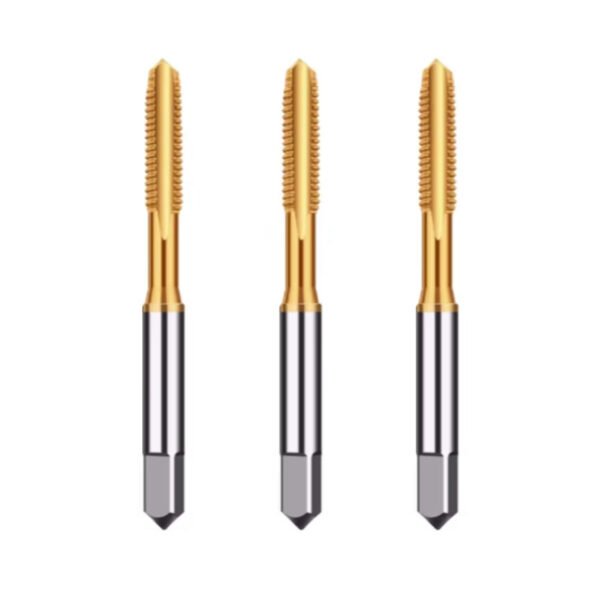
We recommend that any facility experiencing tool life issues, unmanageable cycle times, or high scrap rates immediately audit their threading processes. Stop adjusting your feeds and speeds to accommodate mediocre tooling. Instead, let the tool do the heavy lifting. By providing comprehensive specifications to an experienced manufacturer, you can deploy custom thread taps that are engineered to conquer your toughest machining challenges.
Frequently Asked Questions
How do I know if I need a custom thread tap?
You should transition to a custom thread tap if you are experiencing frequent tool breakage, poor thread finish, or chip packing issues with standard catalog taps. Additionally, if your part requires a proprietary thread pitch or an extra-long shank to reach deep cavities, custom manufacturing is required.
What information is critical when ordering custom thread taps?
The most critical information is the exact material of the workpiece (including its hardness), the type of hole (blind or through), the required thread depth, the thread tolerance class, and the capabilities of the machine spindle being used. Mastering how to tap threads in metal begins with providing accurate data to your toolmaker.
How long does it take to manufacture custom thread taps?
Lead times vary depending on the complexity of the tool, the substrate material, and the coating processes required. Generally, professional tool manufacturers require anywhere from 2 to 6 weeks to engineer, grind, coat, and inspect a batch of custom thread taps.
Are custom pipe thread taps available?
Yes. Tapered pipe threads, such as NPT or BSPT, can be custom engineered to deal with specific materials or deep-reach requirements. If you are dealing with common sizes like the 3/8 pipe thread tap size, a custom tool can be optimized with interrupted threads to reduce cutting friction in stringy materials.
Authoritative References & Industry Standards
To ensure your custom tooling conforms to global engineering benchmarks, we recommend consulting the following authoritative standards organizations: