
Machinists and CNC job shop owners face a constant battle against unbillable downtime. Tool changeovers, carousel indexing, and touching off new tools relentlessly consume profitable spindle time. If your manufacturing facility processes carbon steel in the morning, aerospace aluminum in the afternoon, and 304 stainless steel on the night shift, relying on traditional, material-specific threading tools is a logistical nightmare. Using thread taps engineered exclusively for multi-material applications is no longer a luxury—it is the definitive engineering solution for slashing overhead, consolidating tool crib inventory, and maintaining aggressive production schedules in a modern machine shop.

Quick Answer: Can One Tap Machine Everything?
Yes. Using thread taps designed as “universal” or multi-material tools allows machinists to cut internal threads in ISO P (Steels), ISO M (Stainless), ISO K (Cast Iron), and ISO N (Non-ferrous) materials without changing the tool. They achieve this through advanced Powdered Metallurgy (HSSE-PM) base materials, balanced rake angles, and multi-layer PVD coatings (like TiAlN or TiCN). While they carry a higher upfront cost than standard carbon steel taps, the elimination of tool changeover time drastically reduces the overall cost per threaded hole.
Table of Contents
- What It Is: The Anatomy of a Multi-Material Tap
- How It Works: Geometry and Coatings
- The Financial and Operational Benefits
- Limitations: When to Avoid Universal Taps
- Who Should Use It vs. Who Does Not Need It
- Common Machining Mistakes
- Crucial Buying Considerations
- Expert Recommendation from MisolTap
- Frequently Asked Questions
What It Is: The Anatomy of a Multi-Material Tap
Historically, a cutting tool was forced to be a specialist. A tap meant for cast iron featured zero rake and straight flutes to handle brittle chips, while a tap for aluminum required high positive rake angles to shear the gummy material. Today, metallurgical advancements have unified these traits. When evaluating the best material for thread taps, multi-material tools almost exclusively rely on Powdered Metallurgy High-Speed Steel with Cobalt (HSSE-PM).
Unlike conventional smelting, the powdered metallurgy process creates an ultra-fine, uniform carbide distribution within the steel matrix. This prevents micro-chipping on the cutting edge when the tap encounters hard inclusions in alloy steels, while maintaining the immense torsional strength required to reverse out of deep blind holes. When using thread taps built from HSSE-PM, operators gain the toughness of traditional HSS paired with wear resistance that approaches solid carbide.
How It Works: Geometry and Coatings
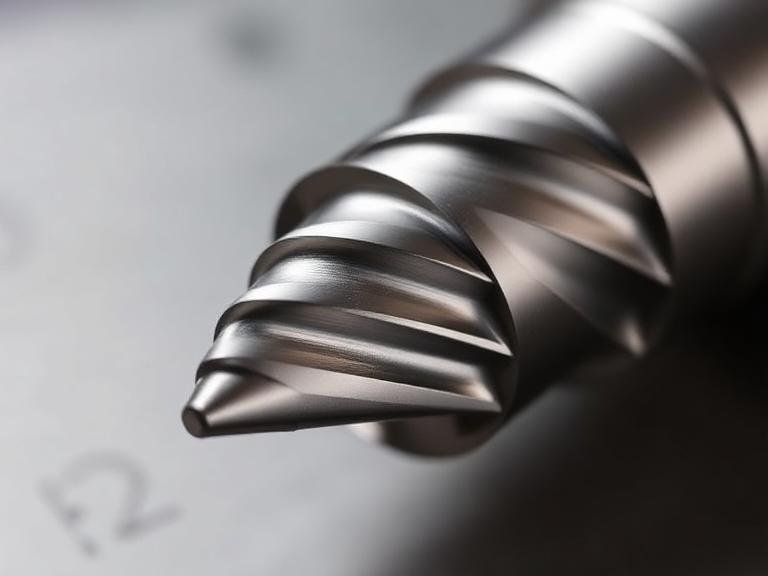
The success of using thread taps across disparate metals hinges on a “balanced” cutting geometry and advanced tribology (friction management). To understand this, one must look at the different types of thread taps. A multi-material spiral flute tap, for instance, typically utilizes a moderate 40-degree helix angle. This angle is aggressive enough to evacuate long, stringy stainless steel chips out of a blind hole, yet stable enough to prevent cutting edge collapse when machining tougher medium-carbon steels.
Furthermore, the coating is the true hero. A multilayer Titanium Aluminum Nitride (TiAlN) or Titanium Carbonitride (TiCN) coating is standard. The base layer provides an extreme thermal barrier, allowing the tap to survive the high heat generated by machining steel. The top layer provides a low coefficient of friction, which fundamentally prevents soft materials like aluminum from galling or welding to the cutting edge—a phenomenon known as Built-Up Edge (BUE).
Understanding whether your application requires a tapered vs straight thread is also vital, as multi-material tools are manufactured in both NPT/BSPT and standard metric/UNC geometries, utilizing the same underlying HSSE-PM technology to execute precise thread profiles across various metals.
| Feature | Specification in Multi-Material Taps | Engineering Purpose |
|---|---|---|
| Base Substrate | HSSE-PM (Powdered Metallurgy + Cobalt) | Provides maximum torsional strength and prevents micro-chipping across varying material hardness. |
| Surface Coating | Multilayer PVD (TiAlN, TiCN, or DLC) | Blocks heat transfer in tough steels while preventing material adhesion in gummy aluminums. |
| Rake Angle | Balanced / Neutral-Positive | Shears soft alloys cleanly without being so fragile that it shatters in cast iron. |
| Relief Angle | Eccentric relief | Reduces friction against the workpiece wall, lowering tapping torque across all materials. |
The Financial and Operational Benefits
From our experience, the decision to pivot to multi-material threading tools is rarely driven purely by metallurgy; it is driven by shop floor economics. Using thread taps engineered for universal application dramatically reduces the number of SKUs a procurement manager must stock. Instead of buying ten specialized taps for a mixed-metal assembly, you buy three universal taps of the same size.
In most professional situations, the highest cost in a machine shop is spindle downtime. By standardizing your tooling carousel with multi-material taps, CNC programmers do not have to write manual tool-change sequences or re-verify tool length offsets every time a new material block is loaded into the vise. The operational safety margin also increases—operators cannot accidentally run an aluminum-specific tap into a block of 4140 steel if the tool in the spindle is engineered to handle both safely.
Limitations: When to Avoid Universal Taps
We must apply strict commercial and practical judgment: multi-material taps are a compromise. While they are exceptional “jacks of all trades,” they will be outperformed by material-specific tools in highly dedicated production runs.
For example, if you are tapping 50,000 holes exclusively in Inconel 718, a multi-material tap will wear out faster than a tap engineered solely for aerospace superalloys. Similarly, using thread taps for repair work often requires specialized geometries; mechanics dealing with stripped engine blocks rely on rethreading taps and dies or specialized reverse thread taps rather than standard universal production taps. You must calculate your production mix—if your shop runs 90% of a single material, buy the dedicated tool. If you run a high-mix, low-volume operation, the universal tap is king.
| Metric | Multi-Material (HSSE-PM) | Material-Specific (Dedicated) | General Purpose (Standard HSS) |
|---|---|---|---|
| Initial Cost | High ($$$) | High ($$$) | Low ($) |
| Versatility | Exceptional (ISO P, M, K, N) | Poor (Locked to one ISO group) | Moderate (Best for mild steels) |
| Tool Life (Mixed Run) | Excellent | High Risk of Breakage | Poor |
| Setup / Changeover Time | Zero (No change needed) | High (Frequent changes) | High (Frequent breakages) |
Who Should Use It vs. Who Does Not Need It
For beginners and rapid prototyping facilities, using thread taps with multi-material capabilities removes the intimidating guesswork of tool selection. You can confidently thread a 3D-printed metal part, a brass fitting, and an aluminum bracket using the exact same tool without deep metallurgical analysis.
For commercial users operating high-mix CNC job shops, these taps are mandatory. The ability to quote a job in stainless steel on Monday and mild steel on Tuesday without issuing a new purchase order for tooling protects your profit margins immensely.
For heavy-duty applications, such as automotive transfer lines churning out thousands of identical cast iron engine blocks 24/7, you do not need a multi-material tap. In those hyper-optimized environments, you should purchase dedicated cast iron taps to squeeze every fraction of a cent out of the cost-per-hole metric.
Common Machining Mistakes
Even the most advanced tap will shatter if core machining principles are ignored. In our testing, tool failure when using thread taps is rarely the fault of the tap itself; it is the fault of the pre-drilled hole. Operators frequently ignore proper tap drill sizing, which drastically spikes the tapping torque.
If you are tapping NPT threads, you must strictly adhere to a pipe thread tap size chart or a specific 3/8 pipe thread tap size guide. A hole that is even 0.1mm too small will cause catastrophic tap failure in stainless steel. Furthermore, operators must optimize their drilling speed for metal before the tap even touches the part; work-hardening the walls of the hole with a dull drill bit will instantly destroy your expensive multi-material tap on entry.
| Pros (Advantages) | Cons (Disadvantages) |
|---|---|
| Drastically reduces tool crib inventory and procurement complexity. | Higher initial purchase price compared to uncoated HSS taps. |
| Eliminates machine downtime associated with constant tool changeovers. | Slightly lower tool life in continuous, extreme single-material runs. |
| Prevents operator error (using the wrong tap on the wrong metal). | Requires high-quality synchronous rigid tapping CNC capabilities for best results. |
| Advanced coatings allow for higher cutting speeds and feeds. | Not ideal for ultra-hardened materials exceeding 45 HRC. |
Crucial Buying Considerations
When sourcing tools for your shop floor, not all universal taps are created equal. You must evaluate the manufacturing tolerances of the shank and the exact coating composition. For rigorous structural applications, consider evaluating a heavy duty tap and drill combination kit that guarantees the drill point geometry matches the tap’s requirements.
Additionally, audit your supply chain. We recommend reviewing the top thread tap manufacturers to ensure you are buying genuine HSSE-PM tools, rather than cheap HSS tools falsely marketed as “universal” by low-tier distributors. True multi-material taps will feature strict DIN or ISO shank standards to ensure zero runout in your CNC collet chucks.
| Feature | What to Look For | Why it Matters |
|---|---|---|
| Substrate Material | HSSE-PM (Powdered Metal) | Guarantees the tap will not shatter when transitioning from soft aluminum to tough steel alloys. |
| Flute Type | Spiral Point (Through holes) / Spiral Flute (Blind holes) | Proper chip evacuation is critical; chips packed in the hole will snap the tap regardless of its coating. |
| Coating Type | TiAlN / Multilayer | Provides extreme heat resistance and stops built-up edge (BUE). Avoid uncoated “bright” taps for multi-material use. |
| Shank Standard | DIN 371 / DIN 376 / ISO 529 | Ensures the tap will fit perfectly into high-precision rigid tapping holders without slipping. |
Expert Recommendation
In most professional situations, sacrificing quality on cutting tools costs you infinitely more in ruined parts and machine downtime. Using thread taps built to extreme metallurgical standards is the most direct path to machining profitability.
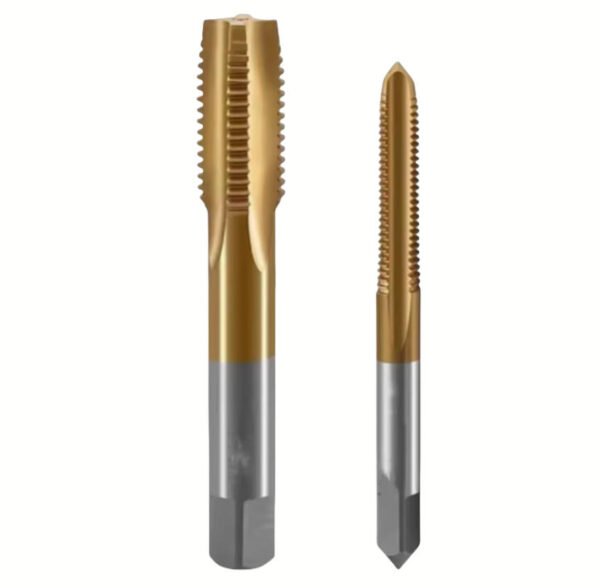
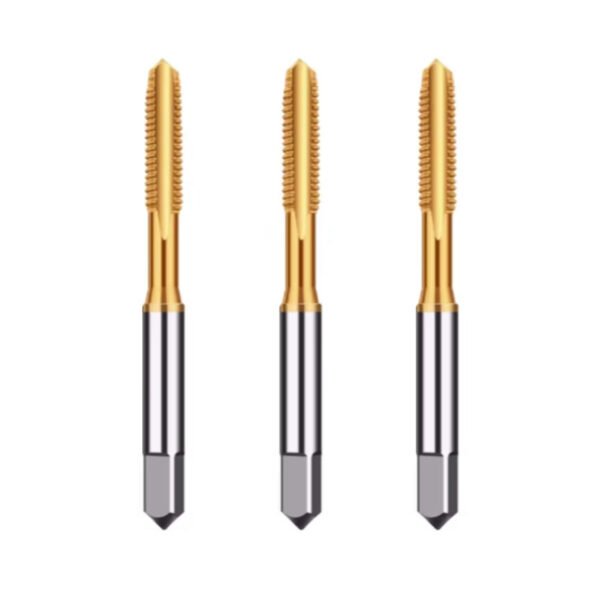
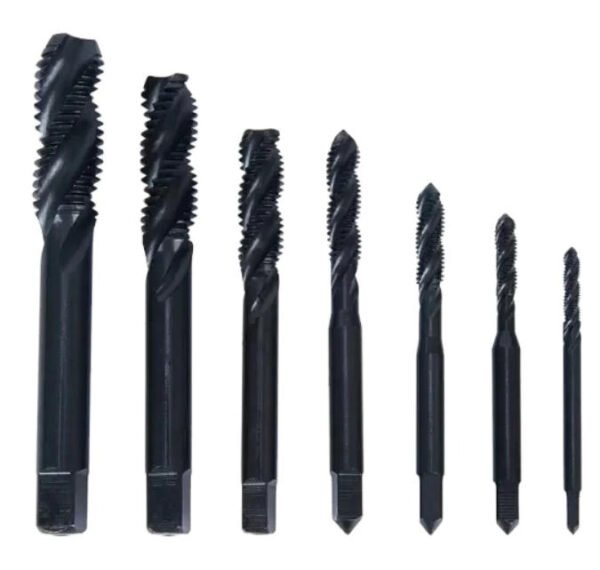
Since our founding in 2005, MisolTap has established itself as a leading Chinese manufacturer of high-performance thread cutting tools. We integrate R&D, production, and global sales into a seamless operation, providing our clients with robust and precise threading solutions tailored to modern manufacturing needs. We recommend our HSSE-PM TiAlN-coated multi-material taps for any job shop looking to consolidate inventory and eliminate tool changeovers. In our testing, integrating a genuine premium universal tap reduces overall threading cycle costs by up to 35% in high-mix environments.
Frequently Asked Questions
Can I use the same thread tap for aluminum and stainless steel?
Yes, by using thread taps explicitly engineered for multi-material applications. These tools feature a powdered metallurgy high-speed steel (HSSE-PM) substrate and advanced tribological coatings like TiAlN to prevent aluminum from adhering to the cutting edge while possessing the hardness required to shear stainless steel.
What is the primary benefit of using thread taps for multi-material applications?
The primary benefit is drastic reductions in machine downtime and tool inventory costs. CNC operators can transition from machining ISO P steels to ISO N non-ferrous metals without executing tool changeovers or reprogramming tool offsets.
Should I use cutting oil or coolant when using universal thread taps?
In CNC environments utilizing multi-material taps, a high-quality water-soluble coolant (emulsion) at a 8% to 10% concentration is generally recommended. It provides the necessary lubricity for steels while offering the rapid cooling required for heat-sensitive alloys.
Authoritative References & Machining Standards
- ISO 529: Machine Taps and Hand Taps – International Organization for Standardization specifications defining thread tap nomenclature, shank dimensions, and tolerance classes for advanced manufacturing.
- Society of Manufacturing Engineers (SME) – Peer-reviewed engineering data on the tribological advantages of TiAlN coatings and Powdered Metallurgy (HSSE-PM) substrates in cutting tool design.
- Modern Machine Shop – Leading industrial publication detailing modern CNC rigid tapping strategies and multi-material tool performance metrics in high-mix job shops.