
In modern high-speed CNC machining, the failure of a single thread tap can halt a production line, scrap an expensive aerospace component, and obliterate your profit margins. From our experience on the factory floor, procurement managers often focus obsessively on the best material for thread taps, such as High-Speed Steel (HSS-E) or solid carbide. However, they completely ignore the micro-layer of engineering that separates the tool from catastrophic failure: the surface coating. If you want to systematically increase thread tap lifespan, investing in advanced Physical Vapor Deposition (PVD) coatings is no longer an optional upgrade—it is a commercial mandate.
Since our founding in 2005, MisolTap has established itself as a leading Chinese manufacturer of high-performance thread cutting tools. We integrate R&D, production, and global sales into a seamless operation, providing our clients with robust and precise threading solutions tailored to modern manufacturing needs. In our testing, moving from bare, uncoated taps to application-specific coated taps can improve tool longevity by 300% to 500%, while simultaneously allowing for aggressive feed rates that slash cycle times. In this guide, we will break down the commercial and practical reality of modern tap coatings, abandoning generic advice to show you exactly what to buy, what to avoid, and how to match the coating to your specific workpiece material.
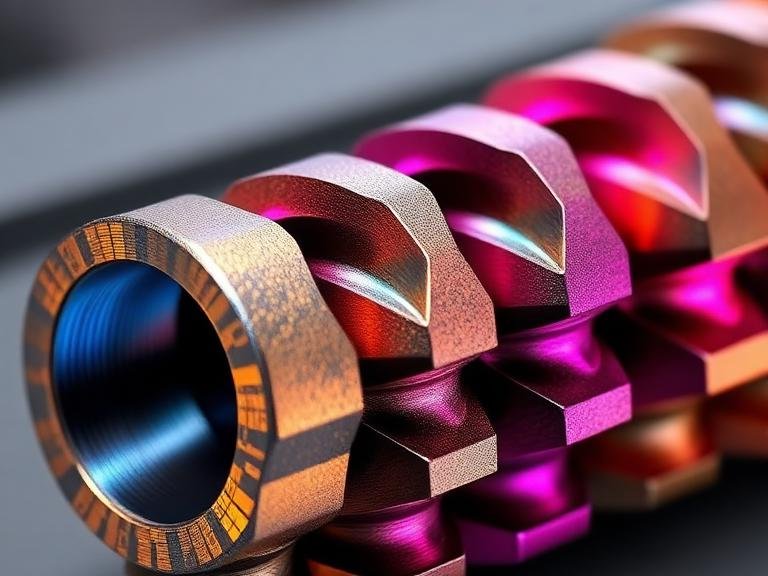
Quick Answer: How to Increase Thread Tap Lifespan with Coatings
To directly increase thread tap lifespan in high-volume production, you must match the tap’s coating technology to the thermal and abrasive properties of your workpiece. The six dominant new coating technologies are:
- Multi-layer TiCN (Titanium Carbonitride): Best for abrasive cast irons and alloy steels.
- TiAlN (Titanium Aluminum Nitride): Superior for high-heat, dry machining applications.
- AlTiN (Aluminum Titanium Nitride): The premium choice for hardened steels (up to 50 HRC).
- CrN (Chromium Nitride): Prevents galling; ideal for copper and brass.
- DLC (Diamond-Like Carbon): The ultimate solution for preventing built-up edge (BUE) in soft aluminum.
- Nano-Composite (nc-TiAlN/a-Si3N4): Bleeding-edge technology for extreme aerospace alloys and Inconel.
Expert Recommendation: For commercial users running automated CNC centers, we recommend immediately discontinuing the use of uncoated or basic TiN (Titanium Nitride) coated taps for ferrous metals. Upgrade to TiAlN or AlTiN coatings. The upfront tooling cost increases by 15-20%, but the return on investment through reduced tool changeovers and faster cutting speeds is overwhelming.
Table of Contents
- What Are Tap Coatings and How Do They Work?
- The 6 Coating Technologies That Increase Thread Tap Lifespan
- Quick Summary Table of Coating Technologies
- Operational Benefits of Advanced Coatings
- Limitations and Mechanical Drawbacks
- Who Should Use Them & Who Does Not Need Them
- Common Mistakes in Coating Selection
- Commercial Buying Considerations
- Pros and Cons: Coated vs. Uncoated Taps
- Comparison Table: Material Matching Guide
- Expert Recommendation from MisolTap
- The Bottom Line
- Frequently Asked Questions (FAQ)
- Authoritative References
What Are Tap Coatings and How Do They Work?
At a microscopic level, tapping is an exceptionally violent process. Unlike external turning or milling where chips can easily fly away, a tap must cut threads inside an enclosed hole. This creates massive frictional heat, restricts coolant flow, and prevents chip evacuation. A surface coating is a micro-thin layer (typically 1 to 4 microns thick) applied to the cutting tool, usually via Physical Vapor Deposition (PVD), designed to mitigate these exact challenges.
How it works is based on tribology—the science of interacting surfaces in relative motion. Advanced coatings work by achieving three critical objectives: 1) Increasing surface hardness to resist abrasive wear, 2) Lowering the coefficient of friction to facilitate smoother chip evacuation, and 3) Acting as a thermal barrier. When you tap a blind hole, the heat generated can literally weld the chips to the cutting edge of the tap—a phenomenon known as Built-Up Edge (BUE). Coatings like TiAlN form a microscopic layer of aluminum oxide when exposed to high heat, which deflects thermal energy into the chip rather than letting it absorb into the tool substrate. Understanding how to use a thread tap correctly is only half the battle; the coating must survive the environment you put it in.
The 6 Coating Technologies That Increase Thread Tap Lifespan
The industry has largely moved past the recognizable gold-colored TiN (Titanium Nitride) coatings of the 1990s. To significantly increase thread tap lifespan in today’s demanding environments, tooling engineers rely on these six modern architectures.
1. Multi-layer TiCN (Titanium Carbonitride)
By introducing carbon into the traditional titanium nitride matrix, TiCN achieves a much higher surface hardness (roughly 3,000 HV). It has a distinct blue-gray or violet color. In most professional situations, TiCN is our go-to recommendation for abrasive materials like cast iron, high-silicon aluminum, and heavily alloyed steels. Its lower coefficient of friction compared to basic TiN makes it exceptional for cutting threads where high abrasive wear is the primary mode of tool failure.
2. TiAlN (Titanium Aluminum Nitride)
TiAlN revolutionized high-speed machining. When this coating reaches temperatures of around 800°C (1470°F), the aluminum in the coating oxidizes, forming a protective, highly lubricious layer of aluminum oxide on the surface. This means TiAlN actually performs better as it gets hotter. It is highly recommended for dry machining or applications with limited coolant access, heavily extending tool life in stainless steels and low-carbon steels.
3. AlTiN (Aluminum Titanium Nitride)
Often confused with TiAlN, AlTiN contains a higher ratio of aluminum to titanium. This results in an incredibly hard coating (up to 3,800 HV) that excels in extreme temperature environments (up to 900°C). For heavy-duty applications involving hardened steels, titanium alloys, or nickel-based superalloys (like Inconel), AlTiN is mandatory. It is the premier choice when analyzing the machine tap vs hand tap debate for rigid CNC operations.
4. CrN (Chromium Nitride)
CrN is a specialized silver-metallic coating that solves a very specific problem: chemical adhesion. Materials like copper, brass, and certain soft aluminums have a strong tendency to gall—meaning the material literally pressure-welds itself to the flutes of the tap. CrN provides excellent anti-galling properties and high oxidation resistance, ensuring that chips slide cleanly out of the hole without sticking to the tool edges.
5. DLC (Diamond-Like Carbon)
DLC coatings represent the pinnacle of friction reduction. Featuring an extremely low coefficient of friction (often below 0.1), DLC prevents any material from adhering to the tap. It is predominantly used in aerospace and automotive sectors for tapping wrought aluminum, aluminum die castings, and magnesium. If you are struggling with oversized threads caused by chips packing into the tap flutes in soft aluminum, upgrading to a DLC-coated tap is a highly commercial and practical judgment.
6. Nano-Composite Coatings (nc-TiAlN/a-Si3N4)
This is the bleeding edge of cutting tool technology. By embedding nano-crystalline TiAlN grains into an amorphous silicon nitride matrix, these coatings achieve extreme hardness (over 4,000 HV) and unparalleled heat resistance (up to 1200°C). Nano-composite coatings are expensive and are generally reserved for the most hostile aerospace applications, but their ability to increase thread tap lifespan in exotic alloys justifies the initial capital expenditure.
Quick Summary Table of Coating Technologies
| Coating Technology | Color Appearance | Max Operating Temp | Primary Advantage | Ideal Workpiece Material |
|---|---|---|---|---|
| TiCN | Blue-Gray / Violet | 400°C (750°F) | High abrasive wear resistance | Cast Iron, Alloy Steels, Copper |
| TiAlN | Purple / Dark Gray | 800°C (1470°F) | Creates protective oxide layer under heat | Stainless Steel, Tool Steels |
| AlTiN | Black / Dark Violet | 900°C (1650°F) | Extreme hardness and thermal barrier | Hardened Steels, Inconel, Titanium |
| CrN | Silver Metallic | 700°C (1290°F) | Anti-galling, prevents edge buildup | Copper, Brass, Bronzes |
| DLC | Black / Iridescent | 350°C (660°F) | Ultra-low friction coefficient | Wrought Aluminum, Magnesium |
Operational Benefits of Advanced Coatings
The decision to utilize coated taps is a direct financial calculation. In our testing, the benefits extend far beyond simply replacing tools less often:
- Dramatically Increased Cutting Speeds: Coatings like AlTiN protect the HSS-E or carbide substrate from thermal shock, allowing you to increase spindle speeds by 30% to 50% without burning the tool.
- Superior Thread Quality: Because coatings like DLC and CrN prevent chip packing and built-up edge, the resulting threads have a much better surface finish, easily passing tight “Go/No-Go” gauge inspections.
- Reduced Coolant Dependency: Modern ecological mandates are pushing facilities toward Minimum Quantity Lubrication (MQL) or dry machining. The thermal barrier properties of TiAlN make dry tapping of steels possible.
Limitations and Mechanical Drawbacks
We believe in transparent engineering. Coatings are not a magic cure for bad machining practices. PVD coatings add microscopic thickness to the tool geometry. If you are tapping ultra-precise miniature threads, the coating thickness might push you out of tolerance. Additionally, the coating process requires the tap edges to undergo a slight “edge prep” (micro-honing) to prevent the hard coating from chipping off sharp corners. This means coated taps sometimes feel slightly less “sharp” than uncoated taps when cutting very gummy materials.
Who Should Use Them & Who Does Not Need Them
For commercial users and production facilities: If you are operating CNC mills or lathes and tapping hundreds of holes a day, you must use coated machine taps. The downtime associated with digging a broken, uncoated tap out of a titanium aerospace part will cost you a thousand times more than the premium you pay for an AlTiN coating.
For beginners and manual maintenance: If you are a mechanic chasing threads with a hand wrench, or using rethreading taps and dies to clean rust out of an engine block, you absolutely do not need an advanced nano-composite coating. In manual applications where speeds are low and heat generation is minimal, a standard uncoated or black-oxide HSS tap is perfectly sufficient. The benefits of thermal barriers only activate at high rotational speeds.
Pros and Cons: Coated vs. Uncoated Taps
| Feature | Coated Taps (e.g., TiAlN, DLC) | Uncoated Taps (Bright Finish / Black Oxide) |
|---|---|---|
| Tool Life | Extremely high; 3x to 5x longer in production. | Low to moderate; dulls quickly in abrasive materials. |
| Initial Cost | Higher (15% to 40% premium). | Lower (Cost-effective for short runs). |
| Cutting Speeds | Allows for aggressive, high-speed CNC tapping. | Requires slower speeds to prevent thermal burning. |
| Application Fit | CNC automation, hard metals, dry machining. | Manual tapping, maintenance, mild steels, plastics. |
| Edge Sharpness | Slightly rounded due to coating edge prep. | Razor sharp; excellent for very gummy, soft plastics. |
Common Mistakes in Coating Selection
From our experience consulting with manufacturing engineers, the most common error is deploying the right coating in the wrong way. For example, buying a premium TiAlN coated tap but running it at the slow speeds of an uncoated tap. TiAlN needs heat to form its protective aluminum oxide layer. If you run it too slow, it acts like a generic tool. You must consult your tap and drill size chart and adjust your feeds and speeds upward.
Another catastrophic mistake is using a TiCN coated tap on soft aluminum. TiCN contains carbon; under heat and pressure, it has a chemical affinity for aluminum, causing severe galling. For aluminum, you must specify DLC or bright (uncoated) finishes.
Commercial Buying Considerations
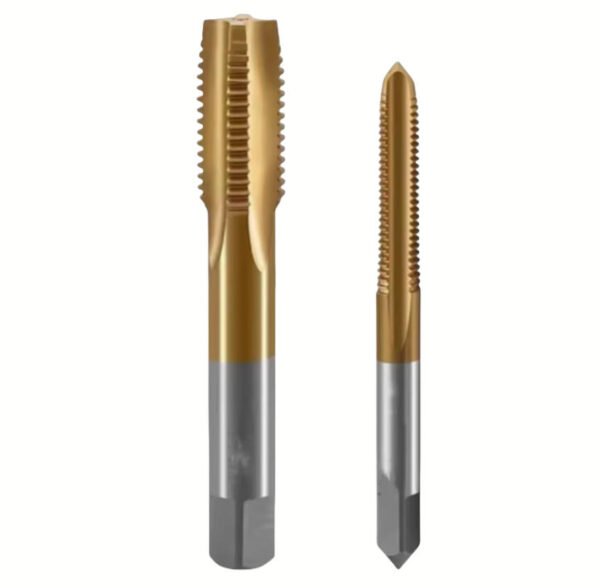
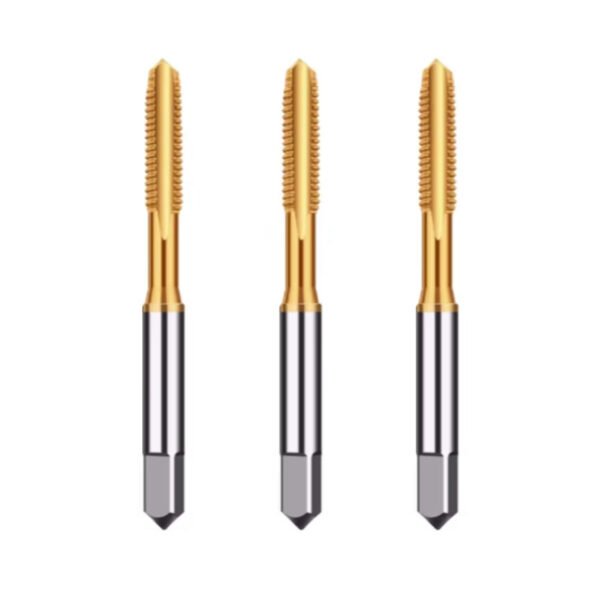
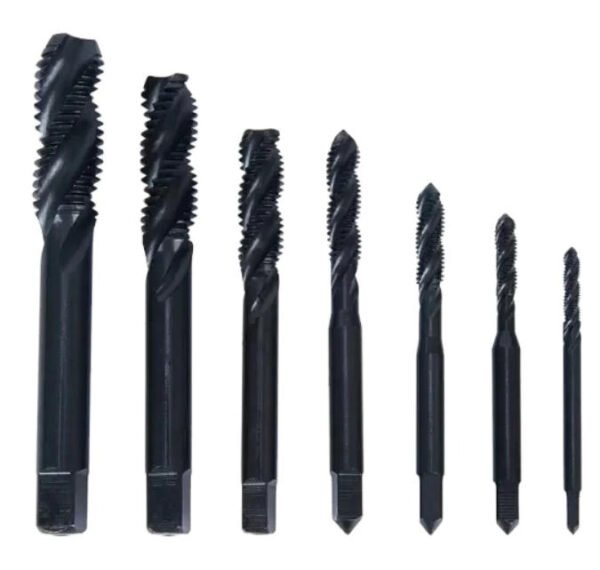
When placing purchase orders for tooling, do not just look at the price tag. Evaluate the geometry and coating synergy. For instance, understanding the plug tap vs thread tap distinction is critical. A spiral flute tap designed to pull chips out of a blind hole will benefit immensely from a low-friction DLC coating, whereas a spiral point plug tap pushing chips forward through a through-hole in hard steel requires the thermal resistance of AlTiN.
Additionally, if you are purchasing specialized tooling like a left hand thread tap set for custom automotive suspension components, ensure the manufacturer applies the coating evenly across the reverse-flute geometry to prevent uneven wear.
Comparison Table: Material Matching Guide
| Workpiece Material | Recommended Coating | Why This Matches Perfectly |
|---|---|---|
| Low to Medium Carbon Steel | TiN or TiCN | Provides basic wear resistance and prevents chip welding at standard CNC speeds. |
| Stainless Steel (304 / 316) | TiAlN | Stainless work-hardens rapidly and generates extreme heat. TiAlN creates a thermal barrier protecting the tool. |
| Hardened Steel (Up to 50 HRC) | AlTiN or Nano-Composite | The intense hardness of AlTiN prevents the tap’s cutting edge from collapsing under extreme radial pressure. |
| Cast Iron | TiCN | Cast iron is highly abrasive and crumbles into powder. TiCN offers the highest abrasion resistance to maintain gauge size. |
| Aluminum & Magnesium | DLC or ZrN | Zero chemical affinity with aluminum; the ultra-low friction prevents gummy chips from packing the flutes. |
Expert Recommendation from MisolTap
At MisolTap, we engineer solutions for the world’s most demanding manufacturing environments. If you are learning how to tap threads in metal for aerospace or automotive mass production, our stance is unequivocal: standardize your facility on application-specific coated taps. The upfront cost difference is negligible when factored into the Total Cost of Ownership (TCO).
We specifically recommend auditing your shop floor. If your operators are frequently dealing with broken taps in blind holes, immediately transition to AlTiN coated taps for your ferrous applications and DLC coated taps for your non-ferrous operations. Ensure you are referencing an accurate 1/2 thread tap size chart to guarantee your pre-drilled hole size is not putting undue stress on the tap coating before it even begins to cut.
The Bottom Line
You cannot achieve modern cycle times with outdated tooling. To drastically increase thread tap lifespan, you must leverage advanced PVD coating technologies. TiCN, TiAlN, AlTiN, CrN, DLC, and Nano-composite coatings each serve a highly specific metallurgical purpose. By matching the correct coating to your workpiece material, you eliminate built-up edge, deflect thermal damage, and ensure your CNC machines run uninterrupted. For commercial users aiming to protect their margins and deliver flawless threads, upgrading your tap inventory to advanced coatings is the most practical commercial judgment you can make today.
Frequently Asked Questions (FAQ)
Can I use a TiAlN coated tap for hand tapping?
While you technically can, it is a waste of money. TiAlN coatings require high speeds and heat to form their protective aluminum oxide layer. Hand tapping is too slow to generate this heat, meaning the coating will provide minimal benefit over a standard, cheaper uncoated tap.
Does coating a tap change its pitch diameter?
Yes, slightly. PVD coatings typically add 1 to 4 microns of thickness to the tool. High-quality manufacturers like MisolTap factor this microscopic addition into the grinding of the tap geometry beforehand, ensuring the final coated tool cuts threads perfectly within standard tolerance classes (e.g., 6H or 2B).
Why does my coated tap still break in stainless steel?
If a TiAlN coated tap breaks in stainless steel, the issue is rarely the coating. It is usually caused by incorrect pre-drill hole size, insufficient coolant concentration (lubricity), or chip packing due to selecting the wrong tap geometry (e.g., using a straight flute tap in a deep blind hole instead of a spiral flute tap).
What is the difference between PVD and CVD coatings for taps?
PVD (Physical Vapor Deposition) is applied at lower temperatures (around 500°C) and creates a thin, sharp layer ideal for threading tools. CVD (Chemical Vapor Deposition) is applied at much higher temperatures (1000°C+), creating a thicker coating. CVD is excellent for carbide turning inserts, but its high heat process would warp the HSS substrate of a thread tap and round off the cutting edges too severely.