
Thread making is undeniably one of the most unforgiving operations in modern machining. You can flawlessly mill, drill, and bore an expensive titanium aerospace component, only to scrap the entire workpiece in the final minutes because a manual tap snapped inside a blind hole. From our experience, relying on manual labor for precision threading in 2026 is no longer just inefficient; it is a profound commercial risk. Automation in thread tapping has transitioned from being a luxury upgrade for elite automotive plants to an absolute baseline requirement for any B2B manufacturer striving to remain competitive.
We routinely consult with facility managers who mistakenly believe that integrating automated threading systems requires massive capital expenditure and months of downtime. This is an outdated myth. Whether you are implementing articulating pneumatic arms or programming rigid cycles on a modern 5-axis CNC, the return on investment (ROI) is staggering. In this comprehensive guide, we dissect the mechanics, analyze the direct financial advantages of automation in thread tapping, and provide the commercial judgment you need to optimize your machining floor.
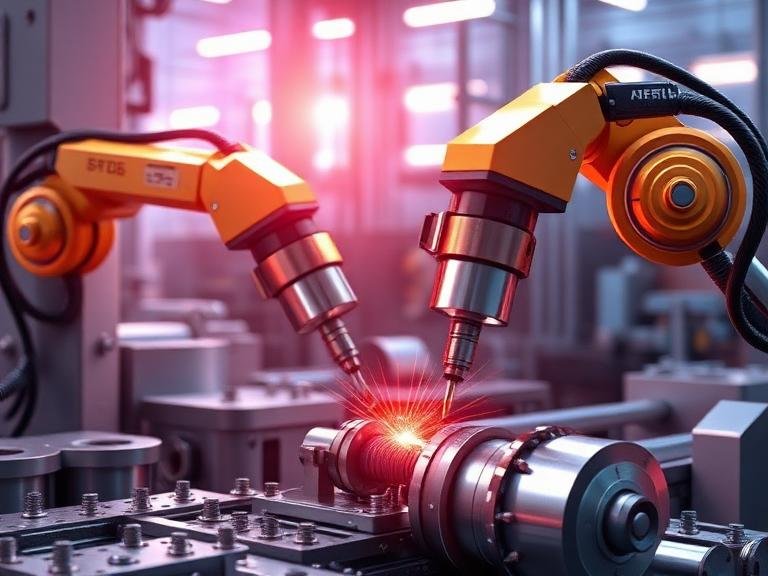
Quick Answer: The Reality of Automated Threading
Why should your facility adopt automated threading systems immediately?
- Immediate ROI: By eliminating human error, automated systems drastically reduce scrap rates and entirely prevent the catastrophic costs associated with broken tool extraction.
- Unmatched Precision: Automated machines guarantee perfect 90-degree perpendicularity, ensuring every thread meets stringent ISO and aerospace tolerances.
- Speed: Modern tapping arms and CNC centers can thread holes up to 500% faster than manual operations, radically decreasing cycle times.
Expert Advice: If your production line generates more than 100 threaded holes per day, manual tapping is hemorrhaging your profit margins. We recommend deploying quick-change articulating tapping arms for varied, large-part jobs, and reserving CNC rigid tapping for high-volume, uniform component runs.
Table of Contents
- What Is Automation in Thread Tapping?
- How It Works: The Mechanics of Precision
- 7 Benefits for B2B Manufacturers
- Limitations: The Reality Check
- Who Should Use It vs. Who Does Not Need It
- Common Mistakes in Automated Threading
- Buying Considerations Table
- Comparison Table: Manual vs. Automated Systems
- Pros and Cons Table
- Expert Recommendation
- The Bottom Line
- Authoritative References
- Frequently Asked Questions
What Is Automation in Thread Tapping?
At its core, automation in thread tapping refers to the use of mechanized, digitally controlled, or pneumatically driven equipment to cut internal threads into a pre-drilled hole, completely removing the physical exertion and guesswork of human operators. This encompasses a spectrum of machinery ranging from semi-automated articulating tapping arms (which an operator guides but does not manually turn) to fully automated CNC machining centers that swap tools and rigidly tap hundreds of holes without human intervention.
In decades past, machinists relied heavily on “floating” tap holders to compensate for the mechanical slop between the machine’s feed rate and the spindle’s rotation. Today, the defining characteristic of modern automation in thread tapping is perfect synchronization. The equipment drives the tap downward at the exact mathematical pitch of the thread, ensuring flawless engagement and retraction.
How It Works: The Mechanics of Precision
To fully grasp the superiority of these systems, you must understand the underlying mechanics. A tapping cycle is only as good as its foundation. Once you have established the optimal drilling speed for metal to create a clean, work-hardening-free hole, the automated tapping system takes over.
In a CNC environment, rigid tapping utilizes advanced servo motors and high-resolution optical encoders. The machine’s computer continuously monitors the spindle’s rotational angle and exactly matches it to the Z-axis vertical feed rate. If the tap rotates one full turn, the Z-axis descends exactly one thread pitch. When the machine reaches the programmed depth, the spindle stops instantaneously and reverses out at the exact same synchronized feed rate.
In articulating tapping arms—which are powered pneumatically, hydraulically, or electrically—the arm acts as a rigid exoskeleton. It holds the tap perfectly perpendicular to the workpiece. These arms utilize adjustable slip-clutch collets. If the tap encounters a hard spot or bottoms out, the clutch immediately slips, stopping the rotational force before the tool shatters. This mechanical failsafe is the heartbeat of production efficiency.
7 Benefits of Automation in Thread Tapping for B2B Manufacturers
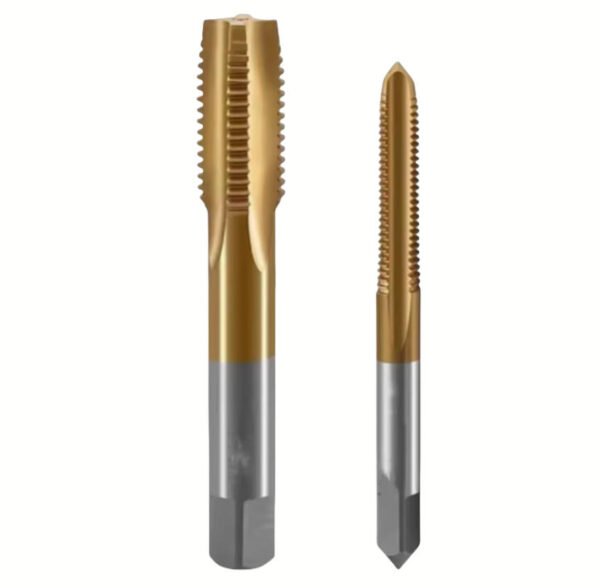
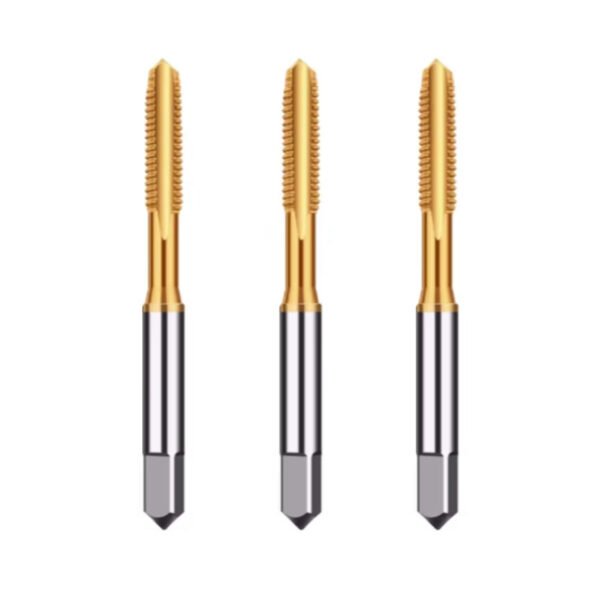
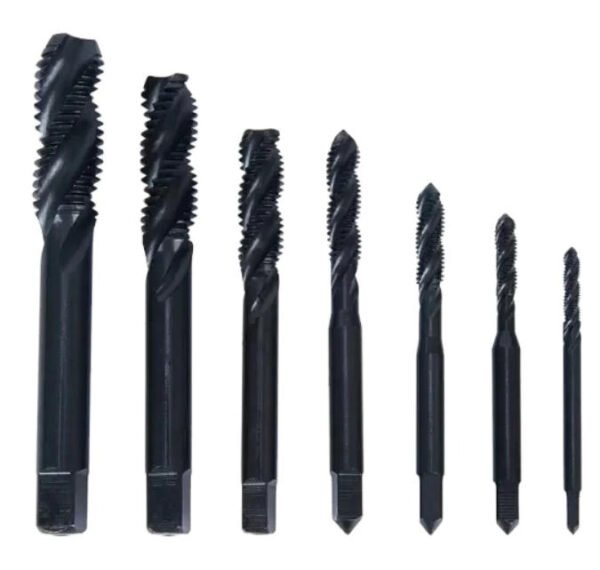
When we analyze automation in thread tapping for our industrial clients, the financial justification always boils down to these seven operational pillars.
1. Exponentially Faster Cycle Times
Time is the ultimate currency on a manufacturing floor. Automated tapping centers and articulating arms can drive and retract taps at speeds exceeding 500 RPM, transitioning between holes in seconds. For commercial users handling mass production, this speed reduces bottlenecks at the finishing stages of fabrication.
2. Virtual Elimination of Tap Breakage
Extracting a broken high-speed steel (HSS) tap from a titanium engine block can take hours of electrical discharge machining (EDM) and often ruins the part. Automated systems use precise torque-limiting chucks. Furthermore, understanding the torque variance between profiles—such as the difference between acme thread vs normal thread—allows operators to digitally set precise torque limits, preventing catastrophic tool failure.
3. Absolute Thread Perpendicularity
Human hands are biologically incapable of holding a tap perfectly straight 100% of the time. Even a one-degree angle deviation causes oversized threads at the top of the hole and severe binding at the bottom. Automated systems lock the tool into a rigid 90-degree axis, ensuring every fastener fits with zero cross-threading.
4. Minimized Scrap and Rework Rates
Inconsistent threading leads to rejected parts, especially in fluid-handling components where seal integrity is paramount. By automating the process, manufacturers guarantee compliance with tight engineering tolerances. For instance, when machining critical pressure vessels, adhering exactly to a 1/4 npt thread tap guide via automated depth control ensures leak-proof assemblies and zero scrapped parts.
5. Seamless Versatility Across Materials
A single automated tapping machine can transition from cutting soft aluminum to threading hardened alloys in seconds. Advanced systems allow operators to instantly adjust RPM and feed parameters. Automated depth control is also vital when choosing between tapered vs straight thread profiles, as tapered threads require exact stopping points to prevent over-sizing the opening.
6. Superior Ergonomics and Operator Safety
Manual tapping is physically grueling and places immense strain on an operator’s wrists and shoulders, leading to repetitive strain injuries (RSI). Articulating tapping arms absorb 100% of the rotational torque, allowing the operator to thread hundreds of holes with just two fingers guiding the head.
7. Industry 4.0 Integration and Traceability
Modern electric servo tapping machines connect directly to shop-floor networks. They record the exact torque, depth, and cycle time of every hole tapped. This data is invaluable for predictive maintenance and quality assurance. Furthermore, these programmable logic controllers easily accommodate complex operations, such as utilizing reverse thread taps for specialized left-hand mechanical assemblies.
Limitations: The Reality Check
Despite the overwhelming advantages, implementing automation in thread tapping does present specific challenges. The primary hurdle is the initial capital investment. A high-quality electric articulating arm can cost several thousand dollars, while CNC machining centers run well into the six figures. Additionally, automated systems demand high-quality tooling; you cannot run cheap, generic carbon-steel taps at high RPMs and expect success. The workspace also must be adapted—pneumatic systems require clean, dry compressed air, and large articulating arms require significant bench clearance.
Who Should Use It vs. Who Does Not Need It
For heavy-duty applications: Manufacturers in the aerospace, automotive, heavy machinery, and defense sectors absolutely must use automated threading. If you are regularly tapping engine blocks, massive structural flanges, or utilizing a heavy duty tap and drill setup for large-diameter holes, manual labor is an indefensible commercial risk.
Who does not need it: Small maintenance and repair shops, hobbyists, or prototyping labs that only tap two or three holes a week in mild steel. The setup time for a single odd job often negates the speed benefits of automation.
Common Mistakes When Automating Your Tapping Process
In our testing and consulting across hundreds of machine shops, we see operators continually sabotage their automated equipment through basic setup failures:
- Ignoring Tap Drill Charts: An automated machine will force a tap into a hole regardless of size. If you drill the hole too small, the torque will spike, and the tap will snap. Always consult a verified pipe thread tap size chart before beginning your cycle.
- Using the Wrong Tap Geometry: You cannot use a standard hand tap in an automated high-speed machine. You must select the correct types of thread taps—such as spiral point taps for through-holes to push chips forward, or spiral flute taps for blind holes to pull chips up and out.
- Inadequate Lubrication: Automated tapping generates immense heat and friction instantly. Failing to use high-quality tapping fluid or automated MQL (Minimum Quantity Lubrication) systems will result in galling and torn threads.
Buying Considerations for Automated Systems
When investing in automation in thread tapping, use commercial judgment to select the right platform for your facility.
| Consideration | Pneumatic Tapping Arms | Electric / Servo Tapping Arms | CNC Rigid Tapping Centers |
|---|---|---|---|
| Best Use Case | General manufacturing, large unwieldy parts. | Precision depth control, varied materials. | High-volume, identical mass production. |
| Power Source | Shop compressed air (clean & oiled). | Standard 110V/220V electrical. | 3-Phase industrial power. |
| Torque Control | Mechanical slip-clutch collets. | Digital torque limit programming. | Spindle load monitoring. |
| Cost Tier | Entry-level to Mid-range. | Mid-range to Premium. | High Capital Investment. |
Comparison Table: Manual vs. Automated Systems
| Feature | Manual Tapping (T-Handle) | Automated Tapping Arm | CNC Rigid Tapping |
|---|---|---|---|
| Speed | Very Slow (1-2 holes per minute) | Fast (10-15 holes per minute) | Ultra-Fast (30+ holes per minute) |
| Operator Fatigue | Extremely High | Near Zero | Zero (Fully Automated) |
| Alignment Accuracy | Inconsistent (Prone to human error) | Perfect 90-degree locked axis | Perfect (Machine defined) |
| Setup Time | None | Low (Under 2 minutes) | High (Requires G-code programming) |
Pros and Cons of Automated Threading
| Pros (Why You Must Upgrade) | Cons (The Trade-Offs) |
|---|---|
| Drastically reduces cycle times and labor costs. | High upfront capital cost for equipment. |
| Eliminates scrapped parts due to broken taps. | Requires rigorous maintenance of chucks and collets. |
| Ensures 100% thread consistency and quality. | Operators must be trained on torque limits and speeds. |
| Protects workers from repetitive strain injuries. | Takes up dedicated floor or bench space in the shop. |
Expert Recommendation
The Professional Verdict
From our experience, delaying the implementation of automation in thread tapping is a false economy. The money you “save” by not buying a tapping arm is rapidly bled away through broken tooling, rejected parts, and glacial production speeds. We recommend that any shop dealing with continuous threading operations immediately invest in an electric servo-driven tapping arm. The ability to digitally set depth and torque limits provides unparalleled flexibility, whether you are tapping a tiny M3 hole or running a massive 3/8 pipe thread tap size.
Furthermore, to maximize the lifespan of your automated equipment, you must pair it with elite cutting tools. Sourcing high-vanadium HSS or carbide taps from premier thread tap manufacturers is non-negotiable. An automated machine is only as effective as the cutting edge attached to its spindle.
Since our founding in 2005, MisolTap has established itself as a leading Chinese manufacturer of high-performance thread cutting tools. We integrate R&D, production, and global sales into a seamless operation, providing our clients with robust and precise threading solutions tailored to modern manufacturing needs.
The Bottom Line
In 2026, precision manufacturing demands absolute consistency. Automation in thread tapping removes the variables of human fatigue, misalignment, and over-torquing from your production line. By investing in modern tapping arms or CNC rigid tapping capabilities, you protect your expensive workpieces, vastly increase your throughput, and secure your profit margins. Do not let outdated manual processes dictate your shop’s ceiling—automate your threading operations and elevate your manufacturing floor to the highest industrial standards.
Authoritative References
To further validate the standards and methodologies discussed in this guide, we recommend consulting the following authoritative manufacturing resources:
- International Organization for Standardization (ISO) – ISO 965-1:1998 Guidelines for general purpose metric screw threads, tolerances, and automated machining compliance.
- Massachusetts Institute of Technology (MIT) Open Access – Academic engineering studies on torsional forces, chip evacuation, and material behavior during automated thread forming processes.
- SME (Society of Manufacturing Engineers) – Industry insights on the evolution of CNC rigid tapping, synchronized feed rates, and machine dynamics.
Frequently Asked Questions
Is automation in thread tapping worth the investment for small machine shops?
Yes. Even for small to mid-sized job shops, investing in an entry-level pneumatic or electric tapping arm pays for itself rapidly. It drastically reduces scrap rates and eliminates the countless hours otherwise wasted extracting broken manual taps from expensive client workpieces.
Do I need special taps for an automated tapping machine?
Absolutely. You cannot use standard hand taps (which typically have straight flutes designed for manual reversal). Automated machines operate at high speeds and require machine taps—such as spiral point taps for pushing chips through open holes, or spiral flute taps for pulling chips out of blind holes.
Can automated tapping arms handle blind holes safely?
Yes, modern automated tapping arms are incredibly safe for blind holes. Electric servo models allow you to program the exact depth digitally, ensuring the tap reverses before hitting the bottom. Pneumatic and hydraulic models use torque-limiting slip clutches that instantly disengage the drive if the tap hits the bottom of the hole.
Does rigid CNC tapping eliminate the need for tapping arms?
Not necessarily. While CNC rigid tapping is perfect for components already loaded in the mill, a tapping arm is vastly superior for large, awkward parts that cannot easily fit into a CNC enclosure. Tapping arms free up expensive CNC spindle time by moving the threading operation offline to a dedicated workstation.